

News, Stories and more
Our Blog
View BY :


Back to the Land, Forward in Time
Biodiversity, organic coffee, and the art of creating with care
September has a way of turning quietly on the Mendocino Coast. The light shifts, the gardens offer their last abundance, and the first edge of autumn asks us to notice what we have grown, both in the ground and in our lives.
This season, we are thinking about the relationships that hold everything together: people and place, farmer and roaster, tradition and everyday life. Biodiversity is part of that larger picture. It is the living foundation behind good coffee, and one of the things Thanksgiving Coffee is committed to protecting.
Original Roastary on Noyo Harbor circa 1970's, With Paul and Panda
A Living Mendocino Inheritance
Thanksgiving Coffee was born from the Mendocino Coast world. Our story is connected to Fort Bragg's working harbor, the Mendocino art scene, environmental activism, and the back-to-the-land ethos.
From the beginning, coffee here has meant more than a product. It has offered a way to remain connected to place, to people, and to a life shaped by purpose.
Much of what once sounded "alternative" has become part of how many of us are trying to live today. We want to know where our food comes from. We care about soil and water. We value independent makers and the knowledge carried within their work.
Coffee as Part of a Living System
Biodiversity is one of the threads tying these values together. Coffee doesn't grow in isolation. A biodiverse coffee farm can include shade trees, birds, insects and other pollinators, microorganisms, ground cover and neighboring plant species - all interacting with the coffee crop and the soil and water that sustain it. Coffee grown organically within a diverse landscape develops as part of a living system - carrying the influence of climate, elevation, soil, variety, and the knowledge of the people who tend it.
From Industry Change to Habitat Protection
Thanksgiving Coffee began making the relationship between coffee and habitat visible decades ago. In 1994, we introduced one of the first shade grown coffee lines, connecting customer choice with the protection of tropical forest habitat. Learn more about shade-grown coffee.
In 2015, we joined the Smithsonian Migratory Bird Center’s Bird Friendly program. This certification brings organic agriculture and forest canopy protection together, recognizing coffee farms that provide habitat for migratory birds and other wildlife.
That history continues to shape how we understand biodiversity today. It is a living foundation of the landscape and an essential part of coffee quality and our responsibility. When farms maintain diverse vegetation, forest canopy, and healthy soil, they create conditions in which coffee, wildlife, and farming communities can thrive together.
A Resilient Coffee System Is a Human System
Every cup passes through many hands. Farmers bring an intimate knowledge of their land. Cooperative leaders build shared stability. Cuppers develop their palates through years of practice. Roasters respond to the qualities each coffee brings. Designers, production teams, retailers, and customers carry it forward from there.
This is where biodiversity and justice meet. Fair compensation supports farmers in caring for their farms, remaining connected to their land, and passing knowledge from one generation to the next.
Putting Knowledge in Farmers’ Hands
Original Cupping Lab project, Nicaragua
Thanksgiving Coffee put this belief into practice in Nicaragua. In 1999, Paul Katzeff proposed placing professional coffee tasting tools directly in the hands of producer cooperatives. With support from USAID, Thanksgiving Coffee helped nine cooperatives build cupping labs owned by farmers in 2000 and trained farmers to evaluate coffee using the same standards as buyers. The farmers could taste, understand, and demonstrate the quality of their own coffee, strengthening their ability to improve it and negotiate its value.
We see ecological responsibility and fairness as complementary goals. They are the same root system, revealed in different forms.
Not Just A Cup, But A Just Cup™.
Mendocino Vienna: A Taste of Place
Mendocino Vienna blends organic coffees from Central America, South America, and Indonesia. Each coffee is shaped by its own landscape and farming traditions.
Careful roasting brings these coffees into balance. The result is bold but sweet, with notes of nuts and dark chocolate and a natural sweetness that lingers. This dark roast still allows the blend’s character to come through.
The beans travel from three continents, but the blend itself was shaped here on the Mendocino Coast. Many of our customers first discovered it in Mendocino and have kept returning to it over the years.
One longtime customer, Joe Massucco of Seattle, first tasted Mendocino Vienna while visiting the coast. He describes it as dark and flavorful without tasting burnt, and as a welcome companion to the morning paper.
A New Way To Enjoy Mendocino Vienna
Its rich notes of chocolate and nuts also make Mendocino Vienna a wonderful foundation for cold brew recipes. Try our Mayan Mocha Smoothie, made with chilled Mendocino Vienna, cacao, banana, cinnamon, and your choice of milk.
Bringing These Values To Your Cup
The choices we make as coffee drinkers can support a more resilient and biodiverse coffee system.
- Look for meaningful certifications. Learn what Organic, Fair Trade, and Smithsonian Bird Friendly certifications tell you about how a coffee was grown or traded. Shade, biodiversity, farming practices, and economic relationships all matter beyond the cup.
- Learn where your coffee comes from. Origin is more than a flavor descriptor. It represents farmers, communities, landscapes, and generations of knowledge.
- Support companies that maintain lasting producer relationships. Relationships built over time can create greater transparency, shared knowledge, and a deeper understanding of quality.
- Learn one story behind the coffee you buy. Knowing something about the people and places behind your coffee can change your relationship with it.
Ready to Begin That Journey?
Start with this month’s featured coffee, Mendocino Vienna. Discover how organic coffees from three continents and more than fifty years of Mendocino Coast roasting experience come together in one enduring blend.
None of this has to be perfect. It simply has to become part of your practice, repeated with care.
Carrying the Legacy Forward
As the fall equinox approaches, we are giving thanks for the harvest, for the people who grow and cultivate our food, and for the relationships that make all of it possible.
The back to the land movement taught us to pay attention. The arts taught us to imagine. Biodiversity reminds us that everything is connected.
At Thanksgiving Coffee, this is living history. It continues through how we source, roast, and share coffee. It also lives within the community that continues to grow around it.
Explore Mendocino Vienna and experience what it means to cultivate coffee, community, and a more thoughtful way of living.
Not Just A Cup, But A Just Cup™.
Frequently Asked Questions
What does biodiversity mean in coffee farming?
Biodiversity refers to the variety of life found within and around a coffee farm. This can include coffee plants, shade trees, food crops, native vegetation, birds, pollinators, insects, fungi, and microorganisms in the soil.
These living elements interact with one another. Together, they can help maintain healthy soil, protect water, support natural pest control, and make a farm more resilient to environmental change. Coffee is one crop within this larger community of life.
How is shade grown coffee good for biodiversity?
Shade grown coffee is cultivated beneath a canopy of trees rather than in a cleared field exposed to full sun. When that canopy includes a variety of tree species and layers of vegetation, it can provide food, shelter, and migratory pathways for birds, insects, and other wildlife.
Shade trees can also help regulate temperature, retain moisture, reduce soil erosion, and return organic matter to the ground. However, “shade grown” by itself is not always a regulated claim. Smithsonian Bird Friendly certification provides additional assurance because participating farms must be certified organic and meet specific standards for forest canopy, vegetation, and habitat protection.
What is the difference between Organic, Fair Trade, and Bird Friendly coffee?
Each certification looks at a different part of the coffee system.
Organic certification focuses on farming and processing practices. Certified organic coffee must meet verified standards governing how it is grown and handled. These standards restrict most synthetic pesticides and fertilizers while supporting soil and water health, ecological balance, and biodiversity.
Fair Trade certification focuses on people and trade. It establishes social, economic, and environmental standards for participating producers and businesses. Depending on the certifying system, this can include price protections, additional community premiums, labor standards, and support for democratic producer organizations.
Smithsonian Bird Friendly certification focuses on habitat. Bird Friendly farms must first meet organic certification requirements. They must also maintain specific levels of shade, forest structure, and plant diversity that provide habitat for migratory birds and other wildlife.
A coffee can carry more than one certification. Organic addresses how the coffee is cultivated. Fair Trade addresses how it moves through economic and social relationships. Bird Friendly adds verified habitat requirements. Together, they give coffee drinkers a fuller understanding of what their coffee supports.
About The Author
Lavender Grace Kent, Head of Brand Narrative & Culture
Lavender Grace documents Thanksgiving Coffee’s history, producer relationships, environmental commitments, and continuing work at the intersection of coffee, culture, and biodiversity.
Stay in touch - we like to stay connected
Back to the Land, Forward in Time
Thanksgiving Coffee grew from a North Coast culture shaped by artists, environmental activism, and a belief that the choices we make shape the world. That inheritance still guides us today as we promote biodiversity and fair compensation throughout our coffee ecosystem.
read more-
![Clean Water For All - Helping Uganda]()

Clean Water For All
by Paul Katzeff

Chapter 1
Since my last report (Feb.19, 2020) was six months ago at the beginning of this clean water project with the Namanyonyi Community of Shalom Interfaith Cooperative we have made significant progress. In addition to the first 40 installations, we have provided an additional 120 families with a clean water filter for their homes. We financed the purchase and distribution of a second 40 in April, and 80 more are being distributed as this post is being written. The funds, if you are not familiar with how we do things at TCC, were provided by your purchases and a $1.00 contribution per package from those revenues, by TCC to our Trust Account for clean water.
For reference, a clay home filter with a 15-gallon capacity costs 82,000 Ugandan Dollars ($24.00 US) plus another $6.00 for transportation, and other Administrative needs to get a filter from the factory in Kampala 150 miles to the Co-op headquarters in Mbale.

Clean water is a rarity in Uganda’s coffee-growing regions. Farm families spend hours every day hunting for water. When they find it it is generally filthy, brackish, and loaded with bacteria that cause disease and often death to the weakest in the family (children under the age of 5). After they find a water source they fill 5-gallon Gerry cans and haul the 40 pounds of bad water back home to be used for cooking and drinking. Many boil the water, but many don’t have the resources to buy charcoal or wood to furnish the fire needed.
When boiled, the water is still brackish and foul-tasting and most often is not boiled long enough to kill all the bacteria. Typhoid, Cholera, Dysentery, and Diarrhea are but four of the many diseases that kill. These diseases are the leading causes of death in the Namanyonyi Community. Every family has lost an infant or a young child. Imagine a community with that sadness. I don’t want that sadness to be in my coffee inventory!
So we have called upon our loyal coffee customers to help us eliminate the sadness that comes from not having a simple but essential commodity, clean water. Buy Delicious Peace Coffee is a call to action.
To date, we have financed 160 filters. The sources of their water have not changed. They are still collecting water, often from puddles after rain. It is still foul when they fill their 5-gallon plastic cans, but when they get it home, they pour it into their clay filter and in minutes the filter removes 99.9 % of the bad bacteria according to the lab tests run by The National Geographic Society. The filtered water is clear, healthy, and tastes good.
The Cooperative is getting healthier with each additional filter. Together with you, we are saving lives, removing sadness from an entire community, and building the cooperative’s importance in its community. Since the water project started the coop has grown by 100 families.
Our goal at Thanksgiving Coffee is to finance with your help, the entire cooperatives member households (average size is 12) with a least one clean water filter. There are 320 members as of July- 125 Muslims, 84 Jews, and 111 Christians.
We have enough Delicious Peace coffee left from the 2018/19 crop to provide another 70 families with the filters which means we will fall short by 70 families this year. The 2020/21 crop will arrive in November. I expect the coffee to be wonderful, perhaps the best Arabica coming out of Uganda. Why? Because I have learned that Quality of life and quality of coffee go hand in hand. When farmers see that their coffee betters their life and their family health, they love their trees more and that love translates into better care, better agronomy, and that translates into flavor that sings with the joy of hope and progress. The 2019 harvest which we are now promoting is their best so far. I know they are motivated to say thank you to us thru their coffee flavor. Let’s make 2021 a banner year for them and for our own taste buds.
Chapter 2
Imagine a village of 320 families of Jews, Christians, and Muslims. There is a great story in this, one that the world needs to hear. Not one member is college-educated, many are illiterate, all farming coffee as their only choice. They need to feed, clothe, house, and educate an average of 8 children. Some households are caring for children whose parents have died of Cholera or Typhoid. And yet, they came together in an effort to aggregate their coffee so it could be sold into the international Coffee Market as Specialty bringing a higher price to each farmer via their Cooperative. We have tripled their income by honoring their effort to show that the three Abrahamic Faiths could work together to bring hope to their families and community.
We have taken great care to document the past health of each family prior to receiving the filters. It is clear to me that we have changed the course of each family’s history. Together, we have altered their fate!
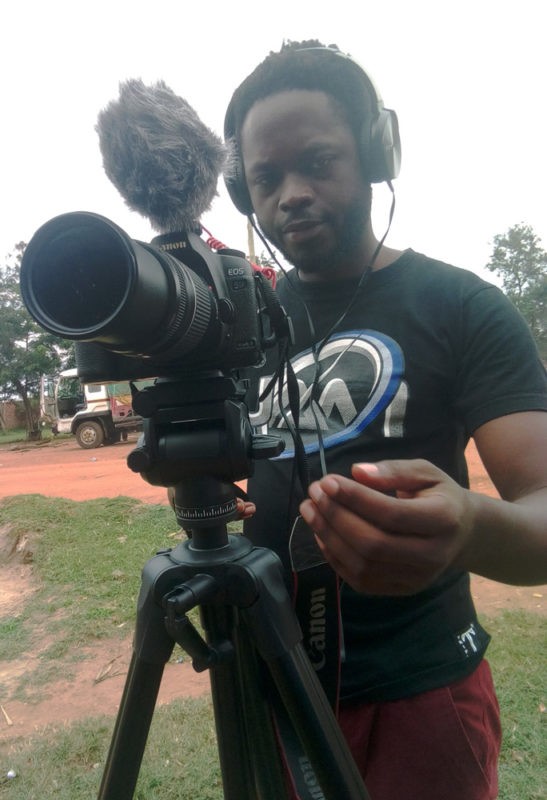
A full report will be part of my next communication to you. My local associate Elijah, whose latest email follows the end of my post, will be doing the interviews and collating the information for us. Elijah is another story in itself. He somehow came out of this impoverished and isolated community to get an education, follow his dream to be a videographer, and eventually meet me on my last visit to Uganda in 2017. We met on a dirt road in the middle of nowhere. He was selling a DVD he made of his soap opera video made with local amateur actors. I bought a DVD and took it back to the US with me to watch. His email address was on the disc. He and I have become friends and now he is our staff project director in Uganda. He deserves a full blog entry. He defied his fate and battled to become himself. In the process, I have been able to work remotely in Uganda with absolute efficiency.
Here is his last report to Thanksgiving Coffee. It exemplifies my good fortune to find myself on the same spot as he was, at the same moment. Was it fate? Serendipity? Providence? That moment changed his life, mine, and the course of 320 coffee farming families.
Dear Paul Kazeff,
I would like to inform you that we started the exercise of water filter distribution for the 3rd round and it’s going on well. I would also like to tell you that whenever some filters reach with damages perhaps on shipping, Mr Matovu (spouts) has to make replacement. This is why, we received 80 filters for the 3rd round plus 2 filters compensation for filters that reached with damages during the 2nd round.On this note, I want Matovu to know that during this 3rd round, the truck driver did not take much precautions hence when I checked, I found 9 filters damaged. There is need for an assurance from Matovu that these 9 filters will be replaced and that in the next round, there will be proper packing of the filters in the truck and the driver taking much care when delivering the filters. For proof of the 9 damaged filters, I have attached some photographs. Check in the attachments of this email. You will see some few photos of water filter distribution exercise and the 9 damaged filters. I will send a 3 minutes video and more photos for the whole exercise in a few days.
Thank you,
John Elijah

We will celebrate when all 340 families have the health energy and joy that clean water brings. When you purchase this coffee you are buying yourself Angel Wings, and of course Delicious Peace.


Clean Water For All - Helping Uganda
read more -
![THE WAY OF THE BEE BOLD ALLIANCE]()

Bee Bold Alliance
The Goal of the Bee Bold Alliance is to Unite Pollinator Protectors to support Biodiversity and Food Security for future generations.The How:
Here are four ways for you to be part of the solution for pollinator survival.
- Drink Bee Bold Coffee – Use your coffee dollars to support your local pollinator protectors. We will send 20% of your online purchase of Bee Bold Coffee to the Bee Bold Partner of your choice. This organic, fair trade coffee is a full circle product.
- Sign the Pollinator Protector Pledge – Pledge to care for the Earth, your home, and your watershed for pollinator survival. You can protect pollinators by using organic land management at your place of residence, your business and community. Join the Pollinator Pledge.
- Create a Pollinator Garden – Feeding local pollinators is possible at any size. Doorstep flowerpots, a tree between a sidewalk and the street, a border of herbs and flowers, a full backyard garden, a front lawn replaced by herbs and veggies, or acres of sustainably farmed vegetables. Garden spaces come in every size. Get planting here
- Sponsor a Pollinator Garden – Support food security in collaboration with the Bee Bold Youth Core. Contact
We Facilitate
-
Pollinator Gardens to feed our communities
-
Youth Projects to develop self-responsibility
-
Intentional Creativity for visions of hope through art, music, and dance
-
Traditional Ecology Knowledge for integrated relationships to all life
We Create
-
A circle of regenerative ecology
-
Support for continued life on Earth
-
Hope for our future generations
We Celebrate
-
Each season with heart-centered storytelling, art, dance, and music
-
Connection to our natural world for social and systemic change
This is the Bee Bold Alliance, uniting pollinator protectors for the future of our biodiversity and food security for future generations. The Bee Bold Alliance is a project of Thanksgiving Coffee Company, a certified B Corp using business as a force for good.
Project Director ~ Lavender Grace Cinnamon ~ Sustainable Ecology Advocate info@beeboldalliance.com or www.beeboldalliance.com
THE WAY OF THE BEE BOLD ALLIANCE
read more -
![Pollinator Protectors Unite for National Pollinator Week]()

Pollinator Protectors Unite
National Pollinator Week June 22 – 28TH, 2020
Thanksgiving Coffee Company is an activist company and has been for over 40 years. We use coffee as a medium for change and a force for good. We are passionate about Pollinators and the biodiversity they create in the web of life and food on the planet. We are so passionate about preserving Pollinators that we have created a product line to support this work. Our Bee Bold Coffee generates funds for Bee Centric and Pollinator Protector Non-Profits to maintain the diversity of each bioregion and ultimately food security for all.
Sign the Pollinator Protector Pledge and show your solidarity for future generations.
Download and Sign the pledge
Email it to Info@beeoldalliance.com
Subject line: Pollinator Protector
or
Simply Copy and Email the following information below to info@beeboldalliance.com:
By signing this pledge you agree to:
Be a steward of the soil and the water of your home residence Only use organic land management to ensure pollinator health To invite neighbors to take the Pollinator Protector Pledge
Are you a Pollinator Protector?
This self-certification is a way to give responsibly to our own place on this Earth. As an individual, you pledge to add the acreage of your home residence to the health of the pollinators by eliminating harmful chemicals and pesticides with the use of organic land management. In this process, you support the watershed that your land is linked to and all the pollinators that rely on this water. Not sure what watershed you are part of, click here. Your pledge will be added to the growing number of Pollinator Protectors from the Bee Bold Alliance. We will add your acreage and your watersheds to a growing map, to show region by region the impact we have as an Alliance for Pollinator Health. (The map is in process and will be live shortly.) As a business you can protect the lands you do business on, or the property of your local school, library or community center.
By focusing on the health of the soil and the water we can provide a safe haven for our pollinators to be, to live, and to grow. Together we can unite the land as a sustainable food source for all pollinators, all people, all races, and all colors. We honor and give thanks for the bounty of the Earth, and the waters that give us life.
We are looking to collaborate with other businesses and nonprofits to maximize the impact of our Pollinator Survival efforts.
To sign the Pollinator Protector Pledge and learn more about the Bee Bold Alliance please contact Lavender Grace at lavender@thanksgivingcoffee.com or 707 964-0118 ext 107.
We are grateful for your pledge, we are grateful for your collaboration.

Local Pollinator Garden Project
Pollinator Week Garden Project Tuesday, June 23, 2020
Fort Bragg Bee City USA requests the help of community volunteers during Pollinator Week (June 22-28) to clean up the Bee City Garden at Guest House Museum Park. The Garden has not been maintained since February due to COVID 19 Sheltering-In-Place. Please come out and help weed and trim in the Garden on Tuesday, June 23 at 2 pm. We will wear masks and practice physical distancing. We can use up to a dozen volunteers. Please bring your own gloves, and your favorite weeding tool and clippers if you have them. We will have some tools available. In the unlikely event more people than needed appear, we will hope to sign volunteers up for other upcoming garden projects in our community. If you have questions, call 707-494-2149 and leave a message. Your call will be returned.
Pollinator Protectors Unite for National Pollinator Week
read more -
![Mocha Java - A Classic Blend Taken to New Heights]()

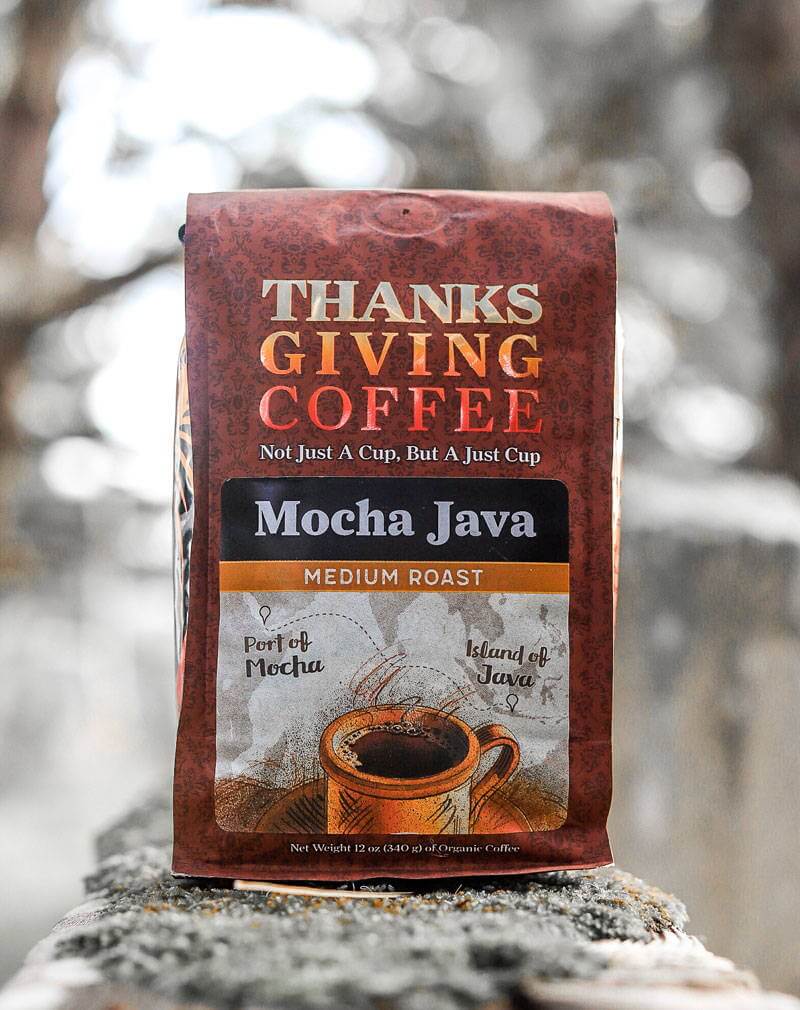
Our Mocha Java blend celebrates the rich history of this classic coffee combination. Back in the 1400s to 1600s, the majority of Europe’s coffee intake came out of the Red Sea, from the Port of Mocha [Makha or Mokha]. This coffee was grown in the country of Yemen, but was referred to by the name of the port from which it came. In the Pacific Islands, it was the same story. Most Indonesian coffee was coming out of a port on the island of Java, controlled by the Dutch East India Trading Company. This led to the term “java”, which has remained as slang for coffee to this day.

These two ports caffeinated most of the coffee-drinking world in those days, and trading ships passed through both on the same trip. Although 5,000 miles separated them, coffee from Java and Yemen lived together on the sailing vessels that made their way across the Indian Ocean and back to Europe. These two origins came together as the very first blend in the world of coffee, and it’s a combination that roasters continue to emulate.
We sent our Mocha Java Blend into Coffee Review for their “Desert-Island Coffees: What To Drink When You’re Stuck at Home” article, and we’re thrilled to announce that it received our highest score ever- 96 points!
Our Roastmaster Jacob Long says:
“We chose to highlight our Mocha Java blend because folks stuck at home can brew up a cup of this coffee, sit back and take a mental vacation to faraway places. We get the opportunity to educate consumers about the early history of Coffea arabica production and trade and answer some common questions like “Is chocolate added to this coffee?” and “Where the heck is Java?” We can talk about the effect of terroir on the cup, the various methods of post-harvest processing, and the fine art of blending coffees together to create a more complex cup.”
Ken Davids of Coffee Review, who particularly liked this coffee, says, “An echoing dry, savory, rather chewy depth comes on immediately (from a wet-hulled Sumatra, apparently), and after that, a pure, berryish sweetness (from two Ethiopias, a washed process and a natural) emerges and takes over through the finish. That paradoxical second surge of fruit and floral sweetness coming out of a nutty, savory matrix is what impresses me about this coffee. Stay-at-home coffees ought to be overlapping, layered, shifty like this one, so you keep coming back and finding something new.”
Pick up a package of Mocha Java today and experience this classic blend for yourself!
Mocha Java Blend
MEDIUM ROAST
Balances earthy richness and lively fruit sweetness; all the flavors we love in coffee. This blend combines wet-hulled Indonesian coffee, with wet and dry processed Ethiopian coffees.
Review Date: May 2020
Aroma: 9
Acidity: 9
Body: 9
Flavor: 10
Aftertaste: 9Mocha Java - A Classic Blend Taken to New Heights
read more -
![Flor de Jinotega – Two Decades in the Making]()

Flor de Jinotega —
Two Decades in the Making
 The story of how Flor de Jinotega got its name begins back in 1985, thirty-five years ago. Unknown to me back then, this coffee we now call Flor de Jinotega was an unknown coffee of dubious quality. It was unnamed as well as unknown. How could it be known when back then, coffees had few if any Appellations. As a roaster, you purchased coffees by country of origin and if lucky, your Broker/importer had discovered a region within that country that produced superior beans. But to ask for anything more specific was beyond the sophistication of the producers and their infrastructure which had no way to produce what we today call “micro-lots” or smaller quantities of very site-specific coffee farms. Although today we take micro-lots for granted, and from every producing country, there was a time when that was not even thought about, and why Flor de Nicaragua did not exist.

The One street in the City Central Market: Dirt street, mountains all around it.
Then, in 2000 I introduced the concept of Micro-Specialty lots to the Specialty Coffee Trade by creating a Cupping Laboratory Project which received a $400,000 USAID Grant to build nine cupping labs in Nicaragua, one of which was to be in Jinotega. Before 2000 it was unheard of for small scale coffee farmers anywhere in the world to have access to a coffee tasting laboratory where they could bring their coffee for flavor evaluation.
Family farms are not Plantations, but small scale “fincas”. Eighty-five percent of all coffee harvested is grown on small family farms of 10 acres or less.
In Rwanda, the average coffee farm is one acre and the average family size is nine! All beside the point but when you think about the last 300 years of the coffee Marketplace, supporting a system where only the buyers have the ability to assess value based on flavor quality, where does that leave the farmers? It leaves them at a terrible disadvantage would be the proper answer. How could they negotiate price if they had no knowledge of the quality of the fruits of their labor? The fix was in and it had been since coffee began to be traded 500 years ago in the Western Hemisphere.

The Local Coffee Market where farmers get quick cash for their beans.
Knowing that they lacked the knowledge and skill-sets to evaluate their coffee and that was compounded by the fact that the “Cupping Labs” where quality was evaluated, were in the hands of the government, large Plantation owners, and the exporters. I suggested in my speech that day to the 300 coffee farmers and Coffee Cooperative leaders that they should build labs so they could partner with the newly emerging worldwide coffee quality revolution.

Inside a coffee stall on Coffee Street: A family affair.
In the audience that day was the “Chief of Party” (on his business card) of USAID, The United States Agency for International Development. He came up to me as I left the stage and said,
“That cupping lab idea is a good one, here is my card. Write up a proposal for building them and let’s get them happening”.
I figured it was just another bullshit bureaucrat who was just doing his job, being in good form. But I wrote the proposal and got it to him AND a year laterThanksgiving Coffee Company had a $400,000 grant to build nine cupping labs in Nicaragua, all at small scale farmer cooperatives. I can say the rest is history, but the story gets better because the Project was to start the year I was to become President of the SCAA and have the loudest Bully Pulpit in the coffee industry.

The labs were revolutionary. They gave the farmers power. The power of knowledge. Curiosity took charge. Pent up desires to know, dampened by centuries of futility, oozed out slowly at first, but soon, exploded into the fast lane of the US and European coffee demand for quality flavor. By 2002, the SCAA was 20 years old and had defined quality, developed a language to describe the coffee flavor quality, and scoring system to quantify it.
>br>So now, for the first time in 500 years, the coffee farmers who had been cut out of the market by Power and greed were playing on a level playing field. It was quick. The Co-op leaders built beautiful labs with local wood and stone. I was operating under the idea that “If you build it they will come!”. Coffee buyers like to taste or “cup” coffees in a lab where they can apply the known standards and methodology of the twenty-first century. The rest of the story is all around us. Coffee of fine quality is almost everywhere because they built them and they did come.

Local Health Clinic. That’s me in the background with the yellow hat.
Coffee buyers and roasters big and small, came to professionally cup coffees, side by side to learn from each other and form new, or strengthen old relationships for mutual benefit. The labs had jobs, they became hubs, and records were kept and buyers had to be received and coffee had to be sold; somebody had to have the keys.
Roasters began to work directly with individual farmers or specific co-ops of the nine that were built, all in the quest for the Holy “Cup of Excellence” award now a part of the Direct Trade movement, known by coffee “insiders” as “The Third Wave”.
It was this third wave of coffee roasters that began to look for hidden diamonds among the many beautiful but lesser coffees. First, they looked for the flavor gems as adventurers would look for the moment. But soon the wave began to find each other and the idea of “Micro-lots” (small amounts of green coffee diamonds that were “discovered”). And here is where Flor de Jinotega comes in.

Coffee pickers bringing in their day’s work.
Flor de Jinotega (flower of Jinotega) is a coffee produced by a small scale coffee cooperative known by the acronym, SOPPEXCCA in the growing region located in the Northcentral region of Nicaragua. The farms are located in the mountains surrounding the city of Jinotega. SOPPEXCCA was one of the original nine cooperatives to build a cupping lab and begin the long hard journey to quality.
The cupping lab provided the tools to begin the process of evaluating each member’s coffee and thus were able to separate the coffees they produced by quality, eventually creating a coffee profile unique to the Jinotega Appellation.
We were there with them from the beginning, buying their coffees and providing feedback to them about the results of their efforts and paying them more as the quality improved over the years. This is the 20th year and these coffees we are presenting you today reflect two decades of our work together. They are the ultimate reflection of our collaboration and you might say, they are both a micro-lot and a perfect example of the value of Direct Trade.
Postscript.
In 2006 I returned for again to Jinotega to visit my friends at SOPPEXCCA and to cup coffees at their professional lab and cupping table. While there, I took these photos of life in a coffee town in the Mountains. Not much has changed in the 14 intervening years so here is a look at life in that part of the world.

Street food- yams, chicken on a stick, rice, gallo pinto. Absolutely delicious!


Jinotega Canines.

The Saddle Shop; the wild west still exists in Jinotega.

Street Dog
Flor de Jinotega – Two Decades in the Making
read more -
![Nicaragua 2020 trip report]()

Nicaragua in March – Everything starts to change: cupping coffees during a crisis
 As I reflect back on the past several weeks in my life, I feel extremely grateful to be back in my office overlooking the Noyo Harbor. Thanksgiving Coffee remains a viable, although much smaller, business on the North Coast. I’m hopeful that it will survive these challenging times and remain an activist company for years to come. My family and I are blessed with a dedicated staff that has followed very strict protocols the last few weeks at our home office. We are a lean crew right now, but everyone remains upbeat and focused on roasting, packaging, and delivering coffee.
I want to communicate my recent experience in Nicaragua as everything started to change rapidly with the advance of Covid-19 throughout the world. I left the United States and arrived in Costa Rica on February 24. I spent two and half weeks on vacation there! Then, I traveled to Nicaragua with the intention to spend two weeks in Nicaragua working remotely for the business before returning home. I arrived a few weeks before the coffee harvest finished and my plan was to visit the farmers and cooperatives that we purchase from with Nicholas Hoskyns, a key ally of Thanksgiving Coffee. He is the Managing Director of Etico, which supplies our green coffees from Nicaragua, Mexico, Guatemala Nicaragua, and Uganda.

I arrived by bus from Costa Rica on March 11th. My temperature was taken and a basic health screening done. This was the first real indication of change that I experienced as a result of COVID-19. I arrived safely in Leon and Nick picked me up outside the bus station office. The speed at which events unfolded over the next week was mind blowing. The two distinct events for me were the travel ban with Europe and the Costa Rica and Honduras border closings. I realize for most people these closings were not significant, but they made it abundantly clear that this crisis was real and the world was shutting down. As the week progressed more and more flights were canceled and my window for leaving Nicaragua was getting smaller. I purchased a ticket back to San Francisco on March 22nd for Sunday March 29th.
Our plan was to visit several of the farms and cooperatives Thanksgiving Coffee purchases from, but this was becoming increasingly unlikely. Sara Corales, the daughter of Byron, has taken over the sales and marketing of his coffee. She arranged to come meet us at Nick’s house on Sunday March 22nd to cup the Corrales’ family coffees, as they needed to make export arrangements. This was just 8 days after the travel ban from Europe went into effect.

Sara brought all the supplies for the tasting: roasted samples, a kettle, and proper cups. This was our first cupping in the COVID-19 era. We exhibited caution by having our own dedicated cups for each sample. There were no known cases in Leon and four total in all of Nicaragua at that moment in time, so no one in our group was highly concerned. However, we did our best to keep space during the cupping so as to minimize risk. Sara brought the usual array of coffees we purchase, which showcased Byron’s ability to process coffees in a number of different ways: Arabica washed, Arabica natural, Maracaturra washed, Maracaturra natural and an Anerobic coffee (yeast fermentation). The four coffees we typically purchase tasted great – bright, lively, floral, fruity and clean! We anticipate these coffees arriving in June or July depending on when they ship.

Although it was different than our normal procedure for tasting coffees, I found the experience uplifting and enjoyable. Coming together during a time of crisis in community is a blessing. I have known the Corales’ for over 20 years and they are an important part of the Thanksgiving Coffee family! We enjoyed a delicious lunch and conversation outside before Sara parted ways for Managua.
Nick and I were still contemplating a trip to Matagalpa to visit some of the farmers and co-ops on Wednesday and Thursday, but the hotel we usually stay at was closed. This was a sign. Nick made the executive decision for us to stay put and we went to the beach Wednesday afternoon instead! It was a good call for peace of mind, but disappointing to not be visiting the coffee region for the first time in nine trips to Nicaragua since 1999. I am confident that I will have an opportunity to visit the farmers and co-ops again and I feel grateful for a successful journey and to be back in a familiar and safe environment: HOME!
I hope everyone remains safe, healthy and mostly happy during this time of transition. We look forward to being your coffee of choice now and into the future. Thank you so much for your continued support! It means the world to me.
Nicaragua 2020 trip report
read more -
![Grinding Coffee at Home]()

Grinding Coffee at Home
Grinding coffee at home is an excellent way to improve your coffee experience. The fresher your coffee is when you brew it, the better it is going to taste. To help you get the most flavor out of your coffee beans, this post will cover a variety of methods to show how anyone can grind their own coffee at home. But first, let’s cover the…
Grind basics
Regardless of what you are using to pulverize your perfectly roasted beans into grounds, there are a few basic principles to keep in mind:
Grind Size
Using the correct particle size in ground coffee is one of the most important steps in coffee brewing. In general, a finer grind will produce a more intense brew and a coarser grind will produce a less intense brew. At the same time, a grind that is too fine will produce an over-extracted, astringent brew, and a grind that is too coarse will produce a weak, under-extracted brew lacking flavor.
Not sure what grind size to use? Here’s a handy guide:
COARSE (looks like Kosher or sea salt)
Cold Brew Coffee, French Press, Percolator, Coffee CuppingMEDIUM (looks like sand particles)
Pour-over Brewers, Auto-Drip Coffee Machines, Aeropress (with 3+ minute brew time)FINE (looks a bit finer than granulated sugar)
Espresso, Moka Pot (Stovetop Espresso Maker), Aeropress (with 1 minute brew time)Consistency
The size of the grounds should be consistent or uniform, meaning you don’t want to see large bits and super tiny bits in your grind. The reason: it is easier for smaller particles to become water soluble than larger ones. If there is a wide variety in the size of the particles in your coffee grinds, there will be a wide variety in the extraction time of your brew. The more consistent your grind size, the easier it is to extract the full flavor from your brewed coffee.
Now that we’ve got the basics covered, the next step is how to get the best grind at home!
HOW TO GRIND YOUR COFFEE
The Burr Grinder
Burr grinders are made of two burred plates with ridges that draw in and crush / grind the beans to a uniform size. This is what the pros use, and with good reason. Burr grinders deliver the most consistent grind with the least amount of work on your part. Just fill up the hopper, turn the dial to your desired grind setting, and turn it on. A burr grinder will cost between $60 — $250 depending on what features it comes with.
The Blade Grinder
While not ideal, a blade grinder will do a fine job if you put in a little effort. The first thing to remember is to pulse grind. Don’t grind all the coffee beans needed for your brew at once, instead, grind smaller quantities and pause regularly to shake the grinder. This will loosen all the bits and help you get a more uniform grind.
Take your blade grind to the next level: Got a sieve?
Sift the grounds through your sieve until you are left with just the large pieces. Then grind those large bits again until you are left with just medium and small grinds.
Pro-tip: Use a paper towel to get rid of the ‘fines’
‘Fines’ is coffee lingo for the tiniest powdery particles in ground coffee. Too many fines will leave your coffee tasting bitter and over-extracted. A nifty trick to get rid of them is to dump all of your grinds onto a paper towel and then rub them down into the paper towel with your fingers. A few passes is all it will take. Then gently transfer the grinds onto a plate (or right into your brewer). This will trap the powdery fines on the paper towel, leaving you with the best (most uniform and consistent) grind possible from a blade grinder.
Grinding Coffee at Home
read more -
![COVID-19 Precautions at Thanksgiving Coffee]()
COVID-19 Precautions at Thanksgiving Coffee
What we are doing to keep our employees and customers safe
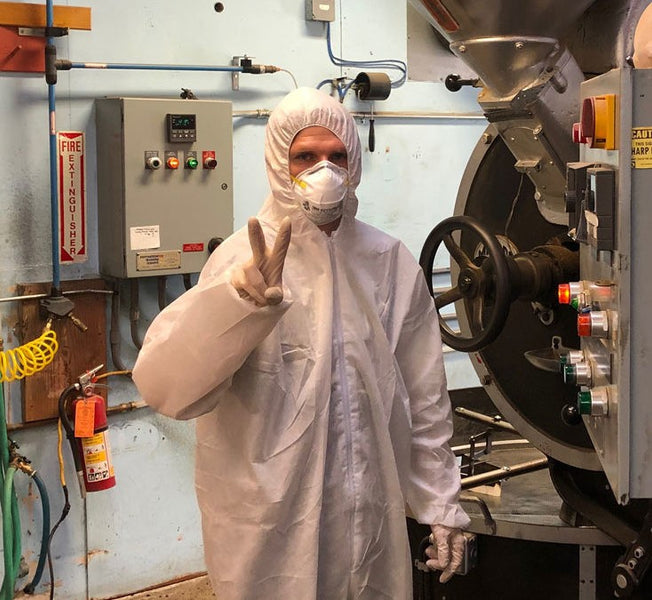
We take health and well being very seriously, and have been ahead of the curve when it comes to responding to the COVID-19 crisis. Thanksgiving Coffee implemented these new strict company-wide guidelines as Proactive Measures against the spread of the Coronavirus on March 17th.

- No visitors. All tours of our roastery, coffee cuppings, and espresso training sessions have been canceled.
- Deliveries to the office are received outside and then decontaminated.
- Office staff has transitioned to working from home.
- We re-configured our coffee package production line to give more space to our production staff.
We are disinfecting all the things:
- Shipments of green coffee are decontaminated before stocking.
- All production counters and surfaces are disinfected at the beginning and end of each day.
- All hands are washed, then washed again.
This is a constantly evolving situation. Please check back on this post for updates.
We are doing everything we can here at Thanksgiving Coffee to make sure that we stay healthy and operational so that A Just Cup is always full.
COVID-19 Precautions at Thanksgiving Coffee
read more -
![Introducing the Bee Bold Alliance]()

Bee Bold Alliance
A Regenerative Network for Pollinator Protection
Right now, bees are dying worldwide at an alarming rate. Why should you care? Because bees and other pollinators are an essential link in the food chain—our food chain.
The Bee Bold Alliance is a movement to help people attract and sustain pollinators in their home gardens, and at their place of work through habitat restoration and creation.
The Bee Bold Alliance blog will share stories that follow both the root causes for the disappearance of the bees and why it is so important to listen to the pollinators. Join us as we explore the diversity and abundance of our Pollinators of the world.
The Four Areas of Focus:
Culture: How Beauty, Art, and Intention Influence our Ecology
Provisions: The Power of Food & Herbal Medicine for Global Health
Regulation: Regenerative Systems for Ecological Solutions
Support: Soil and Water Health, and Traditional Place-based Knowledge of Native People
In these stories we tell how to collaborate with our Bee Bold Partners for the greater good of all. We will look into how we learn from our mistakes and utilize all of the tools available to us to solve the problem of our disappearing pollinators and the huge impact this has on our ecology.
As a Certified B Corp Thanksgiving Coffee Company is prepared to lead the way for Pollinator Protection in our community and beyond.

The Main Objective
The Bee Bold Alliance is about helping people learn how to attract and sustain pollinators in their home gardens & at their place of work through habitat restoration and creation.
However we will not stop there, we are going to look deeper into the root cause of the disappearance of pollinators and discover modern solutions, that perhaps have previously been overlooked.
To find examples of a sustainable relationship with the earth, we will look to a regenerative ecology network that includes Traditional Ecology Knowledge (TEK). Incorporating the Indigenous place based wisdom gathered from around the world by those who develop and maintain a deep and ancestral connection to the land.
Each One Of Us Carries A Piece Within, It Is Up To Us To Find It, And Use It For The Greater Good.
You too, are part of this solution, and I thank you for being here. Your support on this collaborative project is essential. Your participation will allow us to move forward for a bountiful future for all. If you are coffee drinker, make your coffee our Bee Bold Coffee and support pollinator protection in your local region every morning.
The Beginning
The Bee Bold Alliance came into focus in 2018, just after receiving a loud and clear message that it was “my time” be a steward of this land. Shortly after I received this message, Thanksgiving Coffee Company invited me to relaunch the Bee Bold project.
In revitalizing this campaign, what was once Bee Bold Mendocimo became the Bee Bold Alliance for Pollinator Protectors. The more I learned about my role in leading this campaign, the less I truly know. For example, now I understand it is not about being a “steward”, one who watches over the land, but more importantly one who actively gives to the land before one takes. To be full of gratitude for all we are given. To move through each day with honor and respect for the Earth that gives us every little thing that we need.
The Bee Bold Alliance is a reminder that you can give to the land you live on, to the land you do your business is on, and to the community you are part of. The vision is to build native food forest with Native People, with the seed savers, and to support the health of our new generations. The Bee Bold Alliance is about honoring the original care givers of these lands, and protecting the pollinators who allow us to grow the seeds of real food to nourish our bodies and our hearts.
As we develop this full spectrum ecology system for pollinator protection, we must include the practices of cultural ecology.
- Learn from the wisdom of our elders who remember and hold these stories of how we can adapt to our changing world.
- Revitalise the rich lineage of community song & dance as an important piece of the creation processes in our food system
- Remember and recreate connection to the spirit of life through our culture,
- How is sound health for our ecology manifested?
The Earth is full of abundance, the gifts of life are all around us, and all that we need to survive comes from this great planet Earth. How do we learn to live in harmony with the Earth and all its inhabitants? This is what I want to know, and I will take you through this journey of learning, as we travel many roads and look at many different tools that can be utilized in this work of rebalance, harmony, well being and sound health.
Here we are at the beginning of an emerging network for mutual support of our pollinator protectors: it will grow as we build it. Our World is as resilient as we make it. Let us find this new form of global coherence with the aid of one another. I hope you will join us on this journey. Become a pollinator protector with the growing Bee Bold Alliance here.
Follow the Evolution of the Bee Bold Alliance
2015: The 1st Bee Bold Advisory Committee
2016: Our 1st Bee Bold Event
2016: Fort Bragg becomes 1st Bee City USA in CA
2020: Introducing the Bee Bold Alliance
2020: The Way of the Bee Bold Alliance
2021: 4th World Bee Day
2021: Live Feed- World Bee Day
2022: Expanding Our Story of a Growning Alliance
2023: Native Cinema 2023- Groundworks
Lavender Grace is the Sustainable Consultant for Thanksgiving Coffee Company
I want to thank the many wonderful advisors who have informed this work
Introducing the Bee Bold Alliance
read more -
![Ancient History of Pollination]()
Ancient History of Pollination
“Go to your fields and your gardens, and you shall learn that it is the pleasure of the bee to gather honey of the flower, But it is also the pleasure of the flower to yield its honey to the bee. For to the bee a flower is a fountain of life, And to the flower a bee is a messenger of love, And to both, bee and flower, the giving and the receiving of pleasure is a need and an ecstasy.” Kahlil Gibran

There has been a lot of talk about pollinators in recent years, and how the declining populations of honeybees will affect food production. But have you ever wondered how it all started? When I began to write this, I had a rather broad understanding of pollination. However, the more I learned, the more questions I had. How did pollination come into being? Why is it so important to us now? Let’s take a deep dive into ancient history to learn a little more about the origins of pollination.

Pollination is believed to have begun around 130-150 million years ago. Basically, pollination is plant sex: the way plants spread and combine their genetic material to create new generations of plants. It is also essential to the production of fruit and seed crops that form the basis of our current food system. In the earliest forms of pollination, plants would scatter their pollen (male seed) to the wind and hope that a portion would land in the right spot on a female flower (stamen) and voila, there would be “chemistry”! However, this is an extremely unreliable way to reproduce. Although many plants still use this method, most have evolved into a primary relationship to collaborate with insects.

As early insects were flying around in search of food, they discovered how nutritious pollen was. Then several specialists decided to make pollen their main source and feed solely upon this nourishing golden dust of microspores. As the plants grew and thrived as a result of these relationships, they began to “sweeten the deal” by creating nectar for the services rendered. Flowers began to evolve bright colors to stand out and attract insects, distinguishing themselves from the green leaves and foliage that offered no sweet reward for the hard-working pollinators.
Millions of years have passed since the first flowers developed their pollination practice into the stunning displays we see today. This mutualistic relationship has changed the entire appearance of the earth, into the bright and colorful flowers and the vast variety of fruits and vegetables we all enjoy.

Learning the evolution of pollination from its ancient origins to the intricate and collaborative relationship that now occurs has been an inspiration to me. I hope the next time you receive a bouquet of flowers or taste the sweet juices of your favorite fruit, you think of the 130 million year journey it took to reach you.
Follow the Bee Bold Alliance Evolution
A regenerative campaign from Thanksgiving Coffee to protect pollinators
Ancient History of Pollination
read more -
![The Magical and Miraculous Creation of Honey]()

How is it Done? The Magic of Honey

There is special magic found in the miraculous process of honey.
The dedication and unique skills called upon in these extraordinary pollinators is a true wonder. This golden “ambrosia” of vitality and health is the result of a tireless collaboration of specialists capable of exceptional chemistry.
What is the Mysterious process of Honey Making?
How do these honeybees produce this amazing life-sustaining liquid gold?

First, we must enter into the very heart of the flowers. As we learned in the Ancient History of Pollination, this is where the nectaries are created. The flowers offer up their sugary liquid to the bees with added mutual benefit for both.
Mutualism is believed to be one of the most common ecological interactions in communities throughout the world. The forager bee drinks and fills their special honey stomach full of nectar and then makes a beeline home.

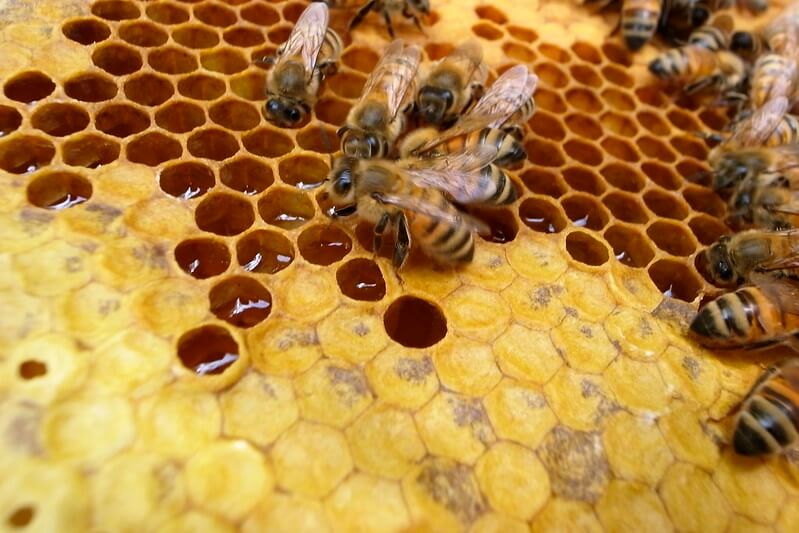
Upon arrival to the hive, the nectar is transferred from one bee’s stomach to another in a process of regurgitation. With each transfer, a special bee enzyme (invertase) is added from each bee via the honey stomach. This is done repeatedly until the optimal viscosity is reached. Then the golden liquid is poured into a hexagon cell to be fanned on my rapidly beating wings. With 80% of the water content evaporated out, the hexagon is sealed with wax and set to cure into honey. This is now a supersaturated solution that contains over 180 components.

This “super” solution provides food and energy for the foraging flights of the bees. To produce one pound of honey, it take over 2 million flower visits, or roughly 55,000 miles flown. Nectar is gathered from a diverse array of sources to help maintain healthy immune systems. The magic of honey is in the diversity of its unique creation. Within the extremely vast healing properties of honey, to the essential role pollinators play in the sphere of our food systems, let honey be a sweet liquid reminder of the full beauty of life itself.


Lavender Grace is the Sustainable Ecology Advocate for Thanksgiving Coffee Company and Consultant for the Honey Hive of Mendocino
The Magical and Miraculous Creation of Honey
read more -
![Delicious Peace Coffee : A New Story]()

Delicious Peace Coffee
Delicious Peace Coffee is produced in Uganda by 250 coffee farmers of Jewish, Christian and Muslim faiths who work together in their newly reformed cooperative after the last one they belonged to was corrupted by their founder who took all the coops property and a portion of their financial resources. In 2016, after a decade of belonging to the original cooperative, Mirembe Kawomera, they parted ways from the original and perhaps the only Interfaith Cooperative in the world that was fully composed of Jews, Christians and Muslims. We at Thanksgiving Coffee spent from 2006 to 2016 happily buying their coffee and telling their Interfaith story. The story of how it all ended can be found in this 10 part series “A Trip to Africa”. What follows is their new story.
Interfaith work was not this cooperatives mission. But it became a necessary aspect of their economic survival as coffee farmers. Individually their farms were too small to produce export quantities where the value of their labor would be appreciated and the price level per pound would be related to the unique flavor of their coffee beans. Putting differences aside, they formed a new cooperative to continue their work together. They renamed the cooperative The Namanyonyi Community of Shalom Coffee Cooperative (NCSCC).
Their story of Interfaith cooperation is worth telling here in the United States. We need to fight the fear of diversity with love, kindness, and inspirational models like this one. If poor Coffee farmers in Uganda can bring together 250 farm families for economic benefit for all, that is an accomplishment worth telling. If they can do it, we can too!

On my periodic visits to Uganda. I notice an unexpected consequence of our support and of their integration. There is a kind of Peace in their community, a shift from the tentativeness and mistrust between people practicing different religions in the same small community. Having to work together brought a familiarity that was comforting to most and as a consequence, enjoyment in finding new friends, a diminishing of the fear of being different and the growing and newfound empathy for their Abrahamic Brothers and Sisters as similarity replaced difference and myths became exposed as ignorance. Interfaith work creates Peace and with Peace in a community, Social, Economic and Environmental Justice can prevail.
 As noted, this group of farmers has a history. First founded in 2004 The Mirembe Kawomera Cooperative was honored by Tufts University with their most prestigious honor, the Jean Mayer Award for Interfaith work in 2008 (I have a video of Thanksgiving Coffee on stage as the Co-op receive the award, but it is still on tape). We had been their only buyer but we were selling their coffee to Mosques, Churches, Synagogues and Interfaith Councils with great success. By 2018 we were selling 30,000 pounds yearly and paying 4 times the local price they would have received from the local buyers in Uganda.
They had become a Fair Trade Certified Cooperative and had converted to 100% organic cultivation. The flavor was steadily improving and we felt that their 82 had the potential to become an 88. We were moving forward and the coffee was now beginning to be a part of the story as its flavor began to shine. But when the Cooperative members reorganized without their corrupt founder, they lost their hard-earned Certifications of Fair Trade and Organic. They are now in the process of becoming re-certified. Their cultivation practices remain the same.

In 2017 Thanksgiving Coffee contracted with The Communities of Shalom International Resource Center at Drew University for a year of intensive training for their new Board of Directors. It cost our company $6,000 but their story still needed to be told and with the internet now in full force, we knew we had the tools to bring the story to a much wider audience than before.
In October 2019 the Namanyonyi coffee farmers harvested their first crop as the new cooperative with its now trained Board of Directors in full charge. I had not yet tasted their 2019 crop for quality but I had a strong suspicion that it would be as good or slightly better than the 82 that was the score we gave our 2016 purchase. I didn’t think it was much of a risk because it was for them a second chance at creating a lasting relationship with a roaster who would tell their story and add value to their crop via the Interfaith model they had successfully accomplished together.

Photo: Co-op president proudly showing his Delicious Peace Coffee Package to the Chef at the Intercontinental Hotel in Kampala.
They were by now quite proud of who they were and how peaceful their small village was. When the coffee arrived at our Roastery in California we gathered in our tasting room and opened the first sack to view their raw, unroasted green beans. They were fresh smelling and blue-green in color. Their aromatics foretold a taste we were all anxious to experience. Jacob roasted a small sample which the next day, after the beans had rested a bit, we gathered around the cupping table to taste what was the first cup of the 360,000 cups that the 15,000 pounds would produce when it was brewed in peoples homes.
The flavors were every bit a reflection of the beautiful green-blue raw beans we inspected and roasted the day before. Lots of sweetness, fruity notes of mission figs, balanced with a nice soft lemony acidity, and a long wet finish. Lovely! We gave it an 86. It was their best score after almost fifteen years of working as a harmonious group of coffee farmers.
The Challenge
The 250 families that produce this coffee have a drinking water problem. Water systems are rare and most water for drinking and cooking is collected from “bore holes” loaded with dangerous bacteria. So boiling is the most common way to kill the bacteria. Even with this purifying procedure water-born diseases like Typhoid, Cholera, and diarrhea kills 50% of all children under 5 years old. Such death rates cause a great deal of emotional pain for the families and their community. We needed to do something about this otherwise the joy of cooperative success would be muted by poor health and death hanging over every one of the 250 families in the Cooperative.
Coincidentally or so it seemed, I received a communication from a woman who had been a Peace Corps Volunteer recently in Uganda. Kathy is a Civil Engineer. She told me of her work providing Clay Water Filters for homes in Uganda. She created a business in Kampala which manufactured water filters made out of local red clay and sawdust. After firing, the filters could remove, by simple gravity, 99.9% of all harmful bacteria making the water safe to drink. Their cost is $24.00 for a 20-liter system.
Calculating a $1.00 rebate to the coop for every pound Thanksgiving sells, we could raise enough money for 600 family water filters. Although there are only 250 families in the cooperative now, the prospect of receiving the filter free from the coop would help them strengthen their ties to the community they all live in and perhaps become well respected for their kindness and concern.
This water filter has multifaceted benefits;
- No wood needs be gathered from the forest to boil water , saving time and kitchen smoke pollution.
- Forests are not reduced to dry meadows
- Woman and girls spend less time hunting for, gathering, carrying, and transporting wood back to their homes
- Health improves, and the pain and fear of illness and loss of life diminishes
- Climate change is mitigated by preserving carbon sequestering trees.
- Money is not wasted on unnecessary purchases of charcoal, wood , medicines, and burials.
This is a work that is worthy. Everyone wins with this wonderful coffee. So here is your call to action. Take a risk on buying the first two packages. One roasted to a Medium Roast and a second to a darker Vienna Roast. A combo you can drink individually or blend together as you use them. Regardless of how you drink them, I guarantee you will find their flavor just wonderfully satisfying.
Delicious Peace Coffee : A New Story
read more -
![Coffee 101 : How to Store Your Coffee]()

How to store your coffee to keep it fresh and as tasty as the day it was received:
Staling is caused, in order of most harmful to least harmful
- Exposure to air (Oxidization)
- Exposure to heat
- Exposure to moisture
- Exposure to light

AIR
Roasted Coffee beans are composed of approximately 800 organic chemical compounds. Many of these organic compounds create the flavor you love.
There are sugars, alcohols, acids, Ketones, Aldehydes, minerals and all sorts of volatile flavonoids and antioxidants. When these organic compounds are exposed to air, many of them will combine with the Oxygen, forming new organic compounds that don’t taste good. The coffee becomes flat, losing its brightness and personality. This doesn’t happen immediately– it begins when you open a vacuum packed bag and the process continues on for about a month. The great flavor of high-quality coffee lasts longer at first but their fall over the cliff is more dramatic then lesser coffees. This is because the taste of lesser coffees when fresh often resembles stale coffee.
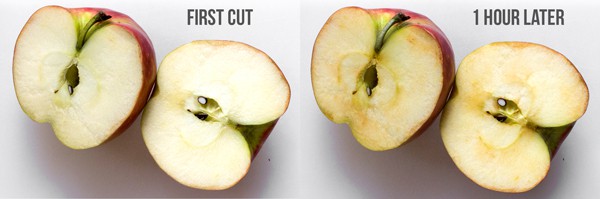
The Oxidization process is clearly observed as a freshly cut apple browns over time
Recommendations:
- Don’t open the vacuum bag until you are ready to use its contents.
- Close the bag and within the first three days, transfer the coffee into an airtight container. No need to purchase an expensive kitchen accessory. Just use a quart mason jar and seal it with a lid.

HEAT
All chemical reactions are speeded up by heat, so we want to keep the coffee at a low temperature. That will go a long way in saving the flavor.
Oxidation can be slowed down or speeded up. Temperature is the factor and since Staling is caused, essentially, by oxygen combining with other compounds, we want to keep the beans cool but not frozen.
Recommendations
- Store your sealed container in a cool dark pantry or in the refrigerator. If you have ordered a five-pound bag, you will need five quart-sized jars and lids.
- Cool is better than room temperature. Since warm air rises, store your sealed containers on your lowest shelves.

MOISTURE
Your coffee beans are pretty devoid of moisture. When we put green raw beans into the roaster they are about 11% moisture. When they exit the roaster after being at high heat (400-465 degrees) they are really dry. But like a dry sponge, they will attract moisture from the air. This is Osmosis. Moisture softens the beans and further enables organic compounds to combine and change, reducing flavor and speeding up the oxidization process.
Recommendation:
- Do not store the beans in the original vacuum packed bag for more than a few days unless you have a heat sealer. Moisture creeps into the bag easily, and even more when it is in the freezer or refrigerator.
- A sealed container is the answer to moisture.

LIGHT
It takes an awful lot of light to make coffee stale; if you address the air, heat, and moisture issues, then the light will become a small factor. On it’s own, in my experience, light alone will take a long long time to damage coffee beans. However, if coffee beans are exposed to prolonged sunlight, then heat becomes the primary culprit.
Recommendation:
If you address the problems of Air, Heat, and Moisture correctly, then Light will have little effect on your coffee.
Coffee 101 : How to Store Your Coffee
read more -
![Springtime for SongBirds]()
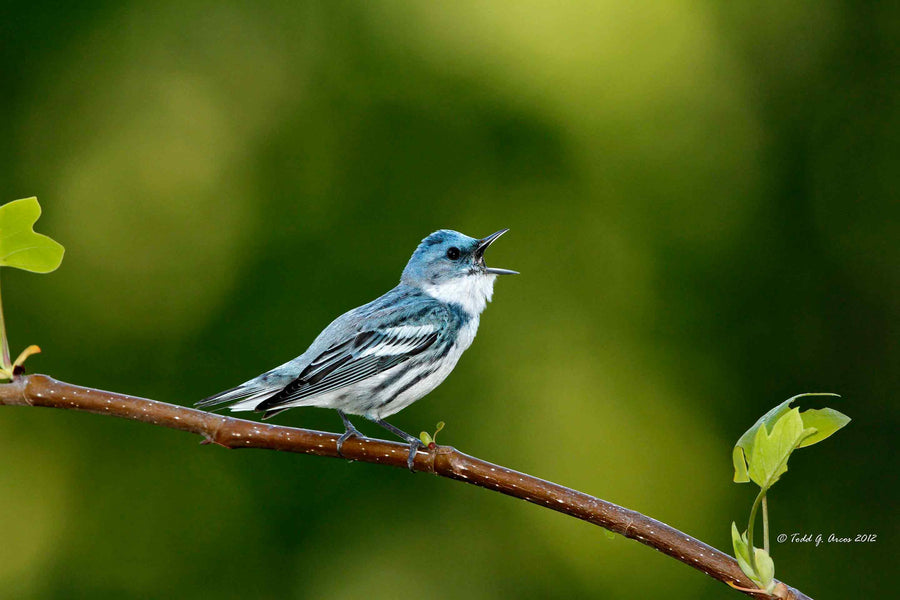
The best coffee is grown the traditional way— slowly, under a canopy of shade from taller native hardwood trees. Shade-grown coffees are carefully tended, harvested, and processed by people who know and love coffee, and who depend on it for their livelihoods.
Traditional shade-grown coffee really is a win for everyone: amazing coffee flavors, a fair wage for the coffee farmers’ hard work, and a lush natural habitat for migratory birds. So much good comes from a just cup of coffee.
The History of Shade Grown
By 1996, the United States forests had run out of hardwoods such as oak, ash, maple, cherry, and all the wild fruit and nut trees. These are important woods used in furniture making, home building, veneers for plywood, doors, window frames and a host of other minor but important uses.
The timber industry needed another source of hardwood, so they targeted the temperate rainforests where coffee was grown. The coffee tree is a shade loving plant that withers in the sun and needs shade to be a healthy producer of the coffee fruit. Mahogany and a dozen other hardwood varieties were there for the loggers if only they could convince coffee farmers to cut down their trees.
The destruction of these native hardwood forests is a long story of deception. Governments, in collaboration with multinational corporations, set out to convince farmers to grow their coffee in the sun, claiming that yields would increase and incomes would rise.
Without the leaf litter from the big hardwood trees to fertilize the soil every year coffee trees at Nicaragua Coffee Farms would need oil-based fertilizers. This is how the petrochemical companies became involved. Now with more sunlight reaching the ground, weed killers would become essential. This is how herbicide producer Monsanto became involved. Without the forest habitat for migratory songbirds, natural pest controls were lost. This is how the need for chemical pesticides became essential.
The big chemical companies found new markets and the timber companies gained new inventories of almost unlimited, inexpensive hardwoods. The coffee farmers paid for all this with higher costs, lower quality coffee, toxins entering the water supply, and a 90% loss of biodiversity on their farms.
At least half of all coffee grown in the northern neotropics has already been converted to full-sun plantations.
Preserving these precious jungle forests not only protects biodiversity, but it’s also our greatest asset in mitigating the effects of climate change.
The Smithsonian’s Bird Friendly® certification is the most rigorous environmental certification possible for coffee, and the only one that justifies the use of the much-abused term “shade-grown.”
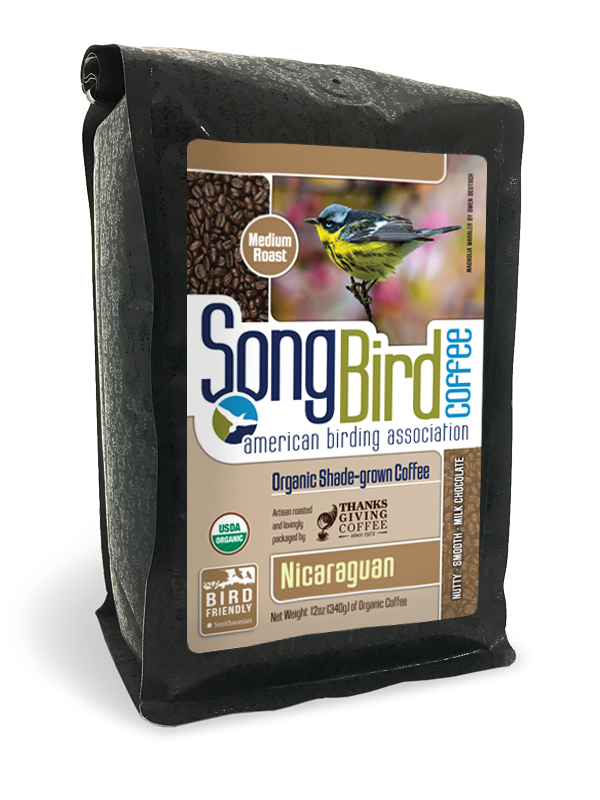
Based on years of scientific research, the SMBC has developed strict criteria for evaluating shade coffee farms. An independent, third-party inspector determines whether a farm meets these criteria or not. Only those farms that also meet organic certification standards are eligible to be certified Bird Friendly®.Try One of Our Songbird Coffees
Protect biodiversity, with your morning Cup
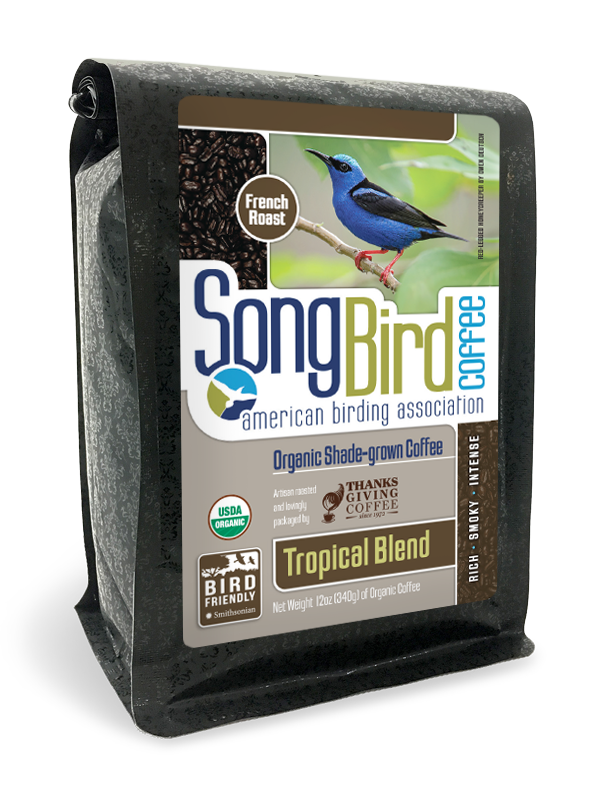
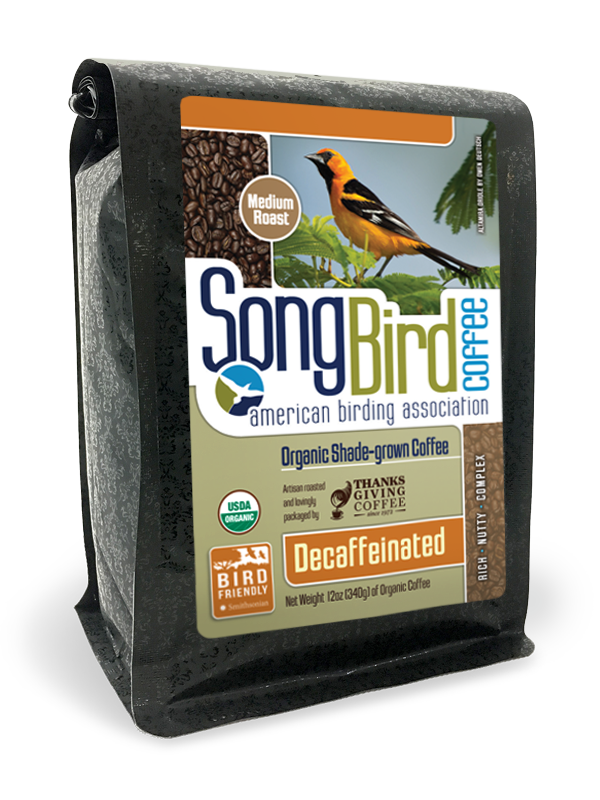
Like us on Facebook and follow along on Instagram and Twitter for frequent updates, promotions, giveaways and more!
Springtime for SongBirds
read more -
![Whale Run 2019]()
Whale Run 2019
Coffee and Movement
Athletes have long appreciated the many helpful properties of coffee. As a pre-race ritual, a hot cup of coffee gets the blood flowing and puts a spring in your step. After a hard workout, the capillary dilation effects of caffeine help aid in recovery, increasing blood flow to tired muscles. Here at Thanksgiving Coffee, we believe in the magic of coffee and we know that it can be so much more than just a morning beverage— it can be a true medium for change.

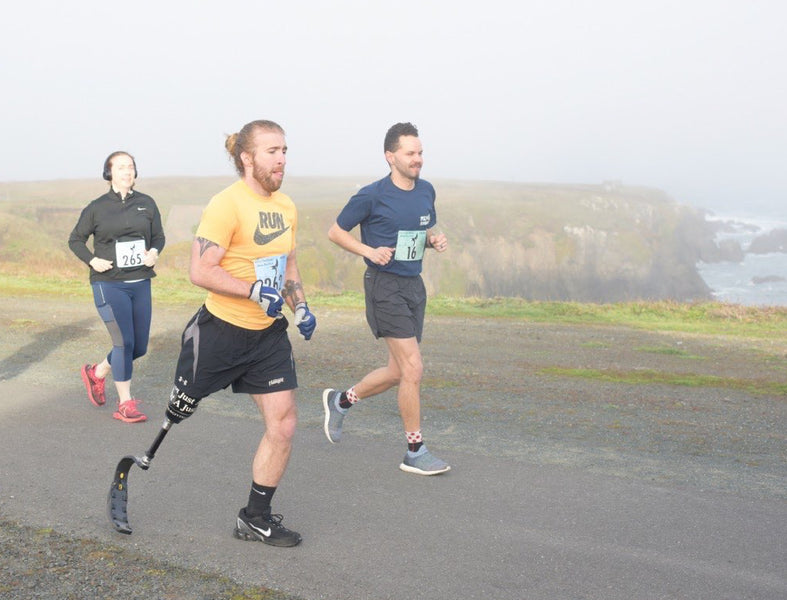
Zachary Friedley was born missing his right leg above the knee, but that has never stopped him from being a natural-born athlete. Participating in wrestling, football, and baseball, Zachary is now pursuing his dream of competing in the 2020 Paralympic games in Tokyo as part of the track and field team. His goal is to spread awareness for his new non-profit organization, The Mendocino Movement Project, whose mission is to provide prosthetics to landmine survivors and those suffering from limb loss in developing countries.

Thanksgiving Coffee was proud to provide coffee for the athletes at this year’s Fort Bragg Whale Run and sponsor Zach for his very first 5k race. A fundraising event for the local Soroptimist group, the Whale Run celebrated it’s 35th year on the town’s brand new coastal trail.
 With support from Thanksgiving Coffee’s Brand Manager and accomplished marathoner, Marchelo Bresciani, Zach ran his farthest distance to date. As a world class sprinter, Zach never imagined how much he would enjoy the 5k distance and seeing just how far he could go. Now, he is pursuing more events and 5k races around the country to share his story and promote movement throughout the community.
>A recipient of this year’s Challenge Athlete Foundation Grant, Zach is gearing up to receive a new leg later this month. He can’t wait to hit the ground running and start posting new personal records.
Thanksgiving coffee is proud to support Zach and his efforts to bring the Mendocino Movement Project to life. Follow him on his adventures this summer and keep an eye out for a special package of Mendocino Movement Project Coffee in the months ahead.
Whale Run 2019
read more -
![This is Shade-Grown Coffee]()
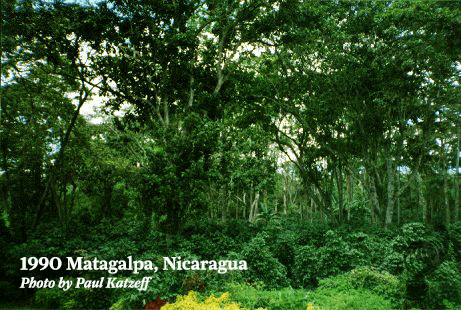
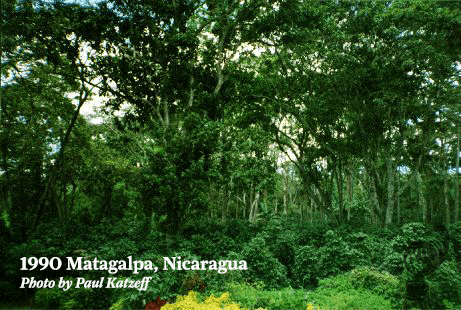
 Shade Coffee looks like this: grown under the canopy of indigenous trees. The white barked taller trees are commonly known in Central America as “Inga”. They are great for coffee because they not only provide shade for the trees but also habitat for biodiversity and leaf litter for soil nutrients. Leaves decaying on the forest floor is natural fertilizer. An additional benefit comes from the tree being “leguminous”, meaning its roots deliver nitrogen to the soil, further reducing the need for oil based fertilizers.
This environment is perfect for the cultivation of organic coffee. This site is located in Northern Nicaragua and is typical of the Mesoamerican Rainforest that stretches from Panama thru Costa Rica, Nicaragua, Honduras, all the way up to the Yucatan Peninsula. These forests are the home of Black Panthers and the National bird of Guatemala, the famous Quetzal. The trees are full of birds and Howler Monkeys and hundreds of species of orchards. At the higher elevations, coffee trees reflect the quality of this forest in the flavor of their fruit, and finally, in your cup.

When you taste coffee from regions like this, you are experiencing a message from the forest spirits. The expression, “There is magic in this package, only you can let it out” is derived from a walk through this place that I took with my good friend Byron Coralles long ago.
This is Shade-Grown Coffee
read more -
![Mocha Java - 92 Points!]()
Mocha Java - 92 Points!
Coffee Review – February 2019
 Blind Assessment: Deep, chocolaty, cleanly fruit-toned. Dark chocolate, cedar, black cherry, magnolia, molasses in aroma and cup. Sweetly tart structure with gentle, rounded acidity. Consolidates to resonant chocolate and cherry in the finish.
Mocha Java Blend Fair Trade Organic bag of Thanksgiving Coffee 'Mocha Java' medium roast
Origin: Ethiopia; Sumatra
Roast: Medium-Light
Agtron: 48/78
Aroma: 9
Acidity/Structure: 8
Body: 8
Flavor: 9
Aftertaste: 8
Notes: The components of this blend are certified organically grown and Fair Trade certified, meaning they were purchased from small-holding farmers at a “fair” or economically sustainable price. This version of the ancient Mocha-Java blend combines a traditionally processed, wet-hulled Sumatra in place of the original Java and replaces the Yemen Mocha with a similar “natural” or dried-in-the-fruit coffee from Ethiopia. One of the country’s pioneering socially and environmentally progressive roasters, Thanksgiving aimed to combine coffee quality with social and environmental responsibility many years before the latter preoccupations became fashionable.
The Bottom Line: A balanced, richly sweet-tart Ethiopia-Sumatra blend that’s also fair trade and organic-certified.
Read more at CoffeeReview.com
Want to know how the review process works? Learn more here.
Mocha Java - 92 Points!
read more -
![The Roastmaster's Select 50th Edition]()
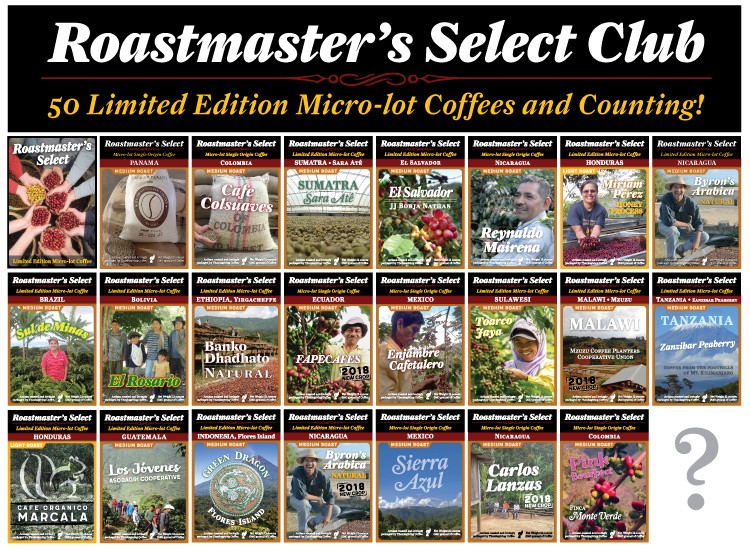
The Roastmaster's Select 50th Edition
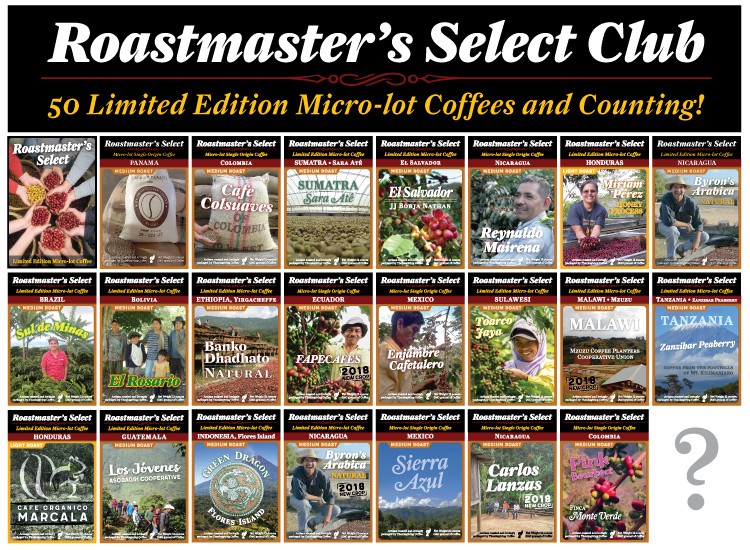
 In late 2014, Roastmaster Jacob Long was touring the Thanksgiving Coffeewarehouse with a new employee, Brand Manager Marchelo Bresciani. Educating him on various green coffees stacked high on pallets, Jacob told Marchelo where the coffees had come from, the farmers and what time of year the coffees are freshest. Finally, he pointed out one particular sack of coffee.
Farmers in Nicaragua, he explained, were sending farm specific micro lots, as opposed to blended sacks of co-op beans. The quality of the coffee from this farm was so striking, that it shouldn’t blended. It would be a shame to lose it’s unique flavor. This coffee, though there was only one sack, was good enough to stand on its own. This coffee had something to say, and it was a micro-lot worth sharing with our customers.That was how the Roastmaster’s Select Coffee came to be.
 Roastmaster’s Select Coffees are a carefully developed monthly selection, roasted in small batches using only the freshest beans at peak flavor. Each month, members are encouraged to record their thoughts and impressions about each selection and country of origin with the informative cupping cards included in every box.
Over time, the Roastmaster’s Club evolved to exclusively showcase single origin micro-lot coffees. Some come from unique and surprising locations,
like Nepal, Laos or Malawi. Others represent the highest quality beans from well established sources, such as Byron’s Natural from Nicaragua or the ever popular Ethiopian Yirgacheffe.
Shhh! It’s a Secret
The added fun of club membership is the surprise of not knowing what’s inside until you open the box. Is this month’s coffee from Mexico or Tanzania? Java or Guatemala? It could be unique beans from remote locations, or the highest quality of a favorite varietal. Every month, the Roastmaster’s Select Club Members are guaranteed to receive a box of awesome coffee.

Join the Club
Curious to know which coffee has been chosen for the 50th Edition of the Roastmaster’s Select? Sign up this month to find out! As a club member, you will have exclusive access to the finest selection of coffees, many of which have gone on to become award winning products. In fact, 2 out of the 3 Roaster of the Year winning coffees, the Kenya Peaberry and the Ethiopia Gedeb, were first released as Roastmaster’s Club Selections.
If you’re looking for just the right gift for the coffee lover in your life, or to add some spice to your coffee routine, a membership in the Roastmaster’s Select Club is guaranteed to please.
So what are you waiting for? These coffees are only available to Club members. Join the Roastmaster’s Select Club today. Don’t miss out on the opportunity to have Thanksgiving Coffee take you on a coffee tasting journey around the world, cup by cup, all from the comfort of home.
The Roastmaster's Select 50th Edition
read more -
![Flores Green Dragon]()

The Roastmaster's Select 50th Edition
Every month, members of our Roastmaster’s Select Club have the opportunity to sample fresh and unique micro lot coffees from all around the world. In 2018 we were proud to showcase a diversity of coffee flavors from Ecuador, Mexico, Malawi, Sulawesi, Tanzania, and more. Now, for a limited time, join the members of the Roastmaster’s Club in exploring the taste of Indonesia’s Flores Green Dragon coffee.Here there be Dragons.
 In the Indochina sea, south of the equator, lies the Malay Archipelago island chain. Rich volcanic soils and dense rain forests host a variety of life, including the largest lizards on the Earth: the famous Dragons of Komodo. It is no wonder why the islanders of Flores would name their unique style of coffee “Flores Green Dragon”.
On the upland plateau of Flores Island, nestled against the Mt. Inerie volcano, Green Dragon coffee is harvested and processed in the town of Bajawa, home to the Ngada people. Flores Island coffee is often sold in local Jakarta markets as commercial grade ‘Sumatra’, but the traceable supply of branded Flores Green Dragon ensures more value finds its way to the growers of this exotic coffee, playing a vital role in the local economy.Coffee from Indonesia
The species of coffee that make up Green Dragon are Typica, Tim Tim, and Linie S 795 (locally known as Jember). Jember is a cross between Kent, a typical mutation, and S288, a naturally occurring C. arabica and C. liberica hybrid. Developed in India, it is known for being one of the first varieties to be highly resistant to coffee leaf rust. Harvested between June and September, the coffee is pulped with minimal water, dried to roughly 35 to 40% and then wet hulled in a process called “Giling Basah.”
- Soil: Volcanic
- Altitude Grown: 1200-1700 meters
- Processing: Semi-washed (pulped natural, wet hulled and unpolished)
- Cooperative: Bajawa smallholders
- Region: Ngada Regency, Flores Island, Indonesia
Milk chocolate, heavy body, herbal notes.Now for a limited time, you can order a package of Flores Green Dragon and taste it for yourself. This special micro lot coffee will only be available until March.
Don’t miss out on a chance to try amazing flavors from all over the world. Join the Roastmaster’s Select Coffee Club, and get first access to exclusive micro lots and rare coffees.
Flores Green Dragon
read more -
![What is Espresso?]()
Es·pres·so – /eˈspresˌō/
noun: espresso; plural noun: espressos; noun: expresso; plural noun:
1. strong black coffee made by forcing steam through ground coffee beans.
from Italian (caffè) espresso, literally ‘pressed out (coffee)’.

The Upsetter Espresso has been named a Good Food Award Winner, and it seems like a great time to talk about espresso roasts and perhaps clarify what that means. So let’s start with the basics:
What is espresso?
Espresso is coffee of Italian origin, brewed by expressing or forcing a small amount of nearly boiling water under pressure through finely-ground coffee beans. Espresso generally has more body than coffee brewed by other methods, has a higher concentration of suspended and dissolved solids which gives it a satiny mouthfeel, and has crema on top, which is a foam with a creamy consistency. As a result of the pressurized brewing process, the flavors and chemicals in a typical cup of espresso are very concentrated. Espresso is also the base for other drinks such as a caffè, latte, cappuccino, caffè macchiato, caffè mocha, flat white, or caffè Americano.
What is an espresso roast?
 Espresso is both a coffee beverage and a brewing method. It is not a specific bean, bean blend, or roast level, though it is more finely ground. An espresso roast is simply a way of roasting any green coffee with the intention of it tasting good brewed as espresso. Any bean or roasting level can be used to produce authentic espresso. For example, in Southern Italy, a darker roast is generally preferred. Farther north, the trend moves toward lighter roasts, while outside Italy a wide range is popular.
By lightly roasting a blend of high quality coffee beans from three different countries of origin, our Roastmaster developed a new espresso flavor profile; one with deeper complexities than many darker roasts.
What is the difference between espresso beans and coffee beans?
This is a question that we hear in various forms all the time. Fortunately, our friends over at Earl of Coffee made a fantastic post that covers this question in detail!
Can I use an espresso roast in my home brewer?

The Upsetter Espresso has been named a Good Food Award Winner, and it seems like a great time to talk about espresso roasts and perhaps clarify what that means. So let’s start with the basics:
What is Espresso?
read more -
![Winner! 2019 Good Food Awards]()

Winner! 2019 Good Food Awards
The Roastmaster's Select 50th Edition
Thanksgiving Coffee’s Upsetter Espresso has been named a Winner of the 2019 Good Food Awards!
Each January, the Good Food Foundation organizes a three-day weekend to meet, celebrate, taste and buy from the nearly 200 Good Food Winners. The awarded products top the charts in a blind tasting and meet the environmental and social responsibility standards of the Good Food Awards. Each year, over 2,000 entries from all 50 states are submitted.
The Judging
The coffees are , so neither the volunteers nor the judges have any indication of what coffees are presented. Judges are broken up into groups, each team tasting up to 8 different flights of coffee. After the first round – which this year featured over 170 submissions – only 50 coffees move on. These represent the 10 highest scoring coffees from each region of the US: East, West, North, South, and Central. The finalists are evaluated again and the top two in each region become Good Food Awards winners.
The Winning Coffee
The Upsetter is a one-of-a-kind blend of coffees from around the world. This unique espresso is smooth and balanced, with complexities not found in single origin brews. Our Roastmaster, Jacob Long, spent a year developing this exciting advancement in espresso coffees, searching for just the right mix of varietals to roast to perfection.
Awarded coffees are usually single origins from Ethiopia. The quality and flavors of that region are legendary, and the fact that a blend has been judged their equal is no small feat. This award distinguishes the smooth complexity and rich flavor present in this coffee.
Authenticity with Distinction
To win a double blind tasting over 170 other distinguished coffee roasters is truly an honor. We thank the Good Food Foundation for recognizing the importance of authenticity and quality in the food we eat. When you love the work you do, and care deeply about the process from start to finish, it shines through to the finished product. At least, that’s been our experience here at Thanksgiving Coffee Company for over 45 years.
Thanks to you, our customers, for knowing that a great cup of coffee comes from the heart, just as much as it comes from the coffee beans. Not Just A Cup, But A Just Cup
Winner! 2019 Good Food Awards
read more -
![The Upsetter]()

The Upsetter
“Behind the controls of the roasting machine, the roaster checks gauges, fiddles with knobs and valves, and works to perfect each and every roast. We’ve named our Upsetter Espresso after Lee “Scratch” Perry, known as “The Upsetter”. A Jamaican record producer famous for his unusual remixes, he uses 8-track analog recordings to produce strange, unique, and beautiful sounds. Just as The Upsetter used reverb, volume, and pitch to perfect his mixes, we fiddle with the controls of our roasting machine to perfect the flavor of this unique espresso blend.”
– Jacob Long, Roastmaster
You might not appreciate the similarities between a studio artist working a soundboard and a coffee roaster fine tuning his machine. Yet both require a deep well of knowledge, a desire to manipulate layers of input, and an artistic vision for how all the various elements will finally come together into a finished product.
The Upsetter espresso stands out as a truly bold step for espresso: a lightly roasted blend of the finest coffees from all around the world.
Enticing notes of caramel and rich milk chocolate are complemented by hints of sweet citrus. Especially well suited for straight shots of espresso.
It took over a year to develop the balanced taste and complex flavors of this espresso. Instead of using coffee from a single origin, Roastmaster Jacob Long played up the complexities imparted by different varietals. This one-of-a-kind blend includes sweet, nutty tastes of Nicaragua, spicy notes from Congo, and the beautiful fruit-forward qualities of Ethiopian beans.
By keeping the roast light, the end result is nuanced and lively; presenting richer flavors and deeper complexity than most dark roasted, single origin espressos.

The Winning Coffee
The Upsetter espresso beat out 170 other coffees in a double-blind taste test to win this year’s Good Food Award. The award highlights the superior flavor of our blended espresso while honoring our social and environmental responsibility.
More than just espresso.
Don’t let the name fool you: just because the Upsetter is an espresso roast, doesn’t mean that it can’t be enjoyed as a drip coffee. French press, pour over, or cold brew, the Upsetter tastes great no matter how you prepare it.The Upsetter
read more -
![Good Food Award Finalist]()
Good Food Award Finalist
 For a long time, certifications for responsible practices and awards for superior taste have remained distinct – one honors social and environmental responsibility, while the other celebrates craftsmanship and flavor. The Good Food Awards recognizes that truly good food – the kind that brings people together and builds strong, healthy communities – contains all of these ingredients.
 This year, Thanksgiving Coffee couldn’t be prouder to have been nominated alongside so many outstanding roasters with our one-of-a-kind light roast espresso: The Upsetter.
The winners of the Good Food Award for coffee will be distinguished by exemplary flavor – sweet, clean, well developed body, balanced acidity and phenomenal aromatics. To qualify for entry, roasters and coffee farmers must emphasize fairness and transparency from seed to cup. Acknowledging the difficulties of verifying farm-level sustainability efforts across continents, the Good Food Foundation again turns to third-party certification bodies for assistance in identifying beans eligible for consideration.In order to be eligible for a Good Food Award, coffee entries must meet the following standards:
- Roasted in the USA or US territories.
- Beans must be certified through one or more of the following programs: NOP Organic, Fair Trade (FTUSA/Fair Trade International), SMBC Shade, Rainforest Alliance, C.A.F.E Practices, 4C/CAS – Global Coffee Platform, Demeter Biodynamic
- To support the work of coffee growers, farmers and roasters around the world, roasters submitting more than one entry must be from different countries.
Members of staff, including our Roastmaster Jacob Long and CEO Paul Katzeff, will be attending the Good Food Awards event this weekend in San Francisco. Stop on by the Marketplace on Sunday to sample all of the amazing foods from producers across the country at Fort Mason in San Francisco. We hope to see you there.
Good Food Award Finalist
read more -
![Water is the Main Ingredient in a Good Cup of Coffee]()

Most people who love their coffee go to great lengths to get exquisite beans, a capable burr grinder, and an expensive device for brewing.
For some reason, however, they never seem to give the water a second thought. The truth is that water constitutes more than 98 percent of the final drink. Perhaps we ought to see it as the most crucial ingredient in a cup of coffee.
I had been a coffee geek for years before I realized the importance of water. Once I finally understood the role of water in coffee extraction it changed my brewing for good
Water chemistry can get pretty complicated, so this is my attempt to boil the most important aspects down to some actionable advice, so you can also brew better coffee at home.
Water is more than H2O
Water is water. It’s everywhere in our daily life, and we never give it a second thought. Sure, you can get some fancy mineral water in the supermarket, but that’s just marketing. Right? Well, it probably often is, but there’s also some truth to it. Water is a lot more than just H2O when you study it carefully. It usually contains minerals, salts, and some impurities.
Depending on where you are in the world the water composition will be somewhat different. Rainwater percolates into the underground where it will go through layers of limestone and chalk. This process makes the water harder as it picks up minerals on the way.
You probably never thought about it, but it’s not uncommon that a single liter of water contains enough minerals that it equates to the size of a headache pill.
People who live in areas with much calcium in the water, however, already know this since they have to descale their electric kettle and bathroom tiles regularly.
The science
One of the things that has become apparent in the specialty coffee community in recent years is that water isn’t just an ingredient in coffee.
The water – or rather the minerals in it – also acts as an extraction agent that pulls the delicious compounds from the coffee beans and into the cup.
The British barista champion Maxwell Colonna-Dashwood and chemist Christopher Hendon did a research project a few years ago that shed some light on the process.
It turns out that magnesium and calcium are the two most important minerals when it comes to coffee extraction. Especially, magnesium is vital if you want to be able to taste the fruity and lively flavors of light roasted coffees.
It could be tempting to think that more minerals equate better coffee but that isn’t the case, argued Hendon and Colonna-Dashwood in their research paper. Instead, there is a sweet spot where minerals and a buffer are balanced to create the ideal water.
When their book, ‘Water for Coffee,’ was published it made headlines within the specialty coffee community.
However, beer brewers had been aware of the importance of water for centuries. In fact, that’s the reason why beers from London, Prague, and Brussels historically had their own style.
Test your water
So how do we boil all this science down to some actionable advice? Well, luckily you don’t have to study water chemistry to start making better coffee.
One thing you can do today is to stop using hard water for brewing coffee if you live in an affected area. You should be able to obtain this information from your local water station easily. Otherwise, you can buy a cheap TDS pen online (I recommend the Xiaomi brand) and measure it yourself. Unfortunately, the majority of Americans have hard water in their taps.
To find out if a certain water is right, you can check the label and see what the amount of total dissolved solids (TDS) is. If it’s between 50 and 150, the water will most likely be great.
However, if the water has a TDS score from 0 to 20 – which is typically the case with reverse osmosis water – it will not be ideal for brewing. The flavor compounds of the beans need some minerals to adhere to in order to be extracted properly. The taste will be astringent and somehow artificial.
Soft water is better.
What if you have soft water in the area where you live? Then you’re one of the lucky ones.
You can probably get away with using a filter pitcher such as Brita. If you can find specific cartridges that convert calcium to magnesium, you should go for that.
It may sound like a lot of trouble to go through, but using the right kind of water makes a huge difference when brewing manually. If you’re still unsure whether it’s worth the effort, I’d encourage you to test it at home. Just brew a cup of coffee with tap water and bottled water and taste them next to each other. The difference should be obvious.
If you already care about buying freshly roasted coffee and have the right equipment, this last step will take your cup from good to great.
About the Author: Asser Christensen is a Danish journalist. These days he mostly writes about coffee. He is a certified Q Arabica Grader with the Coffee Quality Institute. His work has been published in a range of newspapers and magazines in his native country, Denmark, as well as internationally. You can follow his coffee journey at his personal blog: ‘The Coffee Chronicler.’ If you already care about buying freshly roasted coffee and have the right equipment, this last step will take your cup from good to great.
Water is the Main Ingredient in a Good Cup of Coffee
read more