

Our Blog
Night Of Native Cinema
View BY :
Reflections of Mendocino Film Festival 2022
The Mendocino Film Festival (MFF) began in 2006, and Thanksgiving Coffee Company has been a steady supporter since the beginning. This 2022 season an innovative program called "Native Cinema: Vision the Future" was lanched. This was created and produced by the Bee Bold Alliance (a project from Thanksgiving Coffee) to help tell the story of Mendocino’s regenerative renaissance.
The overwhelming positive response of the Native Cinema program demonstrated an earnest interest in the Native experience. It was screened to a sold out audience at Crown Hall in Mendocino, CA. and featured many wonderful Native Filmmakers and several remarkable local Native Leaders.
The tone of the evening was set by local coastal Pomo activist and cultural revitalizer Bernadette Smith. With her moving ancestral songs for the land, Smith gave respect and honor to her heritage and for those in the audience, the cultural experince of the original peoples of Mendocino, CA. Priscilla Hunter from the Coyote Valley Band of Pomo joined Smith in this acknowledgment with her prayers and helped amplify the intention for the evening of Native Films to come. (image: Bernadette Smith on left, Priscilla Hunter on right)
Strengthen our connection through Indigenous Storytelling
Part I
Q&A led by Pat Ferrero (left) with director Daniel Golding (right)
The Cinema portion began with the film Chasing Voices (a “Pat’s Pick”) documentary about Ethnographer John Peabody Harrington who spent 50 years recording and documenting over 150 different, dying Native American languages. This film has been included in Rhode Island International FF, Montana Int FF, Mother Tongues FF, and the Smithsonian Institution in Feb 2022.
Director/Producer Daniel Golding is an award-winning Native filmmaker with a degree in Cinema and American Indian Studies from SF State University. He has been making award-winning documentaries for the past twenty years and teaches digital filmmaking workshops to at-risk tribal youth through his Hokan Media Digital Filmmaking Academy.
After viewing this unique and intriguing film, the audience engaged in a Q&A led by Pat Ferrero with director Daniel Golding. Listen to more behind the making of Chasing Voices at Forthright Radio here.
Part II
Nathaniel Golding hopes audiences will take away how a positive outlet will lead to positive things.
Part II of the Native Cinema program featured AWAKEN, a short film about the issues young people face on the Fort Yuma Reservation in Southern California. The first-time filmmaker Nathaniel Golding (an enrolled member of the Quechan tribe) tells the story of cousins Orlando and Kieran whose love for metal music has not deterred them from learning their traditional songs and dances. Nathaniel was the youngest film crew member. He is learning the Quechan language and songs and was inspired to make this film by his father, producer Daniel Golding.
(Image: Awaken filmmaker Nathaniel Golding)
The second film Forest Grandmothers explores the activism of Priscilla Hunter (Coyote Valley Band of Pomo Indians) and Polly Girvin (Indigenous Rights Lawyer). For the past 40 years, they have tirelessly worked to preserve the forests and educate others about the cultural significance of biodiversity for Native People and the wellbeing of the planet.
(Image: Forest Grandmothers filmmaker Henry Thomas, center)
This unique film project was directed by first-time filmmaker Henry Thomas who led the Bee RYL Production Crew, a multicultural and multi-generational mentorship for youth to sustain local art and culture through film. Henry Thomas is a young aspiring filmmaker combining digital video with analog photography.
The Bee RYL Crew for 2021-22: Ronan Williams, Keiran Miller, Kyla Marchello, Josephine Steinbeck, and camera support from Amy Heckeroth.
*Bee RYL Productions is a pilot project of the Bee Bold Alliance led by Lavender Grace Cinnamon and sponsored by Thanksgiving Coffee Company in partnership with Hope4Natives, Mendocino Film Festival, and MHS Media Lab.
Bernadette Smith opened the third film Chishkale: Blessing of the Acorn, with a beautiful spoken word in her native Kashia language in honor of the Acorn. This dance film with Bernadette was created to honor Tan Oak conservation efforts and the sacred, traditional food of California Natives. Bernadette dedicates her life to the restoration and revitalization of the Chichkale, (the Kashia word for the Tan Oak) with the use of contemporary dance and music she breathes new life into her beautiful Pomo language and culture. (Image:Bernadette Smith, Coastal Pomo)
Chishkale filmmaker Linda Mai Green likes to tell stories of previously overlooked people. Green's films are for audiences who, like her, hunger to see an inclusive, multicultural world where they are reflected in all their complexity and nuance. Drawing on her biracial Vietnamese identity and her background in art history and literature, she is currently developing films that focus on the immigrant cultures and turbulent history of her home state of California.
(Image:Chishkale filmmaker Linda Mai Green)
The fourth and final film of the evening was Pomo Land Back: A Prayer from the Forest by filmmakers Evan-Marie Petit & Louis Fox. Hailing from the red earth of her ancestors, visual storyteller Petite is from the Eastern Cherokee.
This film aims to honor the vital movement towards indigenous-led stewardship and rematriation of California forest lands. Created in collaboration with the Coyote Valley Band of Pomo Indians, Pomo Land Back is a visceral poetic document of an alliance-building, inter-tribal gathering that took place in February 2022. The Coyote Valley Band of Pomo Indians calls for protection and co-management of the 48,652-acre Jackson Demonstration State Forest.
(Image:Pomo Land Back filmmaker Evan-Marie Petite)
A Q&A panel comprised of all the Filmmakers was hosted by Hawaiian Kanaka U'ilani Wesley along with local artist and Sustainable Ecology Advocate, Lavender Grace Cinnamon.
(Image: Lower level left to right Bernadette Smith, Linda Mai Green, Lavender Grace Cinnamon, U'ilani Wesley. Top left to right Henry Thomas, Evan-Marie Petite, Nathaniel Golding, Daniel Golding)
The evening closed with two honored local Tribal Leaders Chairmen Michael Hunter and Tribal Chairwoman Priscilla Hunter. Together they addressed the audience with a unique depth and humor all their own. They shared their vision to preserve the local forests and create a clean safe environment for future generations to come. Dynamic in vision and in action, the inspiring Chairman and Chairwoman Hunter actively work for the well-being of the planet and fortunate Mendocino is their home.
Thanksgiving Coffee Company is a proud sponsor of the Native Cinema event. It felt like a step in the right direction to strengthen our communities resilience. The evening created an opportunity to learn and gather some tools to use during these turbulent times. With positive outlets, we can be community-minded and learn how to grow through our shared experiences. Ultimately we are all in this together, let's tell a good story.
(Image: Tribal Chairman Michael Hunter left, Tribal Chairwoman Priscilla Hunter right)
This event was a collaboration with The Bee Bold Alliance, in partnership with Hope4natives and The Mendocino Film Festival and made possible by the sponsorship of Thanksgiving Coffee Company.
Resources:
Sinkyone Intertribal Wilderness Council
*Bee RYL Productions Pilot Project appreciates the generous donations from Sweetwater Inn and Spa, Fortunate Farms, Cafe Beaujolais, Corners of the Mouth, Princess Seafood, and Simone’s Kitchen
~Sustainable Ecology Advocate~ Lavender Grace Cinnamon
Get Involved
If you are interested in learning how to get involved, please reach out. We are most resilient when we honor our diversity and create creative solutions together.
Our Bee Bold Coffee supports biodiversity and Earth renewal with your daily cup of coffee. The Bee Bold Campaign offers a steady funding source for Conservation Works, training youth to support native bees and pollinators with the restoration and preservation of habitats to sustain a resilient ecosystem.
Follow Thanksgiving Coffee Companies Growing Stories.
We use coffee as our medium to do good in the world.
Recommended Reading
Back to the Blog-
![Native Cinema 2024]()

Native Cinema 2024
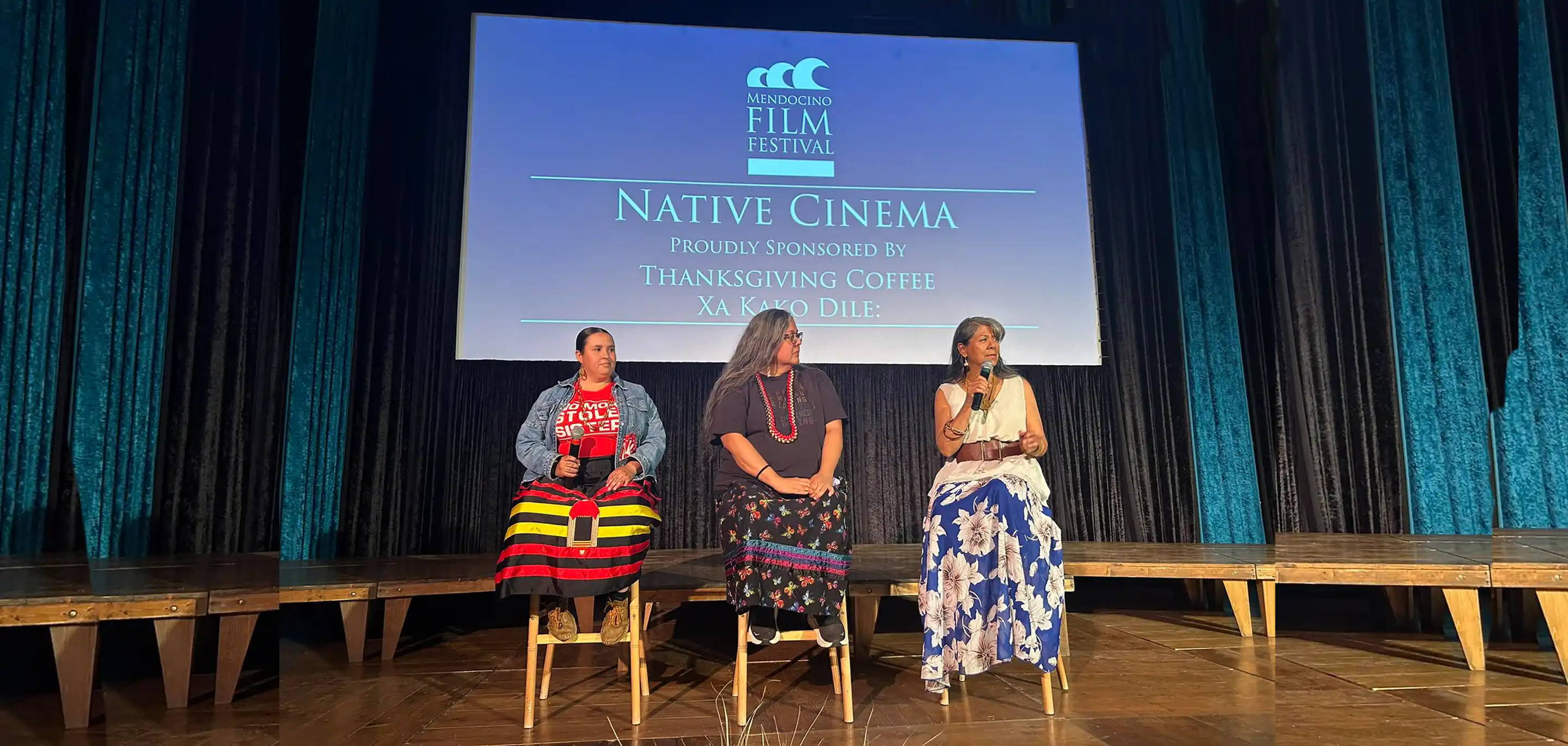
Thanksgiving Coffee Company had the privilege to co-sponsor the “Native Cinema” event along with Xa Kako Dile: in the main tent at the 2024 Mendocino Film Festival. The sold out audience was alerted at the introduction that the next two and a half hours could make them feel “uncomfortable” and the truths that were shared at this event were even more than that word conveyed.
Corine Pearce - Pomo Basket Weaver
There were beautiful short films on the artistry and teaching of the world-renowned Pomo basketry with Corine Pearce, and the resurgence and validation of the Yurok tribe’s forest management practices using fire which has been practiced in this region for millennia. These controlled burns have now been adopted by Cal Fire and other agencies as extremely effective in controlling dangerous undergrowth and revitalizing the land.
Margo Robbins of the Yurok Tribe bringing prescribed fire back in the film - Fire Tender
This led up to the most significant part of the event – a documentary on MMIW – Missing and Murdered Indigenous Women. It was horrifying to learn that we live in parts of the top 5 most dangerous parts of California for Indigenous Women, and also for other Indigenous people (MMIP) as well. Here is a snapshot of an all-too-horrific story: Missing of Murdered Indigenous People Fact Sheet
"The next 2 1/2 hours could make you uncomfortable"
Image from the documentary "We Ride For Her"
raising awareness of the heartbreaking realities
The film WE RIDE FOR HER (directed by Prairie Rose Seminole & Katrina Lillian Sorrentino) follows the birth of a group of motorcycle riding indigenous women who created this group to raise awareness of the heartbreaking realities and to aid in the search for their missing sisters and brothers. This documentary should be required education for all Californians.
History of Thanksgiving Coffee Company and Native Cinema:
Native Cinema 2024
read more -
![55th Annual World's Largest Salmon BBQ]()
SUMMER 2026 EVENTS
Salmon Restoration Efforts Never Tasted So Good!
Fort Bragg's 55th Annual "World's Largest Salmon Barbeque" took place on Saturday July 4, 2026. This annual event raises funds for habitat restoration for salmon spawning grounds through the Salmon Restoration Association.
What a turnout! Approximately 3,000 attendees joined us to enjoy freshly grilled salmon, delicious sides, and live music from six bands. Thanks to nearly 100 volunteers and generous local sponsors, the event was a massive success—all while raising vital support for our local habitat, wild salmon populations, and the local economy.
In addition to Thanksgiving Coffee Company, two other Mendocino County certified B Corps donated to this event: North Coast Brewing Company and Bonterra Organic Estates. Other donors included: Harvest Market, Trout Unlimited, Rossi Building Materials, UNFI, Redwood Waste Solutions, and the California Conservation Corp.
At Thanksgiving Coffee Company, our commitment to sustainability extends far beyond the shade-grown canopies of our international source farms—it flows directly into our local backyards here on California’s North Coast. Healthy ecosystems require a holistic approach to conservation, and for our coastal home in Fort Bragg, nothing represents the vitality of our environment quite like the wild salmon navigating our local rivers.
As part of our mission to craft "Not Just A Cup, But A Just Cup" we recognize that true environmental stewardship means protecting our immediate watersheds. Over the years, coastal development, resource extraction, and shifting climates have fragmented critical aquatic habitats for species like the coho salmon. Successful ecological restoration requires persistent, community-led initiatives to restore damaged stream environments, monitor local water flow, track temperature variations, and clean vital spawning gravels.
This is why grassroots efforts are so vital. Local organizations work tirelessly to revitalize historic runs, hosting regional awareness events and driving hands-on recovery projects. Supporting watershed recovery is a natural extension of our values; pure, healthy water is not only essential for brewing the perfect cup of coffee, but it is also the lifeblood of our entire coastal ecosystem.
By prioritizing sustainably sourced coffee and championing regional conservation, our community can help protect these premier wild resources for generations to come. Join us in raising a mug to the streams, the forests, and the resilient fish that call the North Coast home. You can learn more about how to support local stream monitoring and regional habitat restoration initiatives by visiting the Salmon Restoration Association.
55th Annual World's Largest Salmon BBQ
read more -
![Bee Bold & Blooming: Coffee That Helps the World Flower]()
A May Invitation: Bees Make the World Bloom
There’s a moment in May when the air begins to hum.
You can feel it in the movement between blossoms, in the soft presence of bees at work, in the quiet unfolding of the season. This is the time when the world leans into bloom.
At Thanksgiving Coffee Company, coffee has always been a way of participating in that living system - connecting farmers, ecosystems, and daily ritual through a shared practice of care.
This May, we celebrate that connection through Bee Bold Medium Roast, a coffee crafted to support pollinator health and the ecosystems that coffee depends on.
Featured Coffee: Bee Bold Medium Roast
Crafted with Care, Connected to Biodiversity
Bee Bold is a vibrant blend of Central & South American and Ethiopian coffees, combining natural and washed processes to create a cup that is both lively and grounded.
In the cup:
- Bright fruit notes
- Deep sweetness
- A smooth, lasting finish
This coffee reflects the kind of sourcing we’ve practiced for decades, working with producers who grow coffee in ways that support biodiversity, soil health, and long-term resilience.
Through every purchase, Bee Bold contributes directly to pollinator protection through our partnership with Conservation Works - helping fund on-the-ground efforts that protect the species essential to our food systems.
Why Bees Matter: The Work Behind the Bloom
Bees and other pollinators play a vital role in the health of our ecosystems - including coffee farms.
When pollinators are present:
- Coffee plants produce more abundant and consistent harvests
- Flavor complexity can improve
- Farms become more resilient over time
When we choose pollinator-friendly coffee, we participate in something much larger than a morning ritual. We help restore the delicate balance that allows life to flourish.
Thanksgiving Coffee's Headquarters is 3 acres of Pollinator Protected Zone.
World Bee Day & The Flower Moon
May carries a constellation of meaning:
- Mother’s Day (May 10): honoring care, nourishment, and life-giving forces
- Endangered Species Day (May 15): recognizing what needs protection
- World Bee Day (May 20): celebrating pollinators
- International Day for Biological Diversity (May 22): protecting the web of life
- Memorial Day (May 26): a time for remembrance and gratitude
The Flower Moon rises in this same window—reminding us that blooming is not an accident. It is the result of relationship, timing, and attention.
The Bee Bold Challenge
This month, we invite you into action. Be a Pollinator Protector!
- 🌱 Plant pollinator-friendly flowers
- 🐝 Support local ecosystems
- 📸 Share your garden or blooms
- 🏷 Tag #BeeBold
Even a small patch of flowers can become a sanctuary.
Small acts, repeated across many places, create real change.
Recipe: Bee Bold Iced Honey Latte
Text
A simple ritual for warm days
Bee Bold Iced Honey Latte
Ingredients:
- 1 cup brewed Bee Bold Medium Roast (cooled)
- ½ cup milk - your choice
- 1–2 tsp local honey
- A pinch of culinary lavender (optional)
- Ice
Directions:
-
Brew your coffee and allow it to cool
-
Stir in honey while still slightly warm
-
Fill a glass with ice
-
Pour coffee over ice, then add your milk choice
-
Sprinkle lavender gently on top
Taste: floral, smooth, lightly sweet—like spring in a glass
A Closing Reflection
Every cup of coffee is part of a larger system, one that connects land, people, and daily life.
For over fifty years, we’ve worked to build that system with care: through long-term farmer relationships, thoughtful sourcing, and a commitment to quality that honors both our craft and our ecology.
Bee Bold is one expression of that work, supporting pollinators, biodiversity, and the conditions that allow coffee to flourish.
This May, may your cup be part of something that continues to grow.
Lavender Grace Kent is the Director of Brand Narrative and Culture
Stay In Touch - We like to stay connected
Bee Bold & Blooming: Coffee That Helps the World Flower
read more

Native Cinema 2024
Thanksgiving Coffee Company had the privilege to co-sponsor the “Native Cinema” event along with Xa Kako Dile: in the main tent at the 2024 Mendocino Film Festival. The sold out audience was alerted at the introduction that the next two and a half hours could make them feel “uncomfortable” and the truths that were shared at this event were even more than that word conveyed.
Corine Pearce - Pomo Basket Weaver
There were beautiful short films on the artistry and teaching of the world-renowned Pomo basketry with Corine Pearce, and the resurgence and validation of the Yurok tribe’s forest management practices using fire which has been practiced in this region for millennia. These controlled burns have now been adopted by Cal Fire and other agencies as extremely effective in controlling dangerous undergrowth and revitalizing the land.
Margo Robbins of the Yurok Tribe bringing prescribed fire back in the film - Fire Tender
This led up to the most significant part of the event – a documentary on MMIW – Missing and Murdered Indigenous Women. It was horrifying to learn that we live in parts of the top 5 most dangerous parts of California for Indigenous Women, and also for other Indigenous people (MMIP) as well. Here is a snapshot of an all-too-horrific story: Missing of Murdered Indigenous People Fact Sheet
"The next 2 1/2 hours could make you uncomfortable"
Image from the documentary "We Ride For Her"
raising awareness of the heartbreaking realities
The film WE RIDE FOR HER (directed by Prairie Rose Seminole & Katrina Lillian Sorrentino) follows the birth of a group of motorcycle riding indigenous women who created this group to raise awareness of the heartbreaking realities and to aid in the search for their missing sisters and brothers. This documentary should be required education for all Californians.
History of Thanksgiving Coffee Company and Native Cinema:
Native Cinema 2024
read more
SUMMER 2026 EVENTS
Salmon Restoration Efforts Never Tasted So Good!
Fort Bragg's 55th Annual "World's Largest Salmon Barbeque" took place on Saturday July 4, 2026. This annual event raises funds for habitat restoration for salmon spawning grounds through the Salmon Restoration Association.
What a turnout! Approximately 3,000 attendees joined us to enjoy freshly grilled salmon, delicious sides, and live music from six bands. Thanks to nearly 100 volunteers and generous local sponsors, the event was a massive success—all while raising vital support for our local habitat, wild salmon populations, and the local economy.
In addition to Thanksgiving Coffee Company, two other Mendocino County certified B Corps donated to this event: North Coast Brewing Company and Bonterra Organic Estates. Other donors included: Harvest Market, Trout Unlimited, Rossi Building Materials, UNFI, Redwood Waste Solutions, and the California Conservation Corp.
At Thanksgiving Coffee Company, our commitment to sustainability extends far beyond the shade-grown canopies of our international source farms—it flows directly into our local backyards here on California’s North Coast. Healthy ecosystems require a holistic approach to conservation, and for our coastal home in Fort Bragg, nothing represents the vitality of our environment quite like the wild salmon navigating our local rivers.
As part of our mission to craft "Not Just A Cup, But A Just Cup" we recognize that true environmental stewardship means protecting our immediate watersheds. Over the years, coastal development, resource extraction, and shifting climates have fragmented critical aquatic habitats for species like the coho salmon. Successful ecological restoration requires persistent, community-led initiatives to restore damaged stream environments, monitor local water flow, track temperature variations, and clean vital spawning gravels.
This is why grassroots efforts are so vital. Local organizations work tirelessly to revitalize historic runs, hosting regional awareness events and driving hands-on recovery projects. Supporting watershed recovery is a natural extension of our values; pure, healthy water is not only essential for brewing the perfect cup of coffee, but it is also the lifeblood of our entire coastal ecosystem.
By prioritizing sustainably sourced coffee and championing regional conservation, our community can help protect these premier wild resources for generations to come. Join us in raising a mug to the streams, the forests, and the resilient fish that call the North Coast home. You can learn more about how to support local stream monitoring and regional habitat restoration initiatives by visiting the Salmon Restoration Association.
|
|
|
|
|
|
|
|
|
|
|
|
|
|
|
|
|
|
|
|
|
|
|
|
55th Annual World's Largest Salmon BBQ
read more
A May Invitation: Bees Make the World Bloom
There’s a moment in May when the air begins to hum.
You can feel it in the movement between blossoms, in the soft presence of bees at work, in the quiet unfolding of the season. This is the time when the world leans into bloom.
At Thanksgiving Coffee Company, coffee has always been a way of participating in that living system - connecting farmers, ecosystems, and daily ritual through a shared practice of care.
This May, we celebrate that connection through Bee Bold Medium Roast, a coffee crafted to support pollinator health and the ecosystems that coffee depends on.
Featured Coffee: Bee Bold Medium Roast
Crafted with Care, Connected to Biodiversity
Bee Bold is a vibrant blend of Central & South American and Ethiopian coffees, combining natural and washed processes to create a cup that is both lively and grounded.
In the cup:
- Bright fruit notes
- Deep sweetness
- A smooth, lasting finish
This coffee reflects the kind of sourcing we’ve practiced for decades, working with producers who grow coffee in ways that support biodiversity, soil health, and long-term resilience.
Through every purchase, Bee Bold contributes directly to pollinator protection through our partnership with Conservation Works - helping fund on-the-ground efforts that protect the species essential to our food systems.
Why Bees Matter: The Work Behind the Bloom
Bees and other pollinators play a vital role in the health of our ecosystems - including coffee farms.
When pollinators are present:
- Coffee plants produce more abundant and consistent harvests
- Flavor complexity can improve
- Farms become more resilient over time
When we choose pollinator-friendly coffee, we participate in something much larger than a morning ritual. We help restore the delicate balance that allows life to flourish.
Thanksgiving Coffee's Headquarters is 3 acres of Pollinator Protected Zone.
World Bee Day & The Flower Moon
May carries a constellation of meaning:
- Mother’s Day (May 10): honoring care, nourishment, and life-giving forces
- Endangered Species Day (May 15): recognizing what needs protection
- World Bee Day (May 20): celebrating pollinators
- International Day for Biological Diversity (May 22): protecting the web of life
- Memorial Day (May 26): a time for remembrance and gratitude
The Flower Moon rises in this same window—reminding us that blooming is not an accident. It is the result of relationship, timing, and attention.
The Bee Bold Challenge
This month, we invite you into action. Be a Pollinator Protector!
- 🌱 Plant pollinator-friendly flowers
- 🐝 Support local ecosystems
- 📸 Share your garden or blooms
- 🏷 Tag #BeeBold
Even a small patch of flowers can become a sanctuary.
Small acts, repeated across many places, create real change.
Recipe: Bee Bold Iced Honey Latte
Text
A simple ritual for warm days
Bee Bold Iced Honey Latte
Ingredients:
- 1 cup brewed Bee Bold Medium Roast (cooled)
- ½ cup milk - your choice
- 1–2 tsp local honey
- A pinch of culinary lavender (optional)
- Ice
Directions:
-
Brew your coffee and allow it to cool
-
Stir in honey while still slightly warm
-
Fill a glass with ice
-
Pour coffee over ice, then add your milk choice
-
Sprinkle lavender gently on top
Taste: floral, smooth, lightly sweet—like spring in a glass
A Closing Reflection
Every cup of coffee is part of a larger system, one that connects land, people, and daily life.
For over fifty years, we’ve worked to build that system with care: through long-term farmer relationships, thoughtful sourcing, and a commitment to quality that honors both our craft and our ecology.
Bee Bold is one expression of that work, supporting pollinators, biodiversity, and the conditions that allow coffee to flourish.
This May, may your cup be part of something that continues to grow.
Lavender Grace Kent is the Director of Brand Narrative and Culture
Stay In Touch - We like to stay connected
Bee Bold & Blooming: Coffee That Helps the World Flower
read more
A Cup That Sounds Like the Forest
There’s a moment in the morning, before the day fully arrives, when everything is still soft.
The kettle hums. Light moves through the trees. And when the coffee begins to pour, there’s a feeling, like something living is arriving with it.
Our Songbird Nicaraguan Coffee carries that feeling. This is our shade-grown, bird-friendly coffee, cultivated beneath forest canopy where songbirds still find habitat along their migratory paths.
Bird-friendly coffee is one of the most effective everyday ways to support migratory bird habitat.
And when you brew it, you are part of that living system.
Nicaraguan Farmer in a Shade Grown Coffee Forest
Why Shade Grown Coffee Matters More Than Ever
The forests that sustain migratory birds are under pressure.
The Smithsonian Migratory Bird Center has spent decades studying and protecting bird migration across the Western Hemisphere. Their work helps make one thing clear: birds need healthy, connected habitat to survive.
Right now, that system is breaking down. Since 1970, bird populations in the U.S. and Canada have declined by 29%, or nearly 3 billion birds. Not only rare species, but common birds too. Backyard birds. Songbirds. The ones many of us grew up hearing.
Birds are indicators of ecological health. When they decline, it tells us something deeper is out of balance.
That is one reason this coffee matters.
For nearly three decades, we’ve partnered with the American Birding Association to help protect that habitat through coffee.
What began as a shared belief, that coffee could be grown in a way that supports bird life, has grown into one of our longest-standing relationships. Together, we’ve supported shade-grown practices that allow forests to remain intact, creating space for migratory birds to rest, feed, and continue their journeys.
This is what bird-friendly coffee makes possible.
What is Shade Grown Coffee?
Shade-grown coffee is coffee grown beneath a diverse canopy of trees instead of in cleared, sun-exposed fields.
This kind of farming helps create:
- habitat for migratory birds
- healthier soil and water systems
- natural biodiversity on the farm
- slower cherry development, which often leads to richer flavor
In simple terms: better habitat supports better coffee.
That has long been part of our understanding at Thanksgiving Coffee. Great coffee and healthy ecosystems belong together.
How do we grow coffee in a way that supports land, people, and ecosystems together?
A Legacy of Environmental Leadership
This work didn’t begin recently at Thanksgiving Coffee.
In the early years of specialty coffee, our team helped establish the first Environmental Committee within the Specialty Coffee Association of America - what today would be recognized as an early form of a sustainability committee in the coffee industry.
At the time, the language was different. But the intention was clear: to bring ecological responsibility into how coffee is grown, sourced, and shared.
Paul and Joan Katzeff worked across farmers, cooperatives, and industry leaders to help connect people around a shared understanding that coffee exists within a living system.
Today, many call this coffee sustainability leadership.
At its root, it was something simpler: whole systems thinking.
That:
- coffee quality is connected to farmer wellbeing
- farmer wellbeing is connected to ecosystem health
- ecosystem health is connected to how we all participate
This has never been separate from the coffee. It is the coffee.
Where Coffee Sustainability Began: A Whole Systems Approach
Long before sustainability became standard language in coffee, it began as a question of relationship.
How do we grow coffee in a way that supports land, people, and ecosystems together?
This question guided early collaboration across the industry - bringing together farmers, environmental advocates, and coffee professionals to think beyond the cup.
From extraction to relationship.
From product to system.
From short-term yield to long-term vitality.
That shift continues to shape coffee today.
Meet the Coffee: Songbird Nicaraguan
Tasting Notes
Cocoa richness
Gentle citrus brightness
Smooth, balanced finish
Origin
Nicaragua, sourced through long-standing cooperative partnerships
Roast
Medium roast, crafted for clarity and body
👉 Shop Songbird Nicaraguan Coffee
Part of our Songbird Coffee line, developed in partnership with the American Birding Association, this coffee reflects nearly 30 years of shared commitment to protecting bird habitat through shade-grown farming. It’s a relationship built slowly, like forests themselves.
Brewing Habitat: A Daily Ritual
There are large challenges in the world.
And there are daily practices that quietly shape what comes next.
When you choose bird-friendly, shade-grown coffee, you are supporting:
- forest ecosystems
- migratory bird pathways
- farmers working in balance with the land
It is not abstract.
It is immediate.
It is in your cup.
Watch how habitat, birds, and coffee are connected across continents.
Recipe: Citrus Bloom Cold Brew
A bright, floral expression of Songbird Nicaraguan.
Ingredients
- 1 cup coarsely ground Songbird Nicaraguan coffee
- 4 cups cold filtered water
- zest of 1 orange
- 1–2 teaspoons wildflower honey
- ice
Directions
- Steep coffee and water for 12–16 hours in the refrigerator
- Strain slowly
- Add orange zest and honey
- Serve over ice
Citrus cold brew coffee with orange zest and honey
7 Ways to Support Songbirds,
Starting With Your Cup
The good news is this: while the challenges are real, there are meaningful ways to help.
- Choose Bird-Friendly Coffee. More than 70 species of migratory songbirds depend on coffee farms for habitat. Shade-grown coffee helps preserve that habitat.
-
Plant Native Species. Even small spaces can provide food and shelter for birds.
-
Avoid Pesticides. Reducing chemical use supports birds and the ecosystems they rely on.
-
Make Windows Safer. Simple changes can reduce bird collisions.
-
Keep Cats Indoors. Protects both birds and pets.
-
Reduce Single-Use Plastics. Supports broader ecosystem health.
- Pay Attention. Noticing birds is part of protecting them.
Start With the Cup
Brew coffee that protects habitat. Let that choice ripple outward.
Earth Month: A Moment to Choose Differently
April brings us back into awareness:
- Earth Month (April)
- Earth Day (April 22)
- Arbor Day (April 24)
These are reminders, and also invitations.
The future of birds, forests, and farming systems is shaped by everyday choices.
From Forest to Cup
From the highlands of Nicaragua to your kitchen, there is a thread.
Birds in motion.
Farmers tending trees.
Water, soil, and time.
And you.
Not just a cup, but a living system that is held for a moment in your hands.
FAQ Section
What is bird-friendly coffee?
Coffee grown under forest canopy that supports bird habitat and biodiversity.
Why is shade-grown coffee important?
It protects ecosystems, supports wildlife, and improves coffee quality.
What is a sustainability committee in coffee?
Today, sustainability committees guide environmental and social practices. This work began with early environmental leadership efforts in specialty coffee, including the first Environmental Committee.
How can I support bird-friendly coffee?
Choose shade-grown coffee, reduce pesticides, plant native species, and support responsible sourcing. From Forest to Cup
Bring the Forest Home
Brew with intention.
Choose shade-grown coffee.
Share your ritual.
Lavender Grace Kent is the Director of Brand Narrative and Culture
Stay In Touch - We like to stay connected