

News, Stories and more
Our Blog
View BY :


A Cup That Sounds Like the Forest
There’s a moment in the morning, before the day fully arrives, when everything is still soft.
The kettle hums. Light moves through the trees. And when the coffee begins to pour, there’s a feeling, like something living is arriving with it.
Our Songbird Nicaraguan Coffee carries that feeling. This is our shade-grown, bird-friendly coffee, cultivated beneath forest canopy where songbirds still find habitat along their migratory paths.
Bird-friendly coffee is one of the most effective everyday ways to support migratory bird habitat.
And when you brew it, you are part of that living system.
Nicaraguan Farmer in a Shade Grown Coffee Forest
Why Shade Grown Coffee Matters More Than Ever
The forests that sustain migratory birds are under pressure.
The Smithsonian Migratory Bird Center has spent decades studying and protecting bird migration across the Western Hemisphere. Their work helps make one thing clear: birds need healthy, connected habitat to survive.
Right now, that system is breaking down. Since 1970, bird populations in the U.S. and Canada have declined by 29%, or nearly 3 billion birds. Not only rare species, but common birds too. Backyard birds. Songbirds. The ones many of us grew up hearing.
Birds are indicators of ecological health. When they decline, it tells us something deeper is out of balance.
That is one reason this coffee matters.
For nearly three decades, we’ve partnered with the American Birding Association to help protect that habitat through coffee.
What began as a shared belief, that coffee could be grown in a way that supports bird life, has grown into one of our longest-standing relationships. Together, we’ve supported shade-grown practices that allow forests to remain intact, creating space for migratory birds to rest, feed, and continue their journeys.
This is what bird-friendly coffee makes possible.
What is Shade Grown Coffee?
Shade-grown coffee is coffee grown beneath a diverse canopy of trees instead of in cleared, sun-exposed fields.
This kind of farming helps create:
- habitat for migratory birds
- healthier soil and water systems
- natural biodiversity on the farm
- slower cherry development, which often leads to richer flavor
In simple terms: better habitat supports better coffee.
That has long been part of our understanding at Thanksgiving Coffee. Great coffee and healthy ecosystems belong together.
How do we grow coffee in a way that supports land, people, and ecosystems together?
A Legacy of Environmental Leadership
This work didn’t begin recently at Thanksgiving Coffee.
In the early years of specialty coffee, our team helped establish the first Environmental Committee within the Specialty Coffee Association of America - what today would be recognized as an early form of a sustainability committee in the coffee industry.
At the time, the language was different. But the intention was clear: to bring ecological responsibility into how coffee is grown, sourced, and shared.
Paul and Joan Katzeff worked across farmers, cooperatives, and industry leaders to help connect people around a shared understanding that coffee exists within a living system.
Today, many call this coffee sustainability leadership.
At its root, it was something simpler: whole systems thinking.
That:
- coffee quality is connected to farmer wellbeing
- farmer wellbeing is connected to ecosystem health
- ecosystem health is connected to how we all participate
This has never been separate from the coffee. It is the coffee.
Where Coffee Sustainability Began: A Whole Systems Approach
Long before sustainability became standard language in coffee, it began as a question of relationship.
How do we grow coffee in a way that supports land, people, and ecosystems together?
This question guided early collaboration across the industry - bringing together farmers, environmental advocates, and coffee professionals to think beyond the cup.
From extraction to relationship.
From product to system.
From short-term yield to long-term vitality.
That shift continues to shape coffee today.
Meet the Coffee: Songbird Nicaraguan
Tasting Notes
Cocoa richness
Gentle citrus brightness
Smooth, balanced finish
Origin
Nicaragua, sourced through long-standing cooperative partnerships
Roast
Medium roast, crafted for clarity and body
👉 Shop Songbird Nicaraguan Coffee
Part of our Songbird Coffee line, developed in partnership with the American Birding Association, this coffee reflects nearly 30 years of shared commitment to protecting bird habitat through shade-grown farming. It’s a relationship built slowly, like forests themselves.
Brewing Habitat: A Daily Ritual
There are large challenges in the world.
And there are daily practices that quietly shape what comes next.
When you choose bird-friendly, shade-grown coffee, you are supporting:
- forest ecosystems
- migratory bird pathways
- farmers working in balance with the land
It is not abstract.
It is immediate.
It is in your cup.
Watch how habitat, birds, and coffee are connected across continents.
Recipe: Citrus Bloom Cold Brew
A bright, floral expression of Songbird Nicaraguan.
Ingredients
- 1 cup coarsely ground Songbird Nicaraguan coffee
- 4 cups cold filtered water
- zest of 1 orange
- 1–2 teaspoons wildflower honey
- ice
Directions
- Steep coffee and water for 12–16 hours in the refrigerator
- Strain slowly
- Add orange zest and honey
- Serve over ice
Citrus cold brew coffee with orange zest and honey
7 Ways to Support Songbirds,
Starting With Your Cup
The good news is this: while the challenges are real, there are meaningful ways to help.
- Choose Bird-Friendly Coffee. More than 70 species of migratory songbirds depend on coffee farms for habitat. Shade-grown coffee helps preserve that habitat.
-
Plant Native Species. Even small spaces can provide food and shelter for birds.
-
Avoid Pesticides. Reducing chemical use supports birds and the ecosystems they rely on.
-
Make Windows Safer. Simple changes can reduce bird collisions.
-
Keep Cats Indoors. Protects both birds and pets.
-
Reduce Single-Use Plastics. Supports broader ecosystem health.
- Pay Attention. Noticing birds is part of protecting them.
Start With the Cup
Brew coffee that protects habitat. Let that choice ripple outward.
Earth Month: A Moment to Choose Differently
April brings us back into awareness:
- Earth Month (April)
- Earth Day (April 22)
- Arbor Day (April 24)
These are reminders, and also invitations.
The future of birds, forests, and farming systems is shaped by everyday choices.
From Forest to Cup
From the highlands of Nicaragua to your kitchen, there is a thread.
Birds in motion.
Farmers tending trees.
Water, soil, and time.
And you.
Not just a cup, but a living system that is held for a moment in your hands.
FAQ Section
What is bird-friendly coffee?
Coffee grown under forest canopy that supports bird habitat and biodiversity.
Why is shade-grown coffee important?
It protects ecosystems, supports wildlife, and improves coffee quality.
What is a sustainability committee in coffee?
Today, sustainability committees guide environmental and social practices. This work began with early environmental leadership efforts in specialty coffee, including the first Environmental Committee.
How can I support bird-friendly coffee?
Choose shade-grown coffee, reduce pesticides, plant native species, and support responsible sourcing. From Forest to Cup
Bring the Forest Home
Brew with intention.
Choose shade-grown coffee.
Share your ritual.
Lavender Grace Kent is the Director of Brand Narrative and Culture
Stay in touch - we like to stay connected
Songbirds of the Forest: Brewing Habitat in Every Cup
A Cup That Sounds Like the Forest There’s...
read more-
![Mendocino Trail Stewards Update]()

Mendocino Trail Stewards Update
Mendocino Trail Stewards Reflects on Progress
by Chad Swimmer – President
July 10, 2021, marks sixteen months since the founding of the Mendocino Trail Stewards–488 days that have changed my world irrevocably. It wasn’t just that six mountain bikers gathered around a table then somehow matured to a coalition which has grabbed the attention of the highest levels of the state government. It wasn’t only the pandemic, the acceleration of climate change, the barely averted July 6 Capitol Hill putsch. It wasn’t vapor trail-less blue skies turning apocalyptic orange, the shattering of heat records across the Pacific Northwest, the dying of billions of clams and mussels.
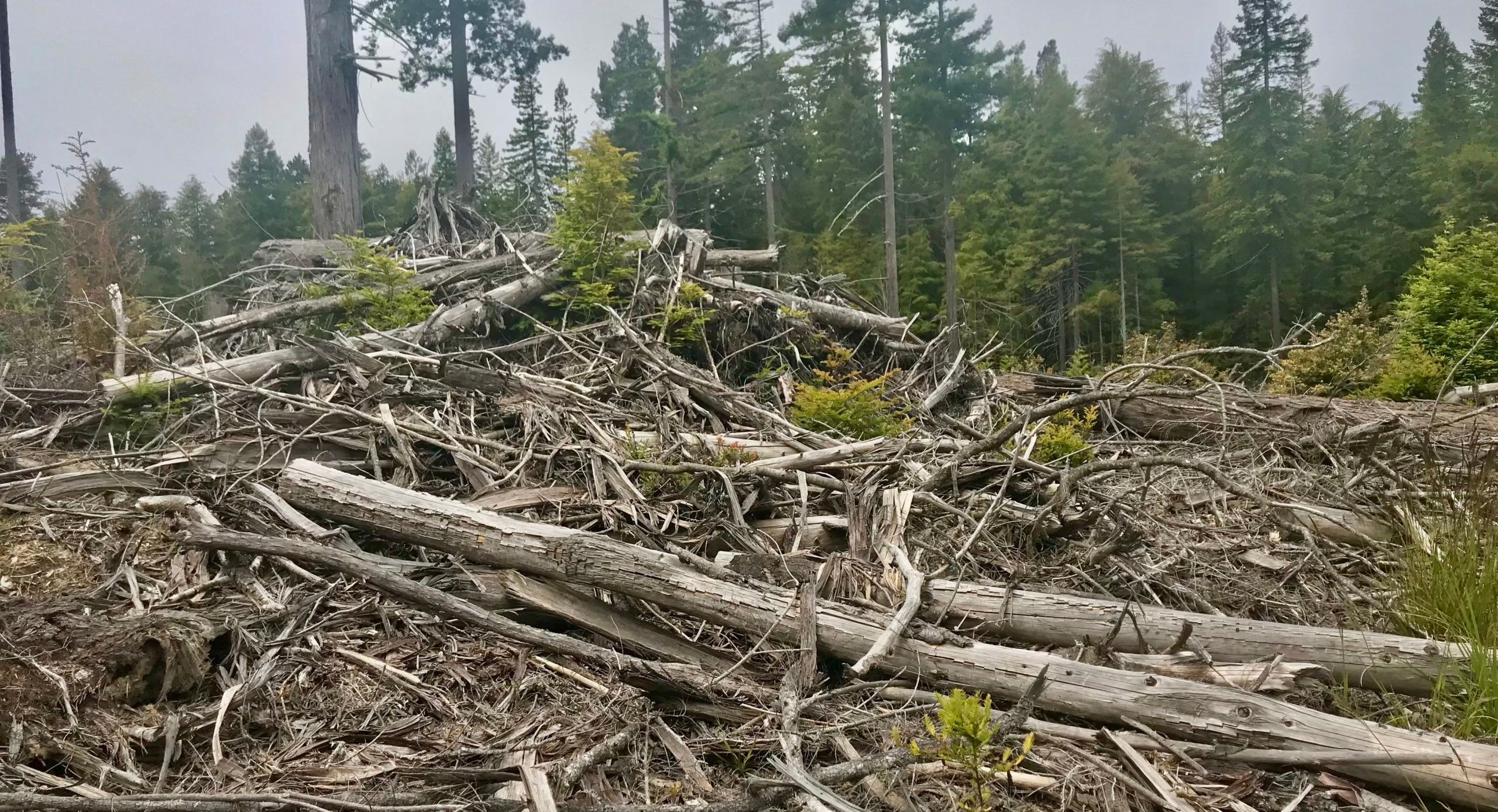
It was a greater transformation, a surprising ray of hope for the future, an unlikely group of strangers joining hands and hearts into an unexpectedly effective coalition, one which includes the Pomo People, young children, once-retired forest activists, and climate scientists, among others. The Coalition to Save Jackson State Forest has struck a chord with our push for accountability, tribal rights, and a legislative solution to the California Department of Forestry’s (CDF) mismanagement of our beloved public lands. Fueled by a pervasive rage at the Trump Administration’s incessantly racist crisis-mongering and by the powerlessness we all felt with Covid-19 sweeping the nation, our ranks have boomed.We have opened the door on an issue right in our backyards, one combining our love of the redwood forest with our greatest fear: climate-driven annihilation.
Michael Hunter of the Coyote Valley Band of Pomo
From 18-year old Greasy Pete, who climbed into Mama Tree’s branches and captured the imaginations of thousands on April 9, to 5-year old Jory, our youngest activist hero, to Paul and Joan Katzeff, whose Redwood Forest Reserve Blend Coffee has kept me organizing late into the night. From the prayers and blessings of Priscilla and Michael Hunter of the Coyote Valley Band of Pomo, the tireless work of their lawyer and ally Polly Girvin, to U’ilani Wesley’s proud chants echoing through the groves, the people of Mendocino County are again at the forefront of change.
CDF has been forced to take notice and they are fighting back, but we still have the moral upper hand. Members of the Mama Tree Network and Redwood Nation Earth First! have repeatedly stopped timber harvest operations, saving thousands of trees and frustrating forest managers. Public comments submitted to CDF have delayed the approval of the controversial Little North Fork Big River and Mitchell Creek plans by months–and hopefully indefinitely. We have overwhelmed California Natural Resource Agency meetings with our calls for change.
Where we go from here is uncertain, but our aim is high. We are drafting litigation to rewrite the Forest Practices Act for the entire State of California, righting historic wrongs and paving the way for this forest to become our ally in protecting our children’s future. Join us for our first ever Caspar Forest Fest, on July 31, from 1:00 to 7:00 at the Caspar Community Center for music, speakers, food, kids’ fun, and to find out how you can become a part of it. Hope to see you there!
Join us for our first ever Caspar Forest Fest
July 31, from 1:00 to 7:00
at the Caspar Community Center
Mendocino Trail Stewards are working to create a visionary model demonstration forest on the Northern California Coast, the Mendocino Coast Redwood Forest Reserve, 20,000 acres of second growth coast redwood forest, preserved in perpetuity for the demonstration of how humans and nature can partner to:
- Fight Climate Change
- Restore Degraded Ecosystems
- Promote Spiritual & Mental Health
- Support Sustainable Economies
Sign the petition and add your voice to the movement to #createthereserve.
The Coffee
The Mendocino Trail Stewards’
Redwood Forest Reserve Blend
When you drink this coffee, your purchase supports Mendocino Trail Stewards’ efforts to create the Redwood Forest Reserve.


Medium Roast
A big, bold, sweet and fruity cup of coffee – with a long finish.
Your purchase supports forest conservation efforts by Mendocino Trail Stewards.

Dark Roast
A bold, sweet blend with hints of nuts, chocolate, and caramel.
Your purchase supports forest conservation efforts by Mendocino Trail Stewards.

Decaf
Complex and sweet enough to enjoy straight, yet bold enough to punch through milk.
Your purchase supports forest conservation efforts by Mendocino Trail Stewards.
Mendocino Trail Stewards Update
read more -
![Iced Lavender Latte Recipe]()

Iced Lavender Latte Recipe
Iced Lavender Latte
Ingredients:- 1 shot espresso
- 4-6 oz. milk or milk alternative (oat, almond, soy)
- 1-2 tsp lavender flavoring
- 2 drops purple food coloring (optional)
- dried lavender for garnish (optional)
To make the lavender milk – pour about 4 oz of milk or milk alternative into a glass or container, adding in 1 tsp of lavender flavoring and purple food coloring. stir, or use milk frother for a fluffier finish.
Add ice into a new glass, and add in your espresso. Pour your lavender milk over the espresso, add in more lavender syrup to taste, and garnish with dried lavender.
Enjoy!
Iced Lavender Latte Recipe
read more -
![Roastmaster's Select: Sumatra, Sara Até]()

Roastmaster’s Select: Sumatra, Sara Até
Sumatra, Sara Até
Each month, our Roastmaster, Jacob Long, hand-picks fresh and unique micro lot coffees that we deliver straight to your doorstep. “What is a micro lot,” you ask? Read up on how we source the beans and what happens when they reach our roastery.

Jacob’s selection this month is a medium roast from the Sara Até Cooperative in Sumatra. By roasting the Sara Até to a medium roast level, he coaxed out a rich, full body, and discovered a maple syrup sweetness and a lingering complex finish.
Join the Roastmaster’s Select Club to begin your coffee journey around the world.
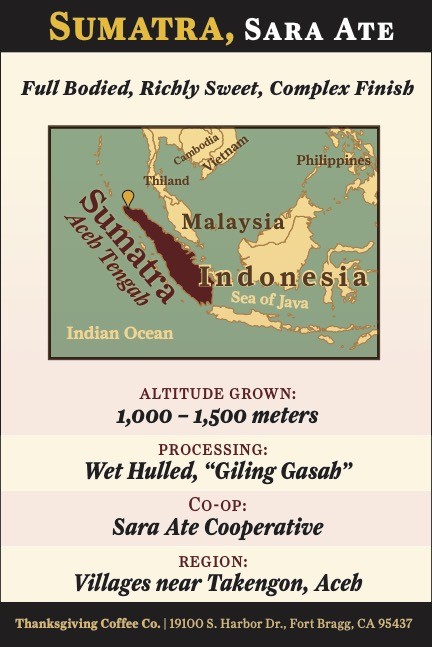
- Altitude: 1,000-1,500 meters/3,280-4,920 feet
- Processing: Wet Hulled, "Giling Basah"
- Producer: Sara Até Cooperative
- Region: Villages near Takengon, Aceh
About the Farm
At an altitude of about 1,500 meters sits the Sara Até Cooperative in the Villages near Takengon, Aceh, northern Sumatra. Sara Até was founded in 2011 and consists of 500+ members. The coffee is processed in a technique called ‘wet hulling’ or ‘giling basah’ in Indonesian. This is not to be confused with wet processing. Wet hulling is similar to wet processing initially – with the first steps of picking and pulping the coffee beans, then fermenting in order to break down the fruity layer of the coffee cherry called the mucilage, which is washed off the next day. The difference is, the drying process is much shorter in wet-hulling and it’s only dried until 50% of the moisture remains, resulting in lower acidity levels and more flavor and aroma.

Roastmaster's Select: Sumatra, Sara Até
read more -
![Ethiopia Yirgacheffe – July Single Origin Club]()
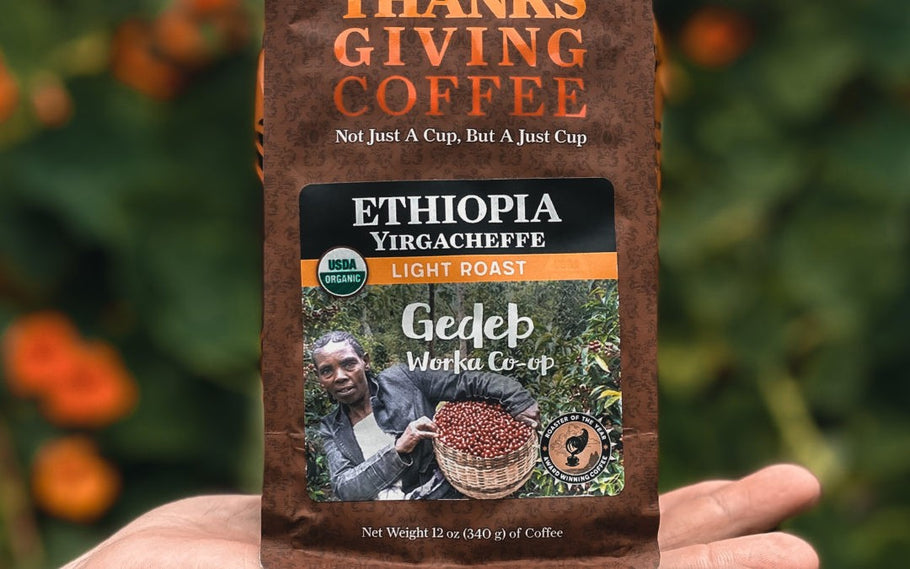
Ethiopia Yirgacheffe – July Single Origin Club
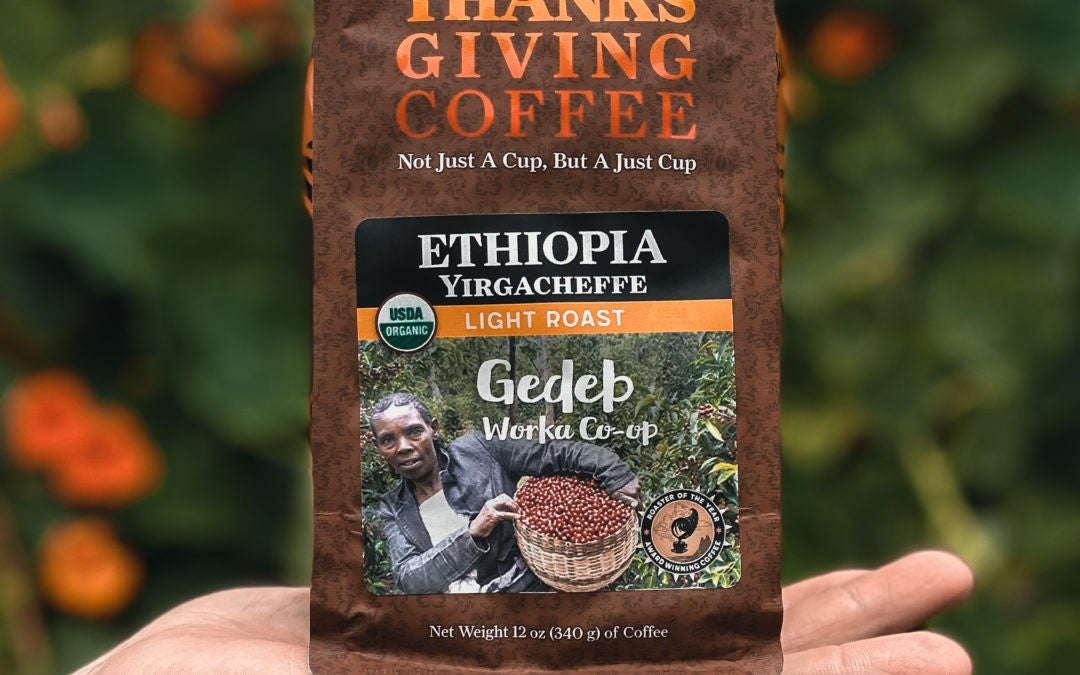
Ethiopia Yirgacheffe, Gedeb
What is a Single Origin coffee? Simply put, these coffees are defined by the place they come from.

Single Origin coffees are from a specific farm or group of farms that make up small cooperatives. You’ll find that most of our Single Origin coffees are light roasted since this brings out their unique aromas and flavor notes.
- Cooperative: Worka Cooperative, YCFCU
- Altitude: 2,000+ meters/4600-6,500+ feet
- Processing: Washed, dried in raised beds

About the Farm
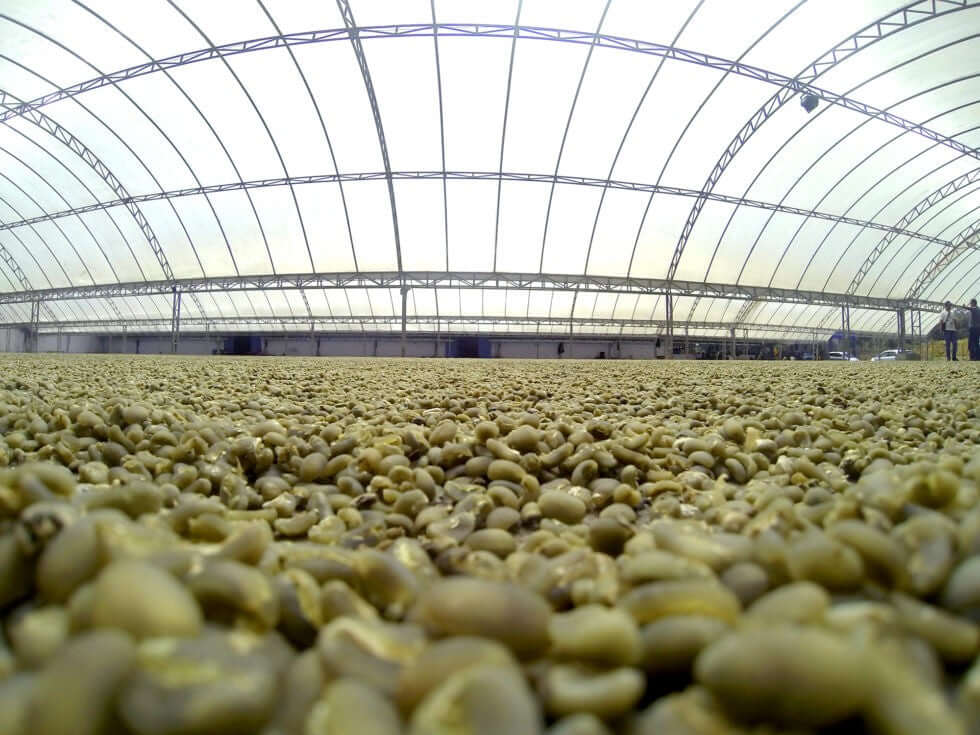
Located in southern Ethiopia at about 2,000 meters above sea level sits the Worka Cooperative, comprised of around 411 members, and is part of the larger Yirgacheffe Coffee Farmers Cooperatives Union (YCFCU). The Ethiopia Yirgacheffe, Gedeb coffee is picked and pulped and washed on the same day, then to be dried in raised beds for no more than seven days.

Ethiopia Yirgacheffe, Gedeb is light roasted locally at Thanksgiving Coffee and delivers peachy and milk chocolate flavor notes with a graham cracker finish.

Not ready to join the Single Origin Club? Make a one-time purchase of Ethiopia Yirgacheffe.
BUY NOW
Ethiopia Yirgacheffe – July Single Origin Club
read more -
![The Coffee that Gives Thanks]()

The Coffee that Gives Thanks
Giving Thanks
You probably know this already. There is a common misconception about our company name where people think that it means we are all about the holiday in November. We like turkey and family gatherings just fine, but our name means something else. Something more.
It is about Giving Thanks with Coffee.
Our logo, the cornucopia and the cup, symbolize the sharing of a farmer’s bounty. It is the beautiful harvest from farmers and co-ops who love their coffee trees, that pours into every cup of Thanksgiving Coffee.
A just cup indeed.
Our logo, the cornucopia and the cup, symbolize the sharing of a farmer’s bounty. It is the beautiful harvest from farmers and co-ops who love their coffee trees, that pours into every cup of Thanksgiving Coffee.
A just cup indeed.

So what does it mean to “give thanks with coffee”?
We give to coffee farmers through fair trade practices, through projects at origin which aim to improve their quality of life, and by supporting them through the hard times. We do this because it is the right thing to do, and as a result of this care, the quality of our coffee is unparalleled.
Beyond the thanks we give to coffee farmers, we give thanks WITH coffee through our Cause Coffee partnerships. Each Cause Coffee represents a community that is doing the hard work to make our world a better place, and they need as much support as they can get. We recognized an opportunity to help these communities, and have created many Cause Coffees which provide support for their hard work by donating 20% of every package of their coffee we sell online- to give them thanks, with coffee.
You probably know about our Cause Coffee partnerships with the Dian Fossey Gorilla Fund International (Gorilla Fund), the American Birding Association (Song Bird), the American Wild Horse Campaign (Wild Grounds), the Bee Bold Alliance (Bee Bold), and Defenders of Wildlife (Save Our Wolves). They each do amazing work, and we are thrilled to have provided them support over the years.
What you may not know about are some of the smaller organizations we have partnered with, but no worries, I’ll introduce you:

The Mendocino Land Trust (Fog Dodger), whose mission is to conserve and restore valuable natural resources of the Mendocino County region. They are dedicated to providing public access to the coast and protecting working farmlands and forests, wildlife habitat, open space, scenic vistas and watersheds.

The Point Cabrillo Lightkeepers Association (Lightkeepers Blend), whose mission is to manage, protect, restore, interpret, and provide public access to the historic Point Cabrillo Light Station State Historic Park, and to assist State Parks in maintenance of the historic structures and gardens to ensure this national treasure for current and future generations.

Baby Rhino Rescue (Baby Rhino Rescue Coffee), who work with the real people on the front lines: the rangers in the bush, the vets caring for the injured orphaned rhinos, the sanctuary experts rehabilitating traumatized rhinos; who are all working together to save rhinos from extinction.
You can find their Cause Coffees online with the links above, and I encourage you to read more about them and to support their work. It is your support that puts the “giving” in Thanksgiving Coffee. We really could not do any of this without you.
Thank you!
The Coffee that Gives Thanks
read more -
![Pollinator Week Partner Post]()

Here is a post from our Bee Bold Alliance partner Conservation Works, with a highlight on our collaborative efforts to restore biodiversity and support local food systems with youth.

Stitching Together Bee Patches of Pollinator Habitat
By Oona Heacock, Executive Director of Conservation Works

On a foggy morning along the Westport Headlands Park, Conservation Works volunteer Joan Wier sets up tools for a group of Bee Bold Youth Core teens and their parents as they gather to plant a new habitat garden for bees. As the teens arrive at this dramatic seaside park, Joan guides them around the perimeter of the future garden, hanging string around wooden stakes that the group pounds into the mowed grass to form the shape of a whale in honor of the Westport Whale Festival held each year at this site. A Bee Patch is being created.
“The trick is to plant 3 foot blocks of the same kind of flower to attract pollinators and plant four seasons of bloom,” Weir explained. She went on to demonstrate how to hand grub the grassy headlands site to expose soil and then directed one mom and daughter pair to cast native lupin seeds directly onto the soil while others mixed seeds with clay to form little seed bombs which later would be rolled onto the site at the end of the day.


Bees are struggling. Multiple factors are causing this decline, but coming together as a community and involving youth to plant a “Bee Patch” of native flowering plants along with clean water and places to rest and nest along our farms, parks and homes can make all the difference in restoring healthy bee populations.
Conservation Works believes that the likelihood of long-term environmental sustainability of our pollinators needs to involve the next generation. Our Bee Patches program energizes youth to choose to be environmental stewards throughout their life, and nurtures them to become the change-makers for taking direct action to reverse the downward spiral in pollinator populations.
Bees inspire a sense of wonder and fascination in most of us and can be a good way to introduce youth and community groups of any age and background to the larger natural world. Bees can be found in any landscape. We will never see most of these furry little wildlife because they’re fast, often small, and nest underground. But take a summer stroll out in your garden or at a local park and you’re likely to spot more bees than you can count. Other beneficial insects and hummingbirds use a garden, too, as it’s a busy oasis of year-round habitat and food resources. Planting a garden is a powerful way to take local action and provide an offset to mounting, worldwide pollinator declines.


Everyone can take action with Conservation Works and the Bee Bold Alliance during National Pollinator Week by growing pollinator-friendly flowers, providing nest and rest sites, avoiding pesticides, and spreading the word. And don’t forget to make your commitment official by becoming a Pollinator Protector. Make your pledge.
Pollinator Week Partner Post
read more -
![Marilyn Monroe, Clark Gable and the Mustangs]()
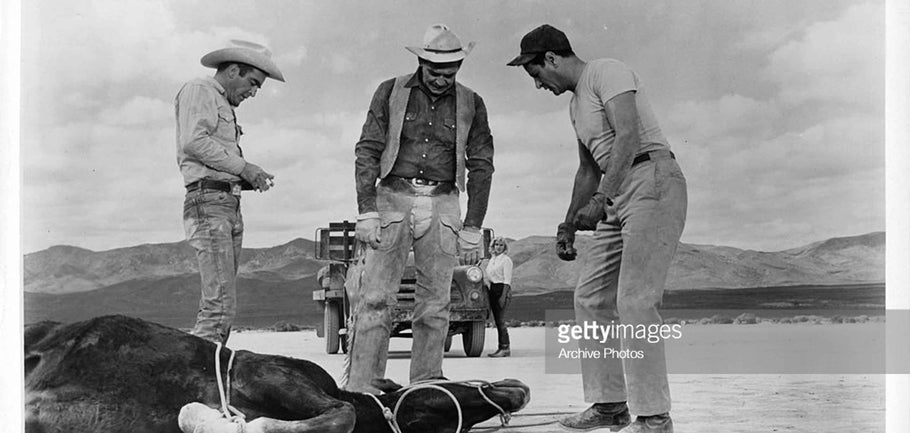
I met my first wild horse in a movie theatre in Greenwich Village in 1963.

The story behind Wild Grounds Coffee
By Paul Katzeff, Co-Founder & Roastmaster Emeritus
He was on the wrong end of a lasso being held by Clark Gable. The horse was bucking and raising up on his hind legs, pulling desperately away from his capture. Marilyn Monroe was pulling on Clark’s hand pleading for the horses freedom. Clark was determined to get his horse and another payday. The Name of the Movie was The Misfits and was about three Aging Cowpokes who once made their living capturing Mustangs and selling them into the slaughter houses for meat. In this movie they complained about how the horses were no longer in abundance , hard to find and it was impossible to make a decent days pay capturing the ‘things’. Maralyn was as beautiful as the horses eyes, fierce now but with long lashes and deep deep soft eyes. Marilyn was beautiful but it was the Mustang, fighting for her freedom, that stole my heart,
Today, 58 years later there is a similar story playing out on the millions of square miles of rangeland between the western slope of the Rocky Mountains and the Eastern slope of the Sierra Nevadas. Today it is not aging cowboys in Pick up trucks and lassos , but Federal Agents in Helicopters rounding up entire herds of free horses and burros and their children, often in the chaos separating family members or driving the horses to their death in the frenzy. Hay Feds, what’s the problem?
The round ups gather the horses into corals so they wont compete for the space grassland feed out there on the range. Thet range is for the Beef Cattle ! Our government leases our citizen owned land to cattle ranchers they can make money selling beef to our meat eating society of which I must admit , I am one. The cost of feeding jailed Mustangs is estimated to be in the billions. And why, when the 1970 Congress afforded Mustangs America’s protection, has all the Bureau of Land Management continued to harass the best symbols of freedom we have ?
A horse has eyes that tell a story. Each of us who have looked into the eyes of a Mustang will never forget the moment , never.
Yes, it happened for me long ago in a movie theatre but last October, on the way from Northern California to Phoenix to play baseball , I pulled my car onto a a sandy dirt road to nowhere and drove into the dessert just to see what was out there on that dirt road to nowhere. About five miles in, there they were ! Three magnificent free roaming Mustangs …and they were looking at me from a hill about a home runs distance away. I stopped, my heart jumping , I exited my car and laid down on the very hot sand and stared back. Finally, the circle was complete. I saw them alive and free.
Who belongs on that land we, as citizens own but have delegated the responsibility for their safety to The Bureau of Land Management to secure ? And why has the BLM chosen to represent the Cattle Industry and not our Mustangs?
When I discovered that others of my kind were fighting for them too, we joined the American Wild Horse Campaign and created a coffee package to tell coffee lovers whose side we were on. As with our other Cause Coffee programs, we wanted to empower our customers to help raise funds and awareness for this important work.
Horse and stuntman in the 1960 film "The Misfits"
Every time you purchase a package of AWHC coffee, Thanksgiving Coffee Company donates $3.00 to the AWHC.
When we are a bit further past this COVID-19 Pandemic we are planning a visit, jointly with AWHC staff, to visit and see these magnificent spirits up close. I hope you will be able to come with us. Until then, buy their coffee and know you are on the bus with us. And let me use that old expression , “The steak is as good as the sizzle “ when I say that the coffee inside the package is as good as it gets. You be the judge.
Wild Grounds Coffee
supports the American Wild Horse Campaign
The American Wild Horse Campaign (AWHC) is dedicated to preserving American wild horses and burros in viable free-roaming herds for generations to come, as part of our national heritage.
Since 2004, this organization has been raising awareness and making change for America’s wild horses. Thanksgiving Coffee Company has partnered with them to create Wild Grounds, a cause coffee to save the wild horses.
Marilyn Monroe, Clark Gable and the Mustangs
read more -
![Lawrence's Cold Brew & Bourbon Cocktail]()

Lawrence’s Cold Brew & Bourbon Cocktail Recipe.
Yields 1 drink
- 1 1/2 ounces cold brew coffee concentrate*
- 1 ounce bourbon
- 1 ounce heavy cream
- 1/2 ounce maple syrup
- Ice
- Ground Nutmeg
Add the coffee, bourbon, cream and maple syrup to a cocktail shaker (or other airtight container) with ice. Shake vigorously for about 15 seconds. Strain out the ice, pour into a glass and top with ground nutmeg.
Note: If you want to make this to serve a crowd, adjust the recipe using 3 parts cold brew coffee concentrate, 2 parts bourbon, 2 parts heavy cream and 1 part maple syrup.
*Cold Brew Coffee Concentrate
You can easily make cold brew coffee using a Toddy Cold Brewer. However, if you don’t have a Toddy, here’s an alternative method that uses a French Press.
- 1 cup coarsely ground coffee
- 4 cups cold water
Add coffee to a French Press. Pour the cold water over the grounds, ensuring that all of the grounds get wet. Let steep overnight, or for 8-16 hours. After coffee has steeped, use the plunger on the French Press to strain your coffee.
Pour brewed coffee concentrate into a container that can be covered and stored in your refrigerator. leftover refrigerated for up to two weeks used make iced lattes baked goods and other treats.
What coffee to use? Our co-founder, Paul Katzeff, would say Mendocino Vienna with just enough toasty notes to augment the barrel flavor from the bourbon. Sales and Marketing Manager, Joe Seta, would say Ethiopian Natural Yirgacheffe with its ripe fruit high notes to balance the bourbon's warmth. The final answer? Follow your tastebuds.
We figured a nice, cool coffee cocktail would help to keep us all chill.
Snap a photo of your coffee creation and tag us on Instagram, Facebook or Twitter @ajustcup

Lawrence began working for Thanksgiving Coffee in 2001, having returned from Ireland and in need of a job. He drove a delivery truck for Thanksgiving for two years and then moved into the main plant where he became an accounts rep, a position he holds now. He’s written copy for the company, proof read (skills he acquired while an editor for McGraw Hill in Los Angeles) and has also done various research projects for Thanksgiving such as cold brew, process steps for ready to drink beverages, and more.
Lawrence's Cold Brew & Bourbon Cocktail
read more -
![Roastmaster's Select: Finca La Cabaña]()

Roastmaster's Select: Finca La Cabaña

Finca La Cabaña (June 2021)
Each month, our Roastmaster, Jacob Long, hand-picks fresh and unique micro lot coffees to bless your taste buds. “What is a micro lot,” you ask? Read up on how we source the beans and what happens when they reach our roastery.
This June, some of the finest Colombian coffee is making its way to your doorstep, straight from the Thanksgiving Coffee roastery! Join the Roastmaster’s Select Club to begin your coffee journey around the world, this month with our Finca La Cabaña Colombian coffee.
- Altitude: 1100-1300 meters/4500-6000 feet
- Processing: Fully washed, dried in solar dryers
- Producer: Dario Delgado – La Cabaña
- Region: Magdalena, Colombia

About the Farm
In the mountains of Northern Colombia sits the La Cabaña farm at about 4500-6000 feet, which is an ideal micro-climate for growing the highest quality Arabica. The farm has a dense over story of native trees allowing for sanctuary of migratory song birds and has been certified by the Smithsonian as “Bird Friendly”. -Roastmaster, Jacob Long

Roastmaster's Select: Finca La Cabaña
read more -
![Kenya Nyeri Peaberry – June Single Origin Club]()

Kenya Nyeri Peaberry – June Single Origin Club
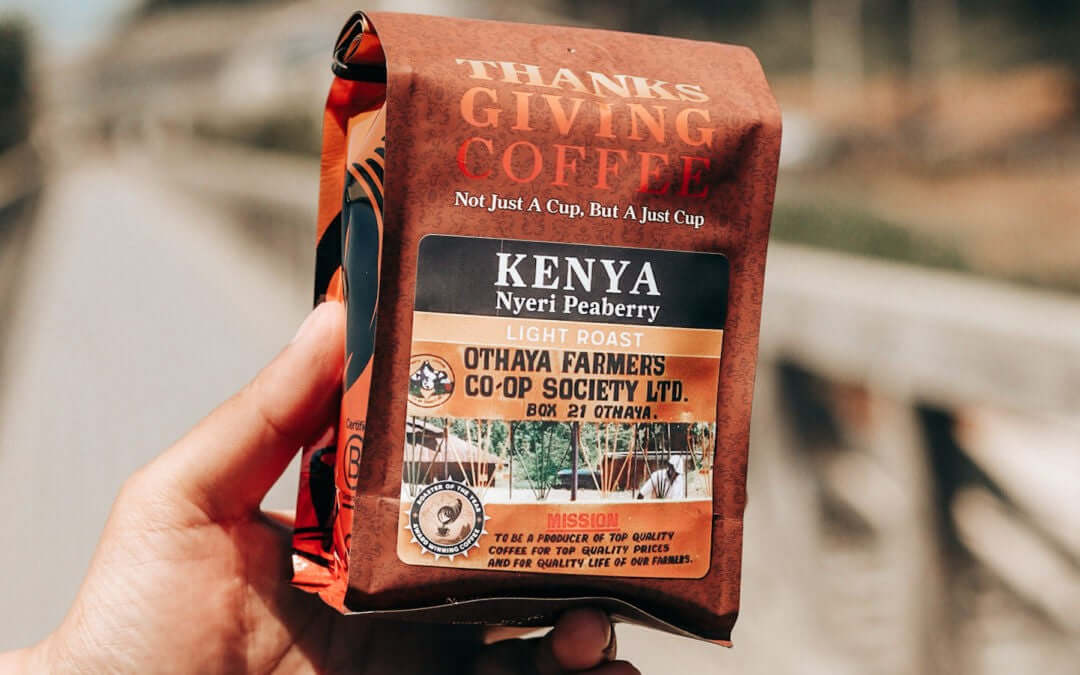
Kenya Nyeri Peaberry
What is a Single Origin coffee? Simply put, these coffees are defined by the place they come from. Single Origin coffees are from a specific farm or group of farms that make up small cooperatives. You’ll find that most of our Single Origin coffees are light roasted since this brings out their unique aromas and flavor notes.
We are thrilled to share the fascinating stories behind each coffee. This month, Roastmaster, Jacob Long, hand-picked our Kenya Nyeri Peaberry coffee, which also happens to be one of our 2017 Roaster of the Year award winners! Join our Single Origin Club now to have only the finest of coffees delivered to your doorstep each month.


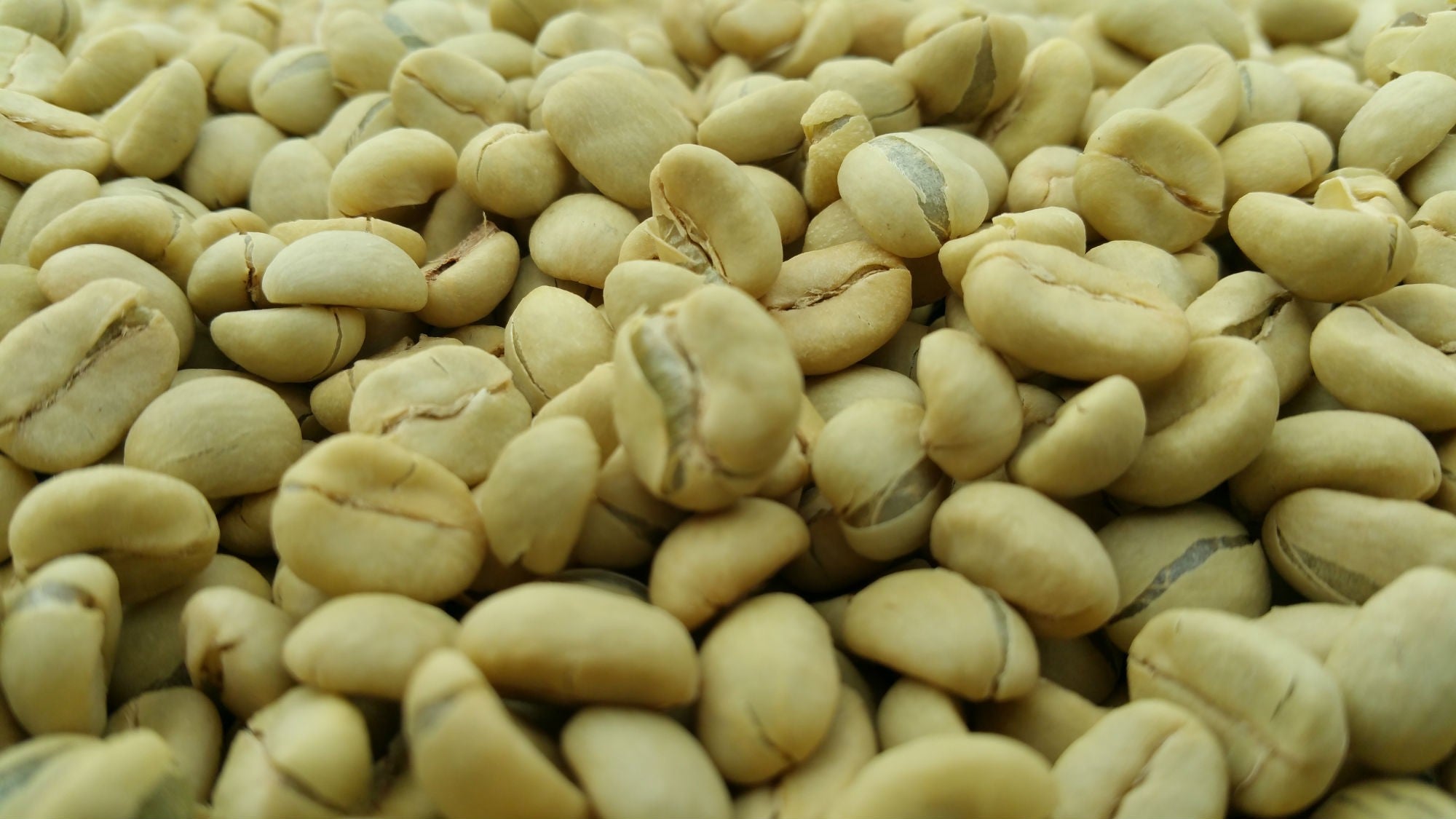


About the Farm
This Kenyan coffee is grown on the eastern slopes of Aberdares mountain ranges in Nyeri County, Kenya by the family-owned farms of the Othaya Farmers Co-operative Society Limited (FCS). Established in 1956, FCS has more than 14,000 members who generally have half acre plots averaging 250 coffee trees.

Kenya Nyeri Peaberry has a unique mouthfeel with hints of milk chocolate, ripe orange and caramel.
Altitude: 1400-1800 meters/4600-5900 feet
Processing: Washed, dried in raised beds
Cooperative: Othaya Farmers Co-op, Society Limited
Kenya Nyeri Peaberry – June Single Origin Club
read more -
![4th Annual World Bee Day - Live Stream]()

World Bee Day
4th Annual World Bee Day Celebration
Free Live Stream
May 20, 2021
12:00PM PSTJoin us for the International World Bee Day as we honor and acknowledge the importance of our bees for sustaining the Earth’s biodiversity, local food security, and ancient sacred knowledge.
In collaboration with the Mendocino Rotary Foundation and the Mendocino Rotary Club, we opened the Bee Bold Alliance’s first Pollinator Sanctuary in Mendocino, CA
Come enjoy a live program with Lavender Grace the Sustainable Ecology Advocate of Thanksgiving Coffee Company plus an excerpt from the ceremony on Sunday, May 16th.
Together we are creating “Honey Heart Habitats” with honor, respect, and reciprocity for the soil, the water, and the bees..
Sunday’s Participants in the included Conservation Works, Jug Handle Creek Farm, and Nature Center, Rotary Club Mendocino, Thanksgiving Coffee Company, Eco Artists, Bee Bold Alliance, Mendocino Art Center, Garden Friendly Community, Mendocino Trail Stewards, Mendocino Gold Honey, The Farm, Botanical Gardens, and Honey Hive of Mendocino.
Support the work of the Bee Bold Alliance when you drink our Bee Bold Coffee.
We acknowledge the Bees for all the beauty and abundance they bring, and for maintaining our biodiversity and local food security. Thanksgiving Coffee Company is an enthusiastic supporter of The Bee Bold Alliance and is proud to produce Bee Bold Coffee as a fundraiser to save pollinators, of which bees are the most important.
Now, after five years of work this effort has turned into a movement anchored by Ft. Bragg becoming the first Certified Bee City in California and a dozen Mendocino County community organizations pledging support for protecting and nurturing our local pollinators by joining The Bee Bold Alliance.
4th Annual World Bee Day - Live Stream
read more -
![4th World Bee Day Annual Celebration]()

World Bee Day

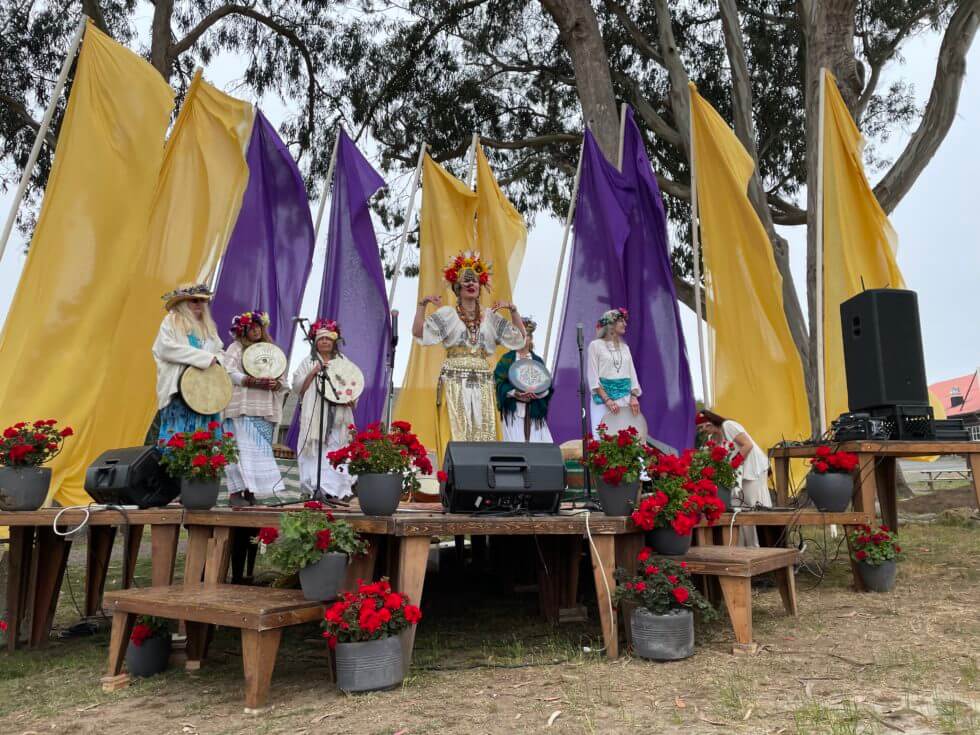
Thanksgiving Coffee Company is co-hosting the 4th annual World Bee Day Celebration on May 16th, 2021 in Mendocino, CA with the Rotary Park of Mendocino and Bee Bold Alliance from 12-2 pm with a virtual screening on May 20th.
The event will begin at noon with an honoring of the Ancestral Lands of the Northern Pomo with the Pinoleville Pomo Tribe and will close with a water ceremony to give respect to the Big River Water Shed.
Musical offering by the Honey Hive Ensemble, art from the Mendocino Eco Artist, Honey from Mendocino Gold, Plants from Jug Handle Native Nursery, Seed Bombs, and information about bees from Conservation Works, Crown and Wand activities for kids, and more.
We acknowledge the Bees for all the beauty and abundance they bring, and for maintaining our biodiversity and local food security. Thanksgiving Coffee Company is an enthusiastic supporter of The Bee Bold Alliance and is proud to produce Bee Bold Coffee as a fundraiser to save pollinators, of which bees are the most important.
Now, after five years of work this effort has turned into a movement anchored by Ft. Bragg becoming the first Certified Bee City in California and a dozen Mendocino County community organizations pledging support for protecting and nurturing our local pollinators by joining The Bee Bold Alliance.
4th World Bee Day Annual Celebration
read more -
![Brew Your Espresso]()

You read that right, Brew Your Espresso!
What exactly is espresso? It is the highest form of coffee. By definition, it’s strong black coffee made by forcing steam through grounds. For a more extensive description, we dedicated a whole blog post to what exactly espresso is.
The common misconception of requiring a fancy, expensive espresso maker can discourage many of us from brewing it ourselves at home.
Although our espresso blends are designed for that high-pressure extraction that an espresso machine delivers, they can be equally as satisfying when brewed like any other coffee blend.
The proof is in the… coffee. We made a 1-minute Bialetti Stovetop tutorial video as well as a French Press tutorial using the same espresso blend – with instructions from our brewing guide page. It really is as easy as it looks, and the whole process only takes about 5 minutes to complete.
To help you start your home espresso-brewing journey, we’re giving you 10% off our Italian Espresso Blends all throughout April!
Our Northern Italian Style Espresso, featured in our tutorial videos, is a delightfully smooth espresso, not at all toasty or burnt-like, but intense enough to show up and vote in a latte or cappuccino when properly pulled.
For a more intense, pungent blend, try our Southern Italian Style Espresso. The blend consists of equal parts Guatemalan, Ethiopian, and Indonesian coffees. These are some of the finest coffees in the world, roasted dark to express a smoky punch, deeply toned notes of licorice, chocolate, and earthy sweetness.
Happy brewing!
Brew Your Espresso
read more -
![Letter from Our Founders]()

Letter from Our Founders
Dear Friends,
We write to you today with an urgent plea for your help. We have been an “activist” progressive company fighting for the human rights of coffee farmer families, and for Social Justice and Environmental Sustainability around the world. We now face a battle for the dignity and preservation of our own Coast Redwood forests right here in California.
We rail against the logging in the Brazilian Amazon, but the same level of deforestation is happening right here in Mendocino County.
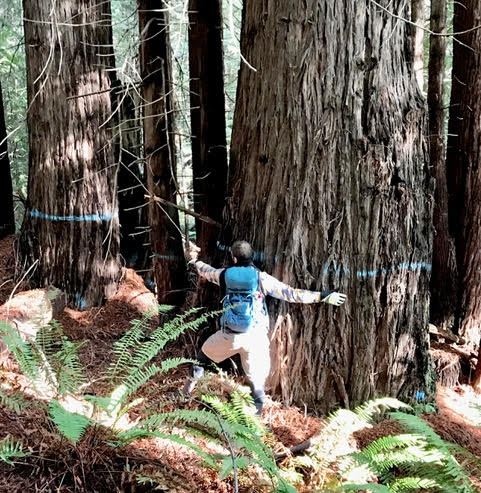
The California Department of Forestry and Fire Protection (Cal Fire) has submitted plans to log big second growth trees right in our backyard. The average age of these Redwoods is between 75 and 100 years and most are 150 feet tall, the height of a fifteen story building. They have been doing this all along, but it wasn’t near homes and trails. Few people knew. Now they are spray painting blue lines on trees well on their way to becoming ancient old growth giants–they just need another 800-900 years.
We local residents are the foot soldiers, fighting the battle for all Americans. Thanksgiving Coffee Company is joining this fight for our national heritage. We are happy to say our native Pomo First Nation tribes are on the team as well. We have joined forces to save these trees, which are literally the lungs of our planet.

We are asking you to join us wherever you are. Help us change the way Redwood trees are valued. The ugly secret is that they are not cut down to build houses. No one builds a house with Redwood. These trees are sacrificed for decks and picnic tables– an ugly and dishonorable death for a tree that is not only a part of our national mythology but has been proven by science to be the best carbon sequestering organism in the world.
This time it is not about far away Brazil. It is right here in a place that many of you have visited or hopefully will someday. As foot soldiers in this battle, we feel our efforts are not just for ourselves, not just because we live here. We are also fighting for you because you are not here to join us (however, if you want to volunteer your special skills and passion, then you are more than welcome).
Wherever you are, we need you to sign our petition. People wonder if online petitions make any difference, but this petition will. We have 3,000 signatures. We need 10,000 for our state legislators to really take notice. If one of every three of you gives two minutes to sign this petition, we’ll be there tomorrow.
Next, take a few more minutes to watch the 11 minute video:
Go to the Take Action Page to find out how you can help, how you can be one of a large group of Americans who believe that Redwoods are more than just trees.
They are a symbol of the enduring nature of life itself.
With sincere thanks in advance,
Paul & Joan Katzeff
Co Founders
Thanksgiving Coffee Company
Letter from Our Founders
read more -
![Giving Tuesday, October Recap]()

Giving Tuesday Recap – October 20th
Thank you for your #GivingTuesday support!
Together, we raised 339.90
for The Southern Poverty Law Center.Thanksgiving Coffee Company stands in solidarity with the movement for racial justice. To put our words into action, one Tuesday of each month remaining in 2020, we have committed to donating 10% of all sales from all of our coffees on that day to an organization working to advance racial justice.
This month, we donated to The Southern Poverty Law Center, founded in Montgomery, Alabama in 1971 by Morris Dees, Julian Bond and Joe Levin. The SPLC adopted a new mission statement in July 2020:
“The SPLC is a catalyst for racial justice in the south and beyond, working in partnership with communities to dismantle white supremacy, strengthen intersectional movements, and advance the rights of all people.”
We encourage everyone to check out their work. Learn more here: www.splcenter.org/
This donation was made possible with your support, and it will help fund their fight for justice for all Americans. Every dollar counts, and we could not have done it without you, our amazing customers.
Stay tuned for our next #GivingTuesday in November!
Giving Tuesday, October Recap
read more -
![Giving Tuesday]()

Giving Tuesday Recap – September 1st
Thank you for your #GivingTuesday support!
Together, we raised
$338.00 for the NAACP Legal Defense Fund.Thanksgiving Coffee Company stands in solidarity with the movement for racial justice. To put our words into action, on the first Tuesday of each month remaining in 2020, we have committed to donating 10% of all sales from all of our coffees on that day to an organization working to advance racial justice.
This month, we donated to The NAACP Legal Defense Fund and Educational Fund (LDF), an organization promoted by Black Lives Matter. This 80-year-old organization strives to:
• diminish the role of race in the criminal justice system
• increase fairness and participation in all aspects of economic life
• increase equity in education
• and achieve full civic engagement and participation in the democratic process for all Americans.
We encourage everyone to check out their work. Learn more here: https://www.naacpldf.org/
This donation was made possible with your support, and it will help fund their 80-year-long fight for justice for all Americans. Every dollar counts, and we could not have done it without you, our amazing customers.
Stay tuned for our next #GivingTuesday on October 6, 2020.
Giving Tuesday
read more -
![Clean Water For All - Helping Uganda]()

Clean Water For All
by Paul Katzeff

Chapter 1
Since my last report (Feb.19, 2020) was six months ago at the beginning of this clean water project with the Namanyonyi Community of Shalom Interfaith Cooperative we have made significant progress. In addition to the first 40 installations, we have provided an additional 120 families with a clean water filter for their homes. We financed the purchase and distribution of a second 40 in April, and 80 more are being distributed as this post is being written. The funds, if you are not familiar with how we do things at TCC, were provided by your purchases and a $1.00 contribution per package from those revenues, by TCC to our Trust Account for clean water.
For reference, a clay home filter with a 15-gallon capacity costs 82,000 Ugandan Dollars ($24.00 US) plus another $6.00 for transportation, and other Administrative needs to get a filter from the factory in Kampala 150 miles to the Co-op headquarters in Mbale.

Clean water is a rarity in Uganda’s coffee-growing regions. Farm families spend hours every day hunting for water. When they find it it is generally filthy, brackish, and loaded with bacteria that cause disease and often death to the weakest in the family (children under the age of 5). After they find a water source they fill 5-gallon Gerry cans and haul the 40 pounds of bad water back home to be used for cooking and drinking. Many boil the water, but many don’t have the resources to buy charcoal or wood to furnish the fire needed.
When boiled, the water is still brackish and foul-tasting and most often is not boiled long enough to kill all the bacteria. Typhoid, Cholera, Dysentery, and Diarrhea are but four of the many diseases that kill. These diseases are the leading causes of death in the Namanyonyi Community. Every family has lost an infant or a young child. Imagine a community with that sadness. I don’t want that sadness to be in my coffee inventory!
So we have called upon our loyal coffee customers to help us eliminate the sadness that comes from not having a simple but essential commodity, clean water. Buy Delicious Peace Coffee is a call to action.
To date, we have financed 160 filters. The sources of their water have not changed. They are still collecting water, often from puddles after rain. It is still foul when they fill their 5-gallon plastic cans, but when they get it home, they pour it into their clay filter and in minutes the filter removes 99.9 % of the bad bacteria according to the lab tests run by The National Geographic Society. The filtered water is clear, healthy, and tastes good.
The Cooperative is getting healthier with each additional filter. Together with you, we are saving lives, removing sadness from an entire community, and building the cooperative’s importance in its community. Since the water project started the coop has grown by 100 families.
Our goal at Thanksgiving Coffee is to finance with your help, the entire cooperatives member households (average size is 12) with a least one clean water filter. There are 320 members as of July- 125 Muslims, 84 Jews, and 111 Christians.
We have enough Delicious Peace coffee left from the 2018/19 crop to provide another 70 families with the filters which means we will fall short by 70 families this year. The 2020/21 crop will arrive in November. I expect the coffee to be wonderful, perhaps the best Arabica coming out of Uganda. Why? Because I have learned that Quality of life and quality of coffee go hand in hand. When farmers see that their coffee betters their life and their family health, they love their trees more and that love translates into better care, better agronomy, and that translates into flavor that sings with the joy of hope and progress. The 2019 harvest which we are now promoting is their best so far. I know they are motivated to say thank you to us thru their coffee flavor. Let’s make 2021 a banner year for them and for our own taste buds.
Chapter 2
Imagine a village of 320 families of Jews, Christians, and Muslims. There is a great story in this, one that the world needs to hear. Not one member is college-educated, many are illiterate, all farming coffee as their only choice. They need to feed, clothe, house, and educate an average of 8 children. Some households are caring for children whose parents have died of Cholera or Typhoid. And yet, they came together in an effort to aggregate their coffee so it could be sold into the international Coffee Market as Specialty bringing a higher price to each farmer via their Cooperative. We have tripled their income by honoring their effort to show that the three Abrahamic Faiths could work together to bring hope to their families and community.
We have taken great care to document the past health of each family prior to receiving the filters. It is clear to me that we have changed the course of each family’s history. Together, we have altered their fate!
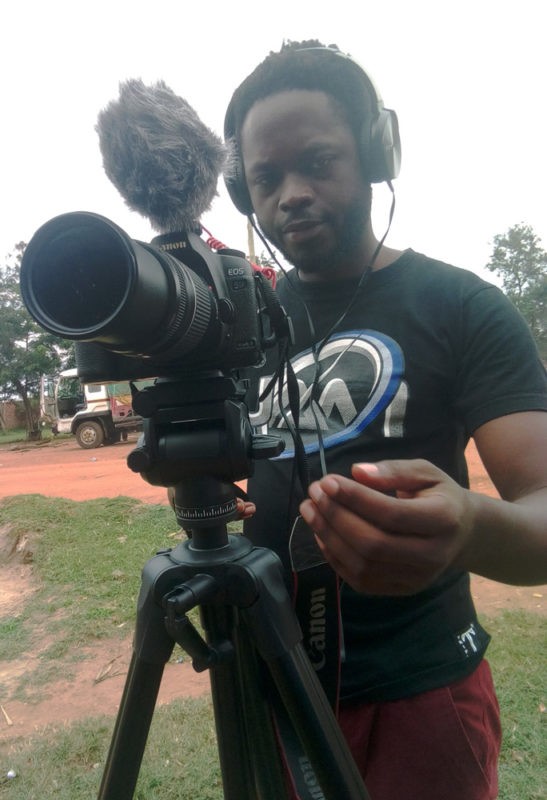
A full report will be part of my next communication to you. My local associate Elijah, whose latest email follows the end of my post, will be doing the interviews and collating the information for us. Elijah is another story in itself. He somehow came out of this impoverished and isolated community to get an education, follow his dream to be a videographer, and eventually meet me on my last visit to Uganda in 2017. We met on a dirt road in the middle of nowhere. He was selling a DVD he made of his soap opera video made with local amateur actors. I bought a DVD and took it back to the US with me to watch. His email address was on the disc. He and I have become friends and now he is our staff project director in Uganda. He deserves a full blog entry. He defied his fate and battled to become himself. In the process, I have been able to work remotely in Uganda with absolute efficiency.
Here is his last report to Thanksgiving Coffee. It exemplifies my good fortune to find myself on the same spot as he was, at the same moment. Was it fate? Serendipity? Providence? That moment changed his life, mine, and the course of 320 coffee farming families.
Dear Paul Kazeff,
I would like to inform you that we started the exercise of water filter distribution for the 3rd round and it’s going on well. I would also like to tell you that whenever some filters reach with damages perhaps on shipping, Mr Matovu (spouts) has to make replacement. This is why, we received 80 filters for the 3rd round plus 2 filters compensation for filters that reached with damages during the 2nd round.On this note, I want Matovu to know that during this 3rd round, the truck driver did not take much precautions hence when I checked, I found 9 filters damaged. There is need for an assurance from Matovu that these 9 filters will be replaced and that in the next round, there will be proper packing of the filters in the truck and the driver taking much care when delivering the filters. For proof of the 9 damaged filters, I have attached some photographs. Check in the attachments of this email. You will see some few photos of water filter distribution exercise and the 9 damaged filters. I will send a 3 minutes video and more photos for the whole exercise in a few days.
Thank you,
John Elijah

We will celebrate when all 340 families have the health energy and joy that clean water brings. When you purchase this coffee you are buying yourself Angel Wings, and of course Delicious Peace.


Clean Water For All - Helping Uganda
read more -
![THE WAY OF THE BEE BOLD ALLIANCE]()

Bee Bold Alliance
The Goal of the Bee Bold Alliance is to Unite Pollinator Protectors to support Biodiversity and Food Security for future generations.The How:
Here are four ways for you to be part of the solution for pollinator survival.
- Drink Bee Bold Coffee – Use your coffee dollars to support your local pollinator protectors. We will send 20% of your online purchase of Bee Bold Coffee to the Bee Bold Partner of your choice. This organic, fair trade coffee is a full circle product.
- Sign the Pollinator Protector Pledge – Pledge to care for the Earth, your home, and your watershed for pollinator survival. You can protect pollinators by using organic land management at your place of residence, your business and community. Join the Pollinator Pledge.
- Create a Pollinator Garden – Feeding local pollinators is possible at any size. Doorstep flowerpots, a tree between a sidewalk and the street, a border of herbs and flowers, a full backyard garden, a front lawn replaced by herbs and veggies, or acres of sustainably farmed vegetables. Garden spaces come in every size. Get planting here
- Sponsor a Pollinator Garden – Support food security in collaboration with the Bee Bold Youth Core. Contact
We Facilitate
-
Pollinator Gardens to feed our communities
-
Youth Projects to develop self-responsibility
-
Intentional Creativity for visions of hope through art, music, and dance
-
Traditional Ecology Knowledge for integrated relationships to all life
We Create
-
A circle of regenerative ecology
-
Support for continued life on Earth
-
Hope for our future generations
We Celebrate
-
Each season with heart-centered storytelling, art, dance, and music
-
Connection to our natural world for social and systemic change
This is the Bee Bold Alliance, uniting pollinator protectors for the future of our biodiversity and food security for future generations. The Bee Bold Alliance is a project of Thanksgiving Coffee Company, a certified B Corp using business as a force for good.
Project Director ~ Lavender Grace Cinnamon ~ Sustainable Ecology Advocate info@beeboldalliance.com or www.beeboldalliance.com
THE WAY OF THE BEE BOLD ALLIANCE
read more -
![Pollinator Protectors Unite for National Pollinator Week]()

Pollinator Protectors Unite
National Pollinator Week June 22 – 28TH, 2020
Thanksgiving Coffee Company is an activist company and has been for over 40 years. We use coffee as a medium for change and a force for good. We are passionate about Pollinators and the biodiversity they create in the web of life and food on the planet. We are so passionate about preserving Pollinators that we have created a product line to support this work. Our Bee Bold Coffee generates funds for Bee Centric and Pollinator Protector Non-Profits to maintain the diversity of each bioregion and ultimately food security for all.
Sign the Pollinator Protector Pledge and show your solidarity for future generations.
Download and Sign the pledge
Email it to Info@beeoldalliance.com
Subject line: Pollinator Protector
or
Simply Copy and Email the following information below to info@beeboldalliance.com:
By signing this pledge you agree to:
Be a steward of the soil and the water of your home residence Only use organic land management to ensure pollinator health To invite neighbors to take the Pollinator Protector Pledge
Are you a Pollinator Protector?
This self-certification is a way to give responsibly to our own place on this Earth. As an individual, you pledge to add the acreage of your home residence to the health of the pollinators by eliminating harmful chemicals and pesticides with the use of organic land management. In this process, you support the watershed that your land is linked to and all the pollinators that rely on this water. Not sure what watershed you are part of, click here. Your pledge will be added to the growing number of Pollinator Protectors from the Bee Bold Alliance. We will add your acreage and your watersheds to a growing map, to show region by region the impact we have as an Alliance for Pollinator Health. (The map is in process and will be live shortly.) As a business you can protect the lands you do business on, or the property of your local school, library or community center.
By focusing on the health of the soil and the water we can provide a safe haven for our pollinators to be, to live, and to grow. Together we can unite the land as a sustainable food source for all pollinators, all people, all races, and all colors. We honor and give thanks for the bounty of the Earth, and the waters that give us life.
We are looking to collaborate with other businesses and nonprofits to maximize the impact of our Pollinator Survival efforts.
To sign the Pollinator Protector Pledge and learn more about the Bee Bold Alliance please contact Lavender Grace at lavender@thanksgivingcoffee.com or 707 964-0118 ext 107.
We are grateful for your pledge, we are grateful for your collaboration.

Local Pollinator Garden Project
Pollinator Week Garden Project Tuesday, June 23, 2020
Fort Bragg Bee City USA requests the help of community volunteers during Pollinator Week (June 22-28) to clean up the Bee City Garden at Guest House Museum Park. The Garden has not been maintained since February due to COVID 19 Sheltering-In-Place. Please come out and help weed and trim in the Garden on Tuesday, June 23 at 2 pm. We will wear masks and practice physical distancing. We can use up to a dozen volunteers. Please bring your own gloves, and your favorite weeding tool and clippers if you have them. We will have some tools available. In the unlikely event more people than needed appear, we will hope to sign volunteers up for other upcoming garden projects in our community. If you have questions, call 707-494-2149 and leave a message. Your call will be returned.
Pollinator Protectors Unite for National Pollinator Week
read more -
![Mocha Java - A Classic Blend Taken to New Heights]()

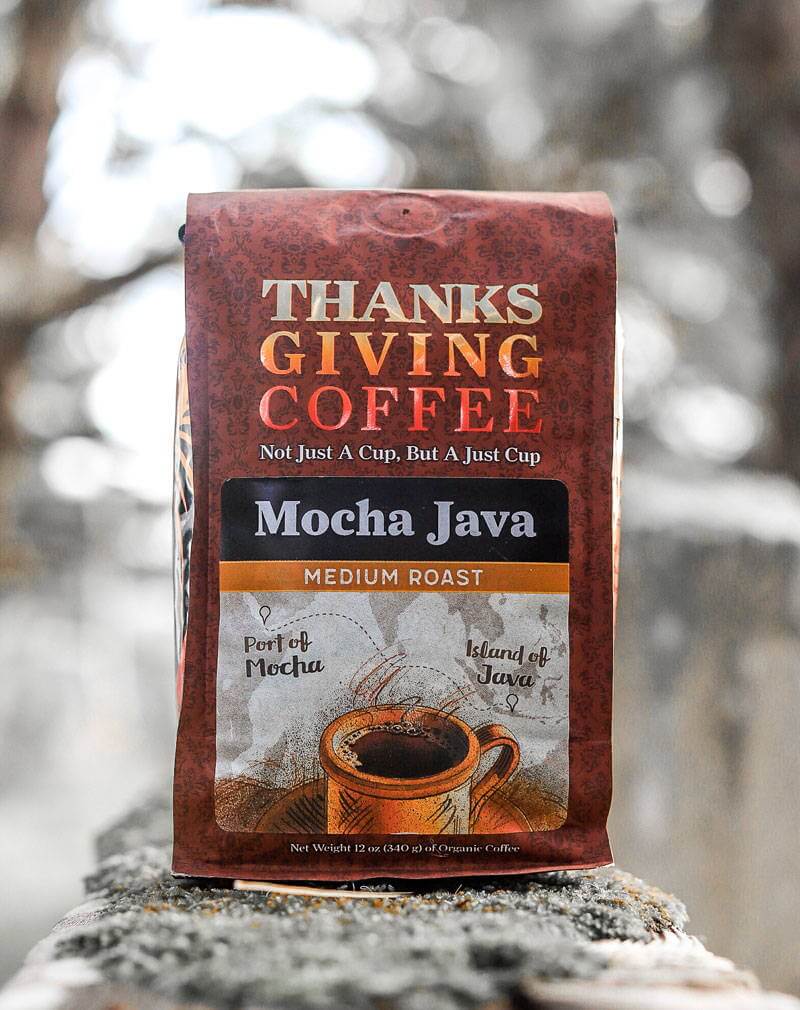
Our Mocha Java blend celebrates the rich history of this classic coffee combination. Back in the 1400s to 1600s, the majority of Europe’s coffee intake came out of the Red Sea, from the Port of Mocha [Makha or Mokha]. This coffee was grown in the country of Yemen, but was referred to by the name of the port from which it came. In the Pacific Islands, it was the same story. Most Indonesian coffee was coming out of a port on the island of Java, controlled by the Dutch East India Trading Company. This led to the term “java”, which has remained as slang for coffee to this day.

These two ports caffeinated most of the coffee-drinking world in those days, and trading ships passed through both on the same trip. Although 5,000 miles separated them, coffee from Java and Yemen lived together on the sailing vessels that made their way across the Indian Ocean and back to Europe. These two origins came together as the very first blend in the world of coffee, and it’s a combination that roasters continue to emulate.
We sent our Mocha Java Blend into Coffee Review for their “Desert-Island Coffees: What To Drink When You’re Stuck at Home” article, and we’re thrilled to announce that it received our highest score ever- 96 points!
Our Roastmaster Jacob Long says:
“We chose to highlight our Mocha Java blend because folks stuck at home can brew up a cup of this coffee, sit back and take a mental vacation to faraway places. We get the opportunity to educate consumers about the early history of Coffea arabica production and trade and answer some common questions like “Is chocolate added to this coffee?” and “Where the heck is Java?” We can talk about the effect of terroir on the cup, the various methods of post-harvest processing, and the fine art of blending coffees together to create a more complex cup.”
Ken Davids of Coffee Review, who particularly liked this coffee, says, “An echoing dry, savory, rather chewy depth comes on immediately (from a wet-hulled Sumatra, apparently), and after that, a pure, berryish sweetness (from two Ethiopias, a washed process and a natural) emerges and takes over through the finish. That paradoxical second surge of fruit and floral sweetness coming out of a nutty, savory matrix is what impresses me about this coffee. Stay-at-home coffees ought to be overlapping, layered, shifty like this one, so you keep coming back and finding something new.”
Pick up a package of Mocha Java today and experience this classic blend for yourself!
Mocha Java Blend
MEDIUM ROAST
Balances earthy richness and lively fruit sweetness; all the flavors we love in coffee. This blend combines wet-hulled Indonesian coffee, with wet and dry processed Ethiopian coffees.
Review Date: May 2020
Aroma: 9
Acidity: 9
Body: 9
Flavor: 10
Aftertaste: 9Mocha Java - A Classic Blend Taken to New Heights
read more -
![Flor de Jinotega – Two Decades in the Making]()

Flor de Jinotega —
Two Decades in the Making
 The story of how Flor de Jinotega got its name begins back in 1985, thirty-five years ago. Unknown to me back then, this coffee we now call Flor de Jinotega was an unknown coffee of dubious quality. It was unnamed as well as unknown. How could it be known when back then, coffees had few if any Appellations. As a roaster, you purchased coffees by country of origin and if lucky, your Broker/importer had discovered a region within that country that produced superior beans. But to ask for anything more specific was beyond the sophistication of the producers and their infrastructure which had no way to produce what we today call “micro-lots” or smaller quantities of very site-specific coffee farms. Although today we take micro-lots for granted, and from every producing country, there was a time when that was not even thought about, and why Flor de Nicaragua did not exist.

The One street in the City Central Market: Dirt street, mountains all around it.
Then, in 2000 I introduced the concept of Micro-Specialty lots to the Specialty Coffee Trade by creating a Cupping Laboratory Project which received a $400,000 USAID Grant to build nine cupping labs in Nicaragua, one of which was to be in Jinotega. Before 2000 it was unheard of for small scale coffee farmers anywhere in the world to have access to a coffee tasting laboratory where they could bring their coffee for flavor evaluation.
Family farms are not Plantations, but small scale “fincas”. Eighty-five percent of all coffee harvested is grown on small family farms of 10 acres or less.
In Rwanda, the average coffee farm is one acre and the average family size is nine! All beside the point but when you think about the last 300 years of the coffee Marketplace, supporting a system where only the buyers have the ability to assess value based on flavor quality, where does that leave the farmers? It leaves them at a terrible disadvantage would be the proper answer. How could they negotiate price if they had no knowledge of the quality of the fruits of their labor? The fix was in and it had been since coffee began to be traded 500 years ago in the Western Hemisphere.

The Local Coffee Market where farmers get quick cash for their beans.
Knowing that they lacked the knowledge and skill-sets to evaluate their coffee and that was compounded by the fact that the “Cupping Labs” where quality was evaluated, were in the hands of the government, large Plantation owners, and the exporters. I suggested in my speech that day to the 300 coffee farmers and Coffee Cooperative leaders that they should build labs so they could partner with the newly emerging worldwide coffee quality revolution.

Inside a coffee stall on Coffee Street: A family affair.
In the audience that day was the “Chief of Party” (on his business card) of USAID, The United States Agency for International Development. He came up to me as I left the stage and said,
“That cupping lab idea is a good one, here is my card. Write up a proposal for building them and let’s get them happening”.
I figured it was just another bullshit bureaucrat who was just doing his job, being in good form. But I wrote the proposal and got it to him AND a year laterThanksgiving Coffee Company had a $400,000 grant to build nine cupping labs in Nicaragua, all at small scale farmer cooperatives. I can say the rest is history, but the story gets better because the Project was to start the year I was to become President of the SCAA and have the loudest Bully Pulpit in the coffee industry.

The labs were revolutionary. They gave the farmers power. The power of knowledge. Curiosity took charge. Pent up desires to know, dampened by centuries of futility, oozed out slowly at first, but soon, exploded into the fast lane of the US and European coffee demand for quality flavor. By 2002, the SCAA was 20 years old and had defined quality, developed a language to describe the coffee flavor quality, and scoring system to quantify it.
>br>So now, for the first time in 500 years, the coffee farmers who had been cut out of the market by Power and greed were playing on a level playing field. It was quick. The Co-op leaders built beautiful labs with local wood and stone. I was operating under the idea that “If you build it they will come!”. Coffee buyers like to taste or “cup” coffees in a lab where they can apply the known standards and methodology of the twenty-first century. The rest of the story is all around us. Coffee of fine quality is almost everywhere because they built them and they did come.

Local Health Clinic. That’s me in the background with the yellow hat.
Coffee buyers and roasters big and small, came to professionally cup coffees, side by side to learn from each other and form new, or strengthen old relationships for mutual benefit. The labs had jobs, they became hubs, and records were kept and buyers had to be received and coffee had to be sold; somebody had to have the keys.
Roasters began to work directly with individual farmers or specific co-ops of the nine that were built, all in the quest for the Holy “Cup of Excellence” award now a part of the Direct Trade movement, known by coffee “insiders” as “The Third Wave”.
It was this third wave of coffee roasters that began to look for hidden diamonds among the many beautiful but lesser coffees. First, they looked for the flavor gems as adventurers would look for the moment. But soon the wave began to find each other and the idea of “Micro-lots” (small amounts of green coffee diamonds that were “discovered”). And here is where Flor de Jinotega comes in.

Coffee pickers bringing in their day’s work.
Flor de Jinotega (flower of Jinotega) is a coffee produced by a small scale coffee cooperative known by the acronym, SOPPEXCCA in the growing region located in the Northcentral region of Nicaragua. The farms are located in the mountains surrounding the city of Jinotega. SOPPEXCCA was one of the original nine cooperatives to build a cupping lab and begin the long hard journey to quality.
The cupping lab provided the tools to begin the process of evaluating each member’s coffee and thus were able to separate the coffees they produced by quality, eventually creating a coffee profile unique to the Jinotega Appellation.
We were there with them from the beginning, buying their coffees and providing feedback to them about the results of their efforts and paying them more as the quality improved over the years. This is the 20th year and these coffees we are presenting you today reflect two decades of our work together. They are the ultimate reflection of our collaboration and you might say, they are both a micro-lot and a perfect example of the value of Direct Trade.
Postscript.
In 2006 I returned for again to Jinotega to visit my friends at SOPPEXCCA and to cup coffees at their professional lab and cupping table. While there, I took these photos of life in a coffee town in the Mountains. Not much has changed in the 14 intervening years so here is a look at life in that part of the world.

Street food- yams, chicken on a stick, rice, gallo pinto. Absolutely delicious!


Jinotega Canines.

The Saddle Shop; the wild west still exists in Jinotega.

Street Dog
Flor de Jinotega – Two Decades in the Making
read more -
![Nicaragua 2020 trip report]()

Nicaragua in March – Everything starts to change: cupping coffees during a crisis
 As I reflect back on the past several weeks in my life, I feel extremely grateful to be back in my office overlooking the Noyo Harbor. Thanksgiving Coffee remains a viable, although much smaller, business on the North Coast. I’m hopeful that it will survive these challenging times and remain an activist company for years to come. My family and I are blessed with a dedicated staff that has followed very strict protocols the last few weeks at our home office. We are a lean crew right now, but everyone remains upbeat and focused on roasting, packaging, and delivering coffee.
I want to communicate my recent experience in Nicaragua as everything started to change rapidly with the advance of Covid-19 throughout the world. I left the United States and arrived in Costa Rica on February 24. I spent two and half weeks on vacation there! Then, I traveled to Nicaragua with the intention to spend two weeks in Nicaragua working remotely for the business before returning home. I arrived a few weeks before the coffee harvest finished and my plan was to visit the farmers and cooperatives that we purchase from with Nicholas Hoskyns, a key ally of Thanksgiving Coffee. He is the Managing Director of Etico, which supplies our green coffees from Nicaragua, Mexico, Guatemala Nicaragua, and Uganda.

I arrived by bus from Costa Rica on March 11th. My temperature was taken and a basic health screening done. This was the first real indication of change that I experienced as a result of COVID-19. I arrived safely in Leon and Nick picked me up outside the bus station office. The speed at which events unfolded over the next week was mind blowing. The two distinct events for me were the travel ban with Europe and the Costa Rica and Honduras border closings. I realize for most people these closings were not significant, but they made it abundantly clear that this crisis was real and the world was shutting down. As the week progressed more and more flights were canceled and my window for leaving Nicaragua was getting smaller. I purchased a ticket back to San Francisco on March 22nd for Sunday March 29th.
Our plan was to visit several of the farms and cooperatives Thanksgiving Coffee purchases from, but this was becoming increasingly unlikely. Sara Corales, the daughter of Byron, has taken over the sales and marketing of his coffee. She arranged to come meet us at Nick’s house on Sunday March 22nd to cup the Corrales’ family coffees, as they needed to make export arrangements. This was just 8 days after the travel ban from Europe went into effect.

Sara brought all the supplies for the tasting: roasted samples, a kettle, and proper cups. This was our first cupping in the COVID-19 era. We exhibited caution by having our own dedicated cups for each sample. There were no known cases in Leon and four total in all of Nicaragua at that moment in time, so no one in our group was highly concerned. However, we did our best to keep space during the cupping so as to minimize risk. Sara brought the usual array of coffees we purchase, which showcased Byron’s ability to process coffees in a number of different ways: Arabica washed, Arabica natural, Maracaturra washed, Maracaturra natural and an Anerobic coffee (yeast fermentation). The four coffees we typically purchase tasted great – bright, lively, floral, fruity and clean! We anticipate these coffees arriving in June or July depending on when they ship.

Although it was different than our normal procedure for tasting coffees, I found the experience uplifting and enjoyable. Coming together during a time of crisis in community is a blessing. I have known the Corales’ for over 20 years and they are an important part of the Thanksgiving Coffee family! We enjoyed a delicious lunch and conversation outside before Sara parted ways for Managua.
Nick and I were still contemplating a trip to Matagalpa to visit some of the farmers and co-ops on Wednesday and Thursday, but the hotel we usually stay at was closed. This was a sign. Nick made the executive decision for us to stay put and we went to the beach Wednesday afternoon instead! It was a good call for peace of mind, but disappointing to not be visiting the coffee region for the first time in nine trips to Nicaragua since 1999. I am confident that I will have an opportunity to visit the farmers and co-ops again and I feel grateful for a successful journey and to be back in a familiar and safe environment: HOME!
I hope everyone remains safe, healthy and mostly happy during this time of transition. We look forward to being your coffee of choice now and into the future. Thank you so much for your continued support! It means the world to me.
Nicaragua 2020 trip report
read more -
![Grinding Coffee at Home]()

Grinding Coffee at Home
Grinding coffee at home is an excellent way to improve your coffee experience. The fresher your coffee is when you brew it, the better it is going to taste. To help you get the most flavor out of your coffee beans, this post will cover a variety of methods to show how anyone can grind their own coffee at home. But first, let’s cover the…
Grind basics
Regardless of what you are using to pulverize your perfectly roasted beans into grounds, there are a few basic principles to keep in mind:
Grind Size
Using the correct particle size in ground coffee is one of the most important steps in coffee brewing. In general, a finer grind will produce a more intense brew and a coarser grind will produce a less intense brew. At the same time, a grind that is too fine will produce an over-extracted, astringent brew, and a grind that is too coarse will produce a weak, under-extracted brew lacking flavor.
Not sure what grind size to use? Here’s a handy guide:
COARSE (looks like Kosher or sea salt)
Cold Brew Coffee, French Press, Percolator, Coffee CuppingMEDIUM (looks like sand particles)
Pour-over Brewers, Auto-Drip Coffee Machines, Aeropress (with 3+ minute brew time)FINE (looks a bit finer than granulated sugar)
Espresso, Moka Pot (Stovetop Espresso Maker), Aeropress (with 1 minute brew time)Consistency
The size of the grounds should be consistent or uniform, meaning you don’t want to see large bits and super tiny bits in your grind. The reason: it is easier for smaller particles to become water soluble than larger ones. If there is a wide variety in the size of the particles in your coffee grinds, there will be a wide variety in the extraction time of your brew. The more consistent your grind size, the easier it is to extract the full flavor from your brewed coffee.
Now that we’ve got the basics covered, the next step is how to get the best grind at home!
HOW TO GRIND YOUR COFFEE
The Burr Grinder
Burr grinders are made of two burred plates with ridges that draw in and crush / grind the beans to a uniform size. This is what the pros use, and with good reason. Burr grinders deliver the most consistent grind with the least amount of work on your part. Just fill up the hopper, turn the dial to your desired grind setting, and turn it on. A burr grinder will cost between $60 — $250 depending on what features it comes with.
The Blade Grinder
While not ideal, a blade grinder will do a fine job if you put in a little effort. The first thing to remember is to pulse grind. Don’t grind all the coffee beans needed for your brew at once, instead, grind smaller quantities and pause regularly to shake the grinder. This will loosen all the bits and help you get a more uniform grind.
Take your blade grind to the next level: Got a sieve?
Sift the grounds through your sieve until you are left with just the large pieces. Then grind those large bits again until you are left with just medium and small grinds.
Pro-tip: Use a paper towel to get rid of the ‘fines’
‘Fines’ is coffee lingo for the tiniest powdery particles in ground coffee. Too many fines will leave your coffee tasting bitter and over-extracted. A nifty trick to get rid of them is to dump all of your grinds onto a paper towel and then rub them down into the paper towel with your fingers. A few passes is all it will take. Then gently transfer the grinds onto a plate (or right into your brewer). This will trap the powdery fines on the paper towel, leaving you with the best (most uniform and consistent) grind possible from a blade grinder.
Grinding Coffee at Home
read more -
![COVID-19 Precautions at Thanksgiving Coffee]()
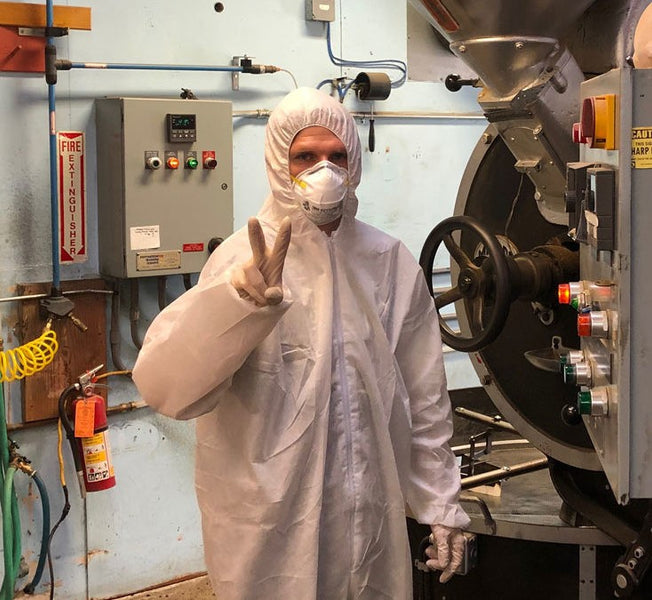
COVID-19 Precautions at Thanksgiving Coffee
What we are doing to keep our employees and customers safe
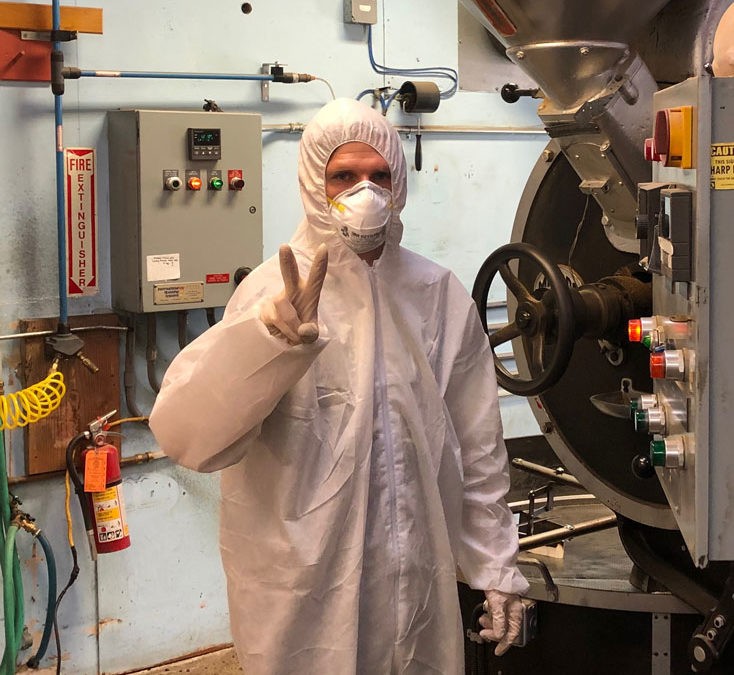
We take health and well being very seriously, and have been ahead of the curve when it comes to responding to the COVID-19 crisis. Thanksgiving Coffee implemented these new strict company-wide guidelines as Proactive Measures against the spread of the Coronavirus on March 17th.

- No visitors. All tours of our roastery, coffee cuppings, and espresso training sessions have been canceled.
- Deliveries to the office are received outside and then decontaminated.
- Office staff has transitioned to working from home.
- We re-configured our coffee package production line to give more space to our production staff.
We are disinfecting all the things:
- Shipments of green coffee are decontaminated before stocking.
- All production counters and surfaces are disinfected at the beginning and end of each day.
- All hands are washed, then washed again.
This is a constantly evolving situation. Please check back on this post for updates.
We are doing everything we can here at Thanksgiving Coffee to make sure that we stay healthy and operational so that A Just Cup is always full.
COVID-19 Precautions at Thanksgiving Coffee
read more