

News, Stories and more
Our Blog
View BY :


A Cup That Sounds Like the Forest
There’s a moment in the morning, before the day fully arrives, when everything is still soft.
The kettle hums. Light moves through the trees. And when the coffee begins to pour, there’s a feeling, like something living is arriving with it.
Our Songbird Nicaraguan Coffee carries that feeling. This is our shade-grown, bird-friendly coffee, cultivated beneath forest canopy where songbirds still find habitat along their migratory paths.
Bird-friendly coffee is one of the most effective everyday ways to support migratory bird habitat.
And when you brew it, you are part of that living system.
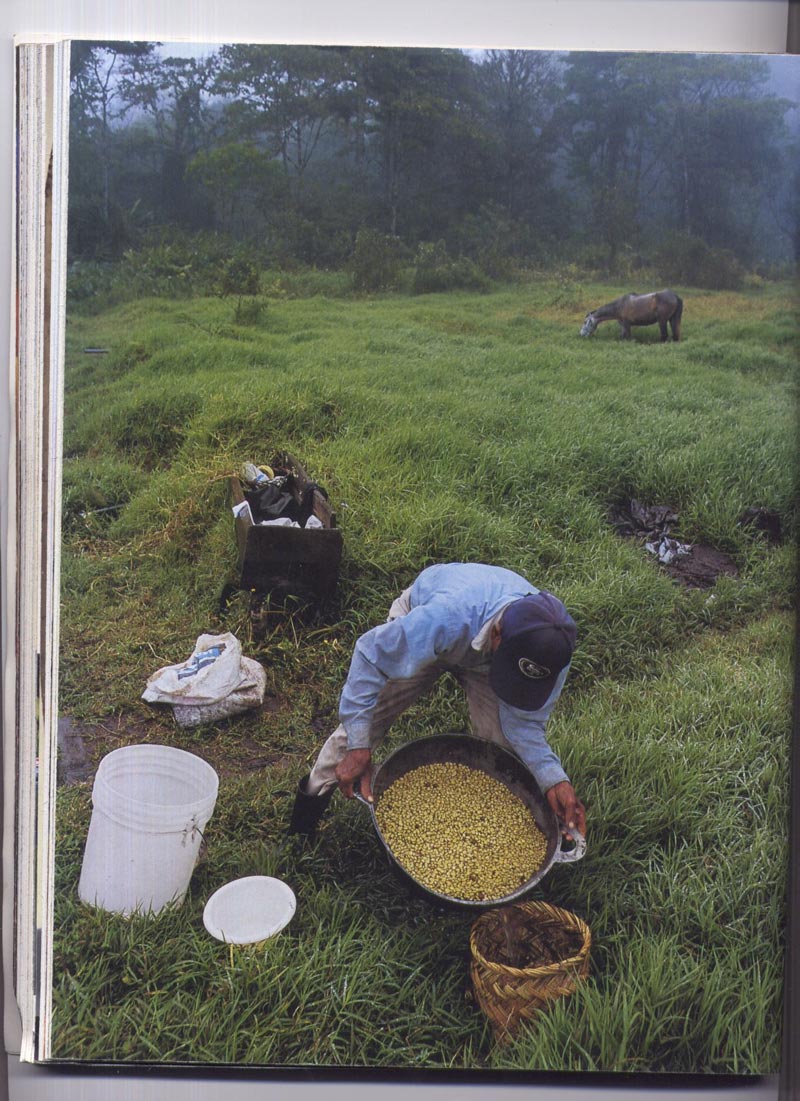
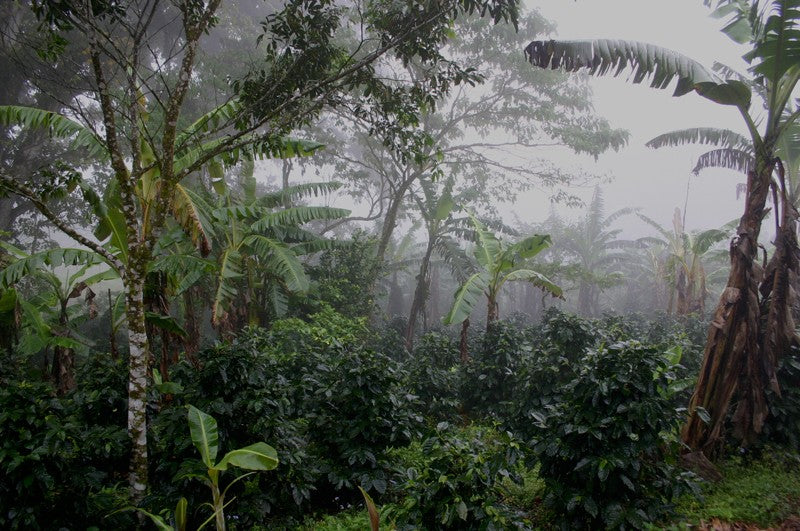
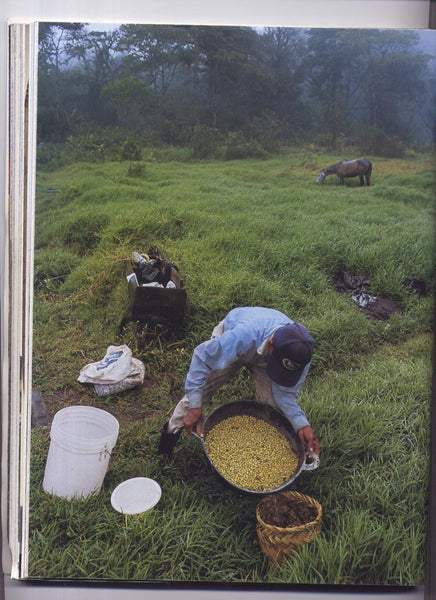
Nicaraguan Farmer in a Shade Grown Coffee Forest
Why Shade Grown Coffee Matters More Than Ever
The forests that sustain migratory birds are under pressure.
The Smithsonian Migratory Bird Center has spent decades studying and protecting bird migration across the Western Hemisphere. Their work helps make one thing clear: birds need healthy, connected habitat to survive.
Right now, that system is breaking down. Since 1970, bird populations in the U.S. and Canada have declined by 29%, or nearly 3 billion birds. Not only rare species, but common birds too. Backyard birds. Songbirds. The ones many of us grew up hearing.
Birds are indicators of ecological health. When they decline, it tells us something deeper is out of balance.
That is one reason this coffee matters.
For nearly three decades, we’ve partnered with the American Birding Association to help protect that habitat through coffee.
What began as a shared belief, that coffee could be grown in a way that supports bird life, has grown into one of our longest-standing relationships. Together, we’ve supported shade-grown practices that allow forests to remain intact, creating space for migratory birds to rest, feed, and continue their journeys.
This is what bird-friendly coffee makes possible.
What is Shade Grown Coffee?
Shade-grown coffee is coffee grown beneath a diverse canopy of trees instead of in cleared, sun-exposed fields.
This kind of farming helps create:
- habitat for migratory birds
- healthier soil and water systems
- natural biodiversity on the farm
- slower cherry development, which often leads to richer flavor
In simple terms: better habitat supports better coffee.
That has long been part of our understanding at Thanksgiving Coffee. Great coffee and healthy ecosystems belong together.
How do we grow coffee in a way that supports land, people, and ecosystems together?
A Legacy of Environmental Leadership
This work didn’t begin recently at Thanksgiving Coffee.
In the early years of specialty coffee, our team helped establish the first Environmental Committee within the Specialty Coffee Association of America - what today would be recognized as an early form of a sustainability committee in the coffee industry.
At the time, the language was different. But the intention was clear: to bring ecological responsibility into how coffee is grown, sourced, and shared.
Paul and Joan Katzeff worked across farmers, cooperatives, and industry leaders to help connect people around a shared understanding that coffee exists within a living system.
Today, many call this coffee sustainability leadership.
At its root, it was something simpler: whole systems thinking.
That:
- coffee quality is connected to farmer wellbeing
- farmer wellbeing is connected to ecosystem health
- ecosystem health is connected to how we all participate
This has never been separate from the coffee. It is the coffee.
Where Coffee Sustainability Began: A Whole Systems Approach
Long before sustainability became standard language in coffee, it began as a question of relationship.
How do we grow coffee in a way that supports land, people, and ecosystems together?
This question guided early collaboration across the industry - bringing together farmers, environmental advocates, and coffee professionals to think beyond the cup.
From extraction to relationship.
From product to system.
From short-term yield to long-term vitality.
That shift continues to shape coffee today.
Meet the Coffee: Songbird Nicaraguan
Tasting Notes
Cocoa richness
Gentle citrus brightness
Smooth, balanced finish
Origin
Nicaragua, sourced through long-standing cooperative partnerships
Roast
Medium roast, crafted for clarity and body
👉 Shop Songbird Nicaraguan Coffee
Part of our Songbird Coffee line, developed in partnership with the American Birding Association, this coffee reflects nearly 30 years of shared commitment to protecting bird habitat through shade-grown farming. It’s a relationship built slowly, like forests themselves.
Brewing Habitat: A Daily Ritual
There are large challenges in the world.
And there are daily practices that quietly shape what comes next.
When you choose bird-friendly, shade-grown coffee, you are supporting:
- forest ecosystems
- migratory bird pathways
- farmers working in balance with the land
It is not abstract.
It is immediate.
It is in your cup.
Watch how habitat, birds, and coffee are connected across continents.
Recipe: Citrus Bloom Cold Brew
A bright, floral expression of Songbird Nicaraguan.
Ingredients
- 1 cup coarsely ground Songbird Nicaraguan coffee
- 4 cups cold filtered water
- zest of 1 orange
- 1–2 teaspoons wildflower honey
- ice
Directions
- Steep coffee and water for 12–16 hours in the refrigerator
- Strain slowly
- Add orange zest and honey
- Serve over ice
Citrus cold brew coffee with orange zest and honey
7 Ways to Support Songbirds,
Starting With Your Cup
The good news is this: while the challenges are real, there are meaningful ways to help.
- Choose Bird-Friendly Coffee. More than 70 species of migratory songbirds depend on coffee farms for habitat. Shade-grown coffee helps preserve that habitat.
-
Plant Native Species. Even small spaces can provide food and shelter for birds.
-
Avoid Pesticides. Reducing chemical use supports birds and the ecosystems they rely on.
-
Make Windows Safer. Simple changes can reduce bird collisions.
-
Keep Cats Indoors. Protects both birds and pets.
-
Reduce Single-Use Plastics. Supports broader ecosystem health.
- Pay Attention. Noticing birds is part of protecting them.
Start With the Cup
Brew coffee that protects habitat. Let that choice ripple outward.
Earth Month: A Moment to Choose Differently
April brings us back into awareness:
- Earth Month (April)
- Earth Day (April 22)
- Arbor Day (April 24)
These are reminders, and also invitations.
The future of birds, forests, and farming systems is shaped by everyday choices.
From Forest to Cup
From the highlands of Nicaragua to your kitchen, there is a thread.
Birds in motion.
Farmers tending trees.
Water, soil, and time.
And you.
Not just a cup, but a living system that is held for a moment in your hands.
FAQ Section
What is bird-friendly coffee?
Coffee grown under forest canopy that supports bird habitat and biodiversity.
Why is shade-grown coffee important?
It protects ecosystems, supports wildlife, and improves coffee quality.
What is a sustainability committee in coffee?
Today, sustainability committees guide environmental and social practices. This work began with early environmental leadership efforts in specialty coffee, including the first Environmental Committee.
How can I support bird-friendly coffee?
Choose shade-grown coffee, reduce pesticides, plant native species, and support responsible sourcing. From Forest to Cup
Bring the Forest Home
Brew with intention.
Choose shade-grown coffee.
Share your ritual.
Lavender Grace Kent is the Director of Brand Narrative and Culture
Stay In Touch - We like to stay connected
Songbirds of the Forest: Brewing Habitat in Every Cup
A Cup That Sounds Like the Forest There’s...
read more-
![Wolf Awareness Week]()
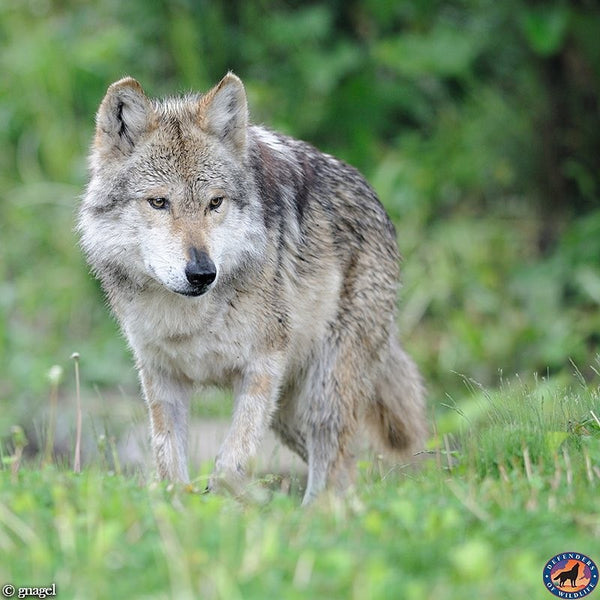
Wolf Awareness Week
October 15 – October 21
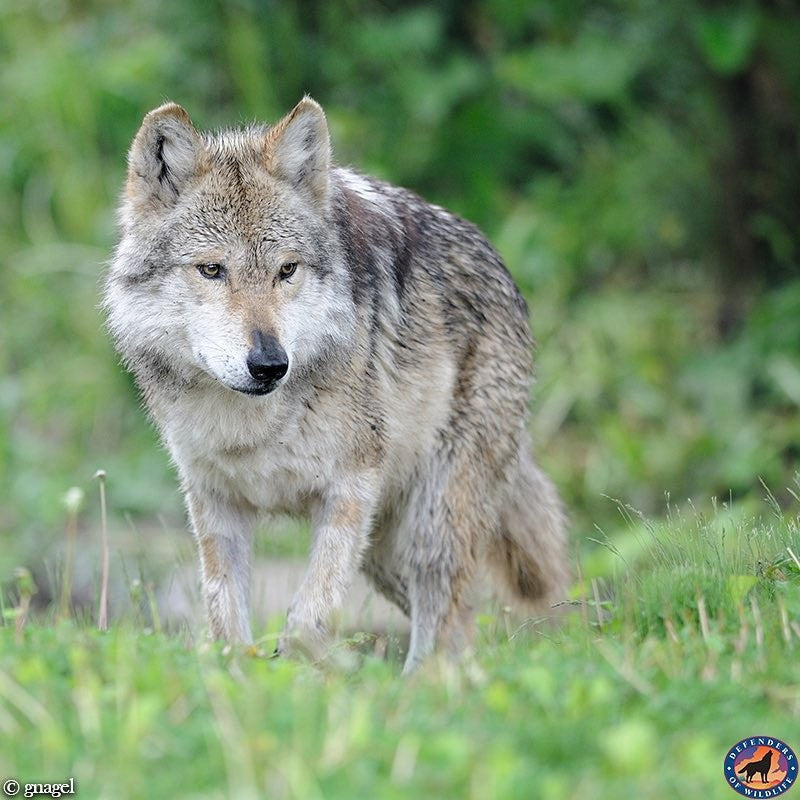
This week, it’s all about the wolves. These magnificent creatures play an integral part in North America’s ecosystem, and Thanksgiving Coffee has partnered with Defenders of Wildlife to protect their legacy. During Wolf Awareness Week, we’re taking a moment to highlight wolves, and the part that each of us can play in protecting these animals for future generations. Spread the word about Wolf Awareness Week, and visit www.defenders.org to make a donation now!
Scroll down to learn more about how Thanksgiving Coffee is involved in protecting our wolves.

What do you know about our wolves? Take a look at the fact sheet below to learn more, and click the image to be directed to the Defenders of Wildlife Gray Wolf Basic Facts page.

Defenders of Wildlife + Thanksgiving Coffee
Thanksgiving Coffee is partnered with Defenders of Wildlife to save our wolves. We do this through our Cause Coffee program, donating 10% of every sale of our Save Our Wolves Coffee back to DOW. If you sign up as a Defenders of Wildlife member and purchase this coffee through the Shop Defenders page, you can give back even more! For every purchase made through their link, 25% of the proceeds will be donated.
Puerto Rico’s road to recovery will be a long and arduous one, but perhaps it will be a bit more bearable with a cup of coffee in hand.

Learn more about roast colors, to choose the right roast for you!
Wolf Awareness Week
read more -
![Sing a Song of Bird Notes]()
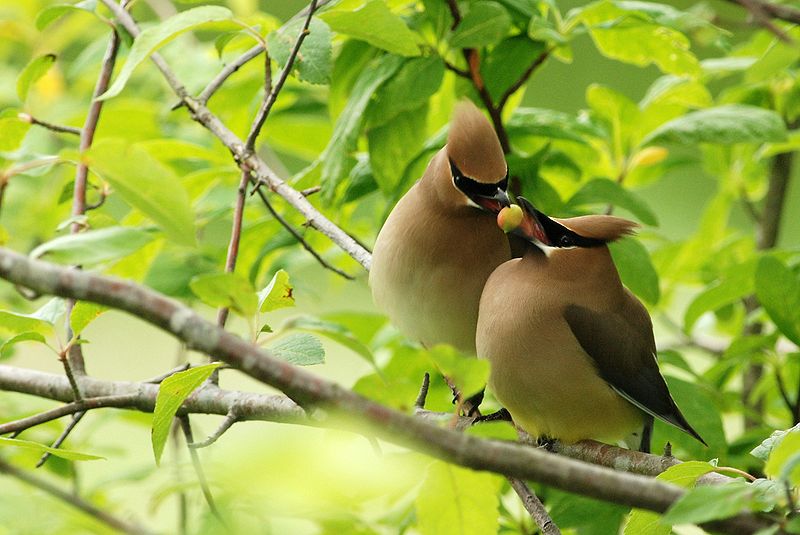
Sing a Song of Bird Notes
Song Bird Coffee supports the arts
Do you have a favorite bird? Is it the bold blue jay, or the striking red cardinal? Perhaps it’s the mischievous raven, or the sweet singing sparrow? Maybe you don’t know what it’s called, or even what it looks like, but you know its song as it fills your ears with a familiar refrain. Birds connect us to nature, regardless of where we live; from city dwelling pigeons to dramatic California Condors, birds are an ever-present aspect of our lives, but their numbers are dwindling. You don’t have to be an avid birder to enjoy their presence, but if we fail to appreciate them in our everyday lives, then we risk taking them for granted and losing them forever.
Fostering a love of the natural world can take years, especially now when more of us live in cities than ever before. Programs like BirdNote cultivate a love of nature with a wide audience, helping to bring the outside into our homes and deliver the delights of nature in small, auditory morsels.
The BirdNote radio program has been engaging listeners of all ages for over ten years, sharing daily two-minute stories about birds and the environment with audiences all across the country. These uplifting little vignettes are just the right length for everyone to enjoy, and the perfect remedy to ‘news fatigue’.
BirdNote and Song Bird Coffee
Song Bird Coffee has been partnered with the American Birding Association for 20 years and together we have raised over $150,000 in support of the ABA and Partners in Flight, which funds ornithological studies of migratory birds in Central America. Together, we are making a difference by promoting citizen science, ecotourism, and sustainable Bird Friendly farming practices, and now we are proud to be reaching new audiences by sponsoring BirdNote.
By working together, Song Bird Coffee, the American Birding Association, and BirdNote are committed to making the world a better place, for us and for the birds.
Give BirdNote a listen here.
Learn more about the American Birding Association and Partners in Flight.
Sing a Song of Bird Notes
read more -
![Best for the World, Best for Community]()

Best for the World, Best for Community
It’s that time of year again, when the Best for the World honorees are published. These are the B Corporations around the world that score in the top 10% of B Lab certification. Thanksgiving Coffee was honored to make this list for the second year in a row in the Best for Community category.
Take a peek at the full list by clicking the image below.

This year 846 companies were recognized on the Best for the World list in 52 different industries from 30 different countries. Being a part of this community and being recognized in the top 10% is a really wonderful validation of the work we do with our partnership with organization like Friends of the Earth and the Dian Fossey Gorilla Fund International.
Take a look at where some of the other Best for the World companies are located all over the globe:

Best for the World in Mendocino County
Thanksgiving Coffee is just one of nine B Corporations located here in Mendocino County. We’re joined by Harvest Market, Fetzer Vineyards, North Coast Brewing Company, The Color Mill, Flo Beds, Bed Bandits, Eleek Sustainable Custom Lighting and Heather Paulsen Consulting.
Harvest Market also made the Best for the World list, under the Changemakers category, as did Eleek, under the Best for the Environment category. We love seeing our local B Corporations making a difference here in Mendocino county, and around the world.
Read more about what it means to be on the Best for the World list, on Forbes.com.
You can also check out our score on the B Corporation website, to see how we stand up in every category! See that here.
Best for the World, Best for Community
read more -
![Grauer's Gorillas in Congo's Maiko Park]()
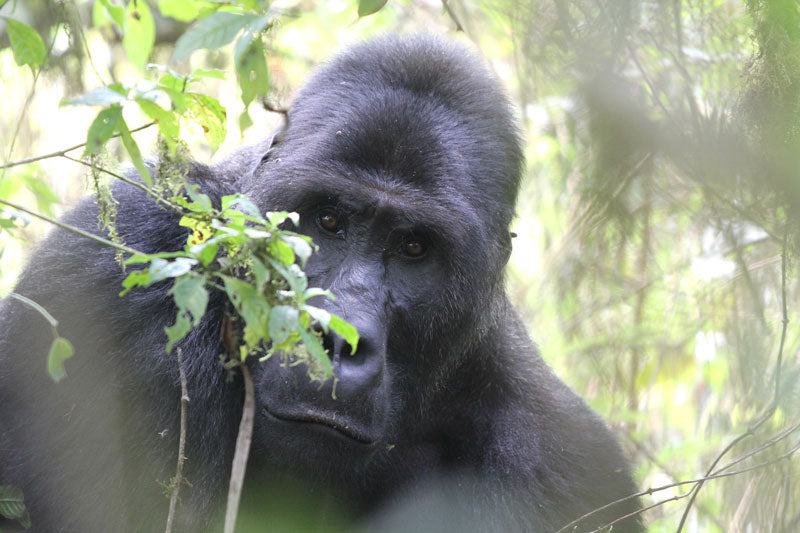
Grauer's Gorillas in Congo's Maiko Park
Read the original Mariko Park blog post on the Dian Fossey Gorilla Fund International website.
Results of a recent wildlife survey led by the Dian Fossey Gorilla Fund in the Democratic Republic of Congo suggests there are twice as many Grauer’s gorillas in parts of Maiko National Park than originally predicted. This is especially welcome news given that Grauer’s gorillas are among world’s most-endangered apes and face numerous threats to their survival, with only a few thousand still remaining. Their population is estimated to have plummeted as much as 80 percent in recent decades.
The greatest threat to Grauer’s gorillas and other wildlife in the region is poaching, which is largely fueled by the illegal trade in conflict minerals. In 2010, legislation was passed which required U.S. companies to disclose whether their products contained conflict minerals. Just this last week, the U.S. House of Representatives passed an amendment that would defund this “conflict minerals rule.” If this measure is passed by the Senate, it will bring additional pressure to this species’ survival.
“Maiko is a huge park — with more than 10,000 square kilometers — and it is critical habitat to the future conservation of Grauer’s gorillas and many other species of wildlife,” says Dr. Damien Caillaud, the Fossey Fund’s research director for Congo. “Recent reports suggested as few as 15 gorillas remained. We hoped that if we looked for more gorillas there, we might find them. And we did.”
In the relatively small portion of the park that researchers were able to survey, they located evidence of more gorilla groups than expected and now estimate at least 30 gorillas live in that area, with likely more living throughout other areas of the park that have yet to be surveyed.
Maiko National Park is one of only two formally protected areas within the Grauer’s gorilla range. However, Maiko had not been surveyed for gorillas for many years, primarily as a result of security challenges in the region and the difficult terrain.
“We surveyed less than 1 percent of the park and found evidence that more gorillas exist there than has been recently suggested. This is very exciting and demonstrates the critical need for more surveys to fully understand how many gorillas remain as well as more conservation support for the park”, says Dr. Tara Stoinski, Fossey Fund president and CEO/chief scientist.
The survey team also found signs of chimpanzees, okapi, buffalo, duikers, giant pangolin, monkeys and other rare wildlife, as well as evidence of poachers and mining activity.
The Fossey Fund works to protect Grauer’s gorillas in a core area of their range outside national parks, by working with local communities and traditional landowners, and training local people to become gorilla trackers, with five teams now working regularly from a permanent base north of the town of Walikale.
Collaborating with local communities and authorities
The Maiko survey represents a collaborative effort between the Fossey Fund, the Congolese national park authorities (ICCN — Institut Congolais pour la Conservation de la Nature) and the local community living around the park. Fossey Fund’s Congo program director, Urbain Ngobobo, and research and conservation program manager, Escobar Binyinyi, worked with Maiko chief warden, M.A. Boji Dieudonné, to survey gorillas and other crucial wildlife in a 100-square kilometer section of the park.
A team of nine Fossey Fund field staff, as well as monitoring officers from Maiko/ICCN walked for several weeks in extremely difficult terrain, measuring signs of gorillas along pre-determined transects. They found good, fresh signs of the presence of gorillas, such as night nests, foot prints and food remains, suggesting there are two to three Grauer’s gorilla groups just in this area, says Dr. Caillaud.
“A few years ago, it was unimaginable that the community surrounding southern Maiko could make a joint patrol with ICCN,” says Ngobobo. “The survey we did was a strong signal showing that we can count on the community to save the remaining extremely endangered Grauer’s gorillas both inside the national parks and in the community forests.”
These findings are especially heartening as the Fossey Fund celebrates its 50th anniversary on Sept. 24, marking the day in 1967 when Dian Fossey founded the legendary Karisoke Research Center. But they are also very critical, given the potential de-funding of the conflict minerals rule, which has brought some progress and international attention to the mining situation in Congo.
With the Fossey Fund’s daily mountain gorilla patrols and 50 years of research all based out of Karisoke, it is known that intensive protection can save endangered gorillas. Indeed, mountain gorillas are the only wild ape whose numbers are stable.
That’s why we are raising funds this month to protect the future of all gorillas! Because of this urgency, our board is matching all donations through Sept. 24, up to $20,000.
Visit the Dian Fossey Gorilla Fund International website to join this special campaign!
Thanksgiving Coffee Company has partnered with the Dian Fossey Gorilla Fund International for almost fifteen years, supporting their efforts in Rwanda, saving the mountain gorillas. Earlier in 2017, we had the honor of releasing a new Cause Coffee to support the Grauer’s gorillas of the Democratic Republic of the Congo.
Grauer's Gorillas in Congo's Maiko Park
read more -
![It Takes a Village to Raise a Whale]()
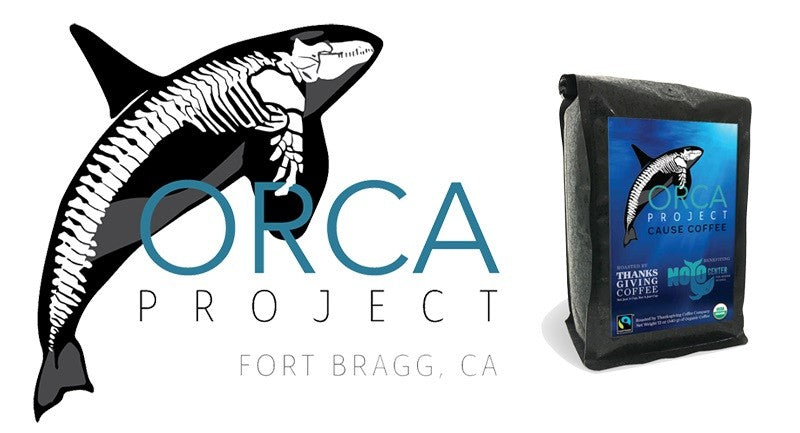
It Takes a Village to Raise a Whale
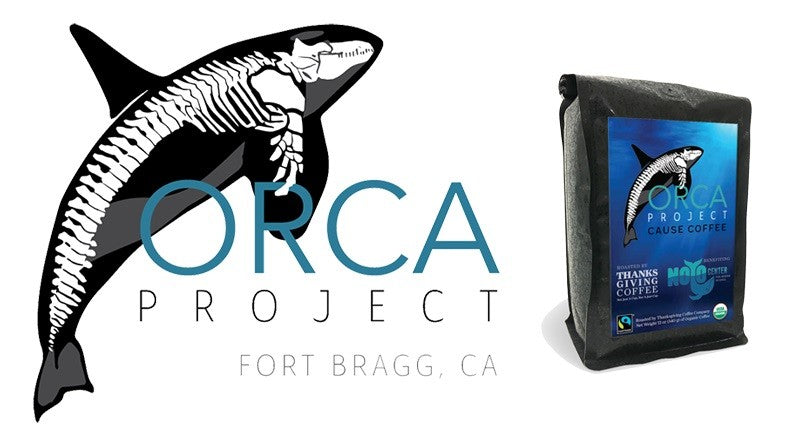
When the body of an adult killer whale (Orcinus orca) washed ashore in 2015, the community of Fort Bragg was presented with a unique opportunity. In the wake of a tragic death, a project was born that could benefit the town and further our understanding of the sea creatures that live along our shoreline.
Beached orcas are exceptionally rare and their bodies are a treasure trove of valuable scientific information. In a combined effort between the Noyo Center for Marine Science, the Marine Mammal Center in Sausalito, the California Academy of Sciences, Humboldt State University, and California State Parks, scientists and volunteers acted quickly to perform a necropsy and recover valuable tissue samples. Two years later and the Noyo Center’s Orca Project is on track to reconstruct the 26 foot long skeleton this summer for everyone to enjoy.
Over the next four weeks, the rec center/basketball court behind Town Hall has been transformed into a marine mammal articulation workshop, led by master articulators Mike de Roos, Michi Main, and Lee Post from Alaska. People have come from far and wide to participate in this once in a lifetime opportunity, and there is something there for everyone. Young kids attending summer camp are learning about marine mammals and ecosystems, while high schoolers assemble their own porpoise skeleton. Grad students are taking measurements and gathering data, artists are photographing and sketching bones, all the while locals and tourists walk among them, drinking it all in, amazed by all the activity.
It takes a village to raise a whale skeleton; from recovering, transporting, cleaning, and housing the bones, to assembling the skeleton and raising it up for all to see. Everyone has a role to play, including Thanksgiving Coffee, who is keeping everyone working on the project well caffeinated. We are so enthusiastic about this amazing endeavor that we have also created a special Orca Project fundraising coffee to help support the mission of the Noyo Center.

It seems that our whole community has coalesced around whalebones, and Thanksgiving Coffee is no exception. Upon its completion, our small town will host one of the largest and most complete Orca skeletons in the world; something that the whole community can take pride in, because it took the whole community to achieve.
It Takes a Village to Raise a Whale
read more -
![Join the Fight to Save Our Wild Horses]()
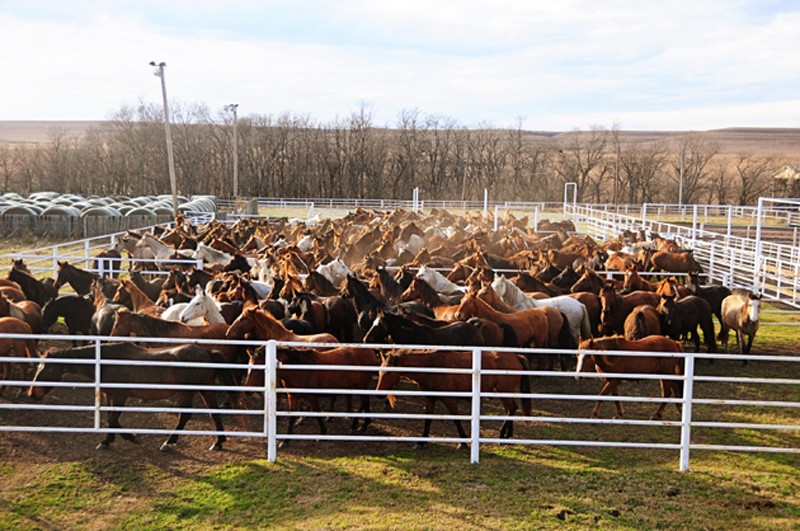
Join the Fight to Save Our Wild Horses
Thanksgiving Coffee, an industry leader in social and environmental justice for over forty years, stands in defense of our wild horses. The vanguard of fair trade shade-grown coffee, Thanksgiving has helped their nonprofit partners raise much-needed funds to champion their missions through the Cause Coffee fundraising program. And now, Thanksgiving is proud to support the efforts of the American Wild Horse Campaign (AMWC) with the release of Wild Grounds Coffee.

Save Wild Horses
Today, both livestock and wild horses have the right to roam the range, but the political power of the cattle ranchers is stronger then the political power of wild horses. In the forty years since a bill was passed by congress to protect the wild horses, moneyed interests have worked tirelessly to chip away at it. Now, the use of our publicly owned grazing lands is being prioritized to create market value for ranging cattle, which only provides for 3% of America’s beef consumption.
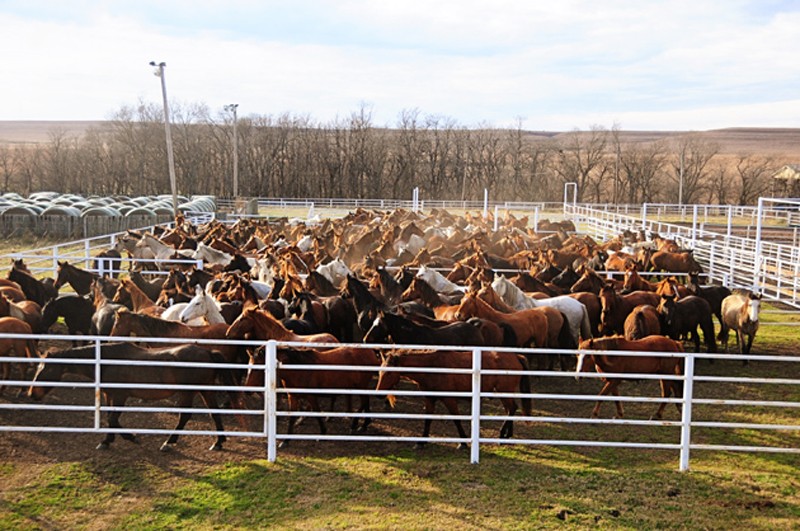
Unable to cull the herds or sell them for slaughter, the BLM began to round up what they considered to be an excess population. Today 35,000 horses, more than their entire population in the 1970’s, are kept in government holding pens. Not to be killed, yet never again to be free; this is a terrible fate to befall the national symbol of perseverance and freedom.
“The whole thing is cruel and lacks any sense of the American Spirit”, says Paul Katzeff, CEO of Thanksgiving Coffee and Past President of The Specialty Coffee Association of America, “We just gotta do something about the suffering to restore our own sense of freedom. Can you imagine the conditions? Thirty-five thousand wild horses in shadeless pens in 100 degree heat waiting to die?”

The American Wild Horse Campaign
The American Wild Horse Campaign is a champion for America’s wild horses and burros and they have been calling on Congress to reform the current ‘holding pen’ policies. Not only would such methods keep these animals in the wild, where they belong, it would also save taxpayers millions of dollars annually by no longer funding the removal of wild horses from the range and stockpiling them in government holding facilities and paying for their feed and water and medical needs.
Thanksgiving Coffee Company, 2017’s Roaster of the Year, is sending Wild Grounds coffee out into the country with the mission to raise funds and educate others about the plight of our wild horses. Together, we will stand in defense of the mustangs who have an inalienable right to roam the western landscape, just as we stand up against those who would profit from their incarceration and eradication.
 We invite you to join us. Stand up for America’s wild horses and the pioneer spirit we all share. Order a package of award winning Wild Grounds coffee and you are not just supporting the horses; you are also supporting fair trade for the farmers, organic shade-grown coffee that preserve rich jungles forests, and the ethical standards of a certified B corporation. Since 1972, we have been proud to bring you a beautiful cup of coffee that tastes just as good as it feels.
Not Just A Cup, But A Just Cup.
Join the Fight to Save Our Wild Horses
read more -
![Flight Beyond Borders]()
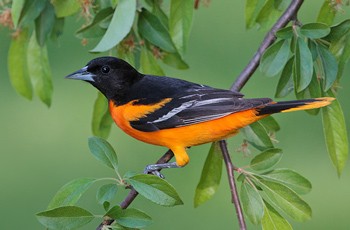
A celebration of International Migratory Bird Day

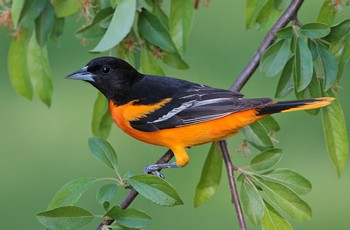
Here in the United States, we sometimes claim a cultural ownership of beautiful birds like the Baltimore Oriole, perhaps forgetting that the very same species could just as easily be named the ‘Panama Oriole’, or the ‘Nicaraguan Oriole’, as it spends half it’s life in Central and South America. IMBD is a reminder that the health and abundance of these birds that are so much a part of our heritage does not stop at our own backyard feeders. If we wish to enjoy their beauty and their songs for generations to come, we must care for them and their well being across all borders.
The growing demand for coffee, and the rise of the mono-cultured full sun coffee plantations, has demolished much of the wintering habitat for iconic birds like Orioles. In fact, many of these species are now referred to as ‘Coffee Birds’ because the only forest home left to them are the shade-grown coffee farms that preserve the jungle canopy.
For over 20 year, Song Bird Coffee has been a leader in supporting the farmers who protect their native forests by growing delicious coffees under the jungle canopy, preserving priceless habitat and biodiversity. This year, on International Migratory Bird Day, we hope you will join us in protecting our precious songbirds, just by enjoying a great cup of shade-grown coffee.
Flight Beyond Borders
read more -
![Smithsonian Magazine Feature – June 2004]()
Smithsonian Magazine Feature – June 2004
We’ve been digging into the archives a little bit, and came across this article from June of 2004. As Earth Day rolls around, check out this article from Smithsonian Magazine featuring Thanksgiving Coffee Company and our work in Nicaragua.
Read the article on the Smithsonian Magazine website.
Smithsonian Magazine Feature – June 2004
read more -
![Micro-Lot Coffee]()
Micro-Lot Coffee
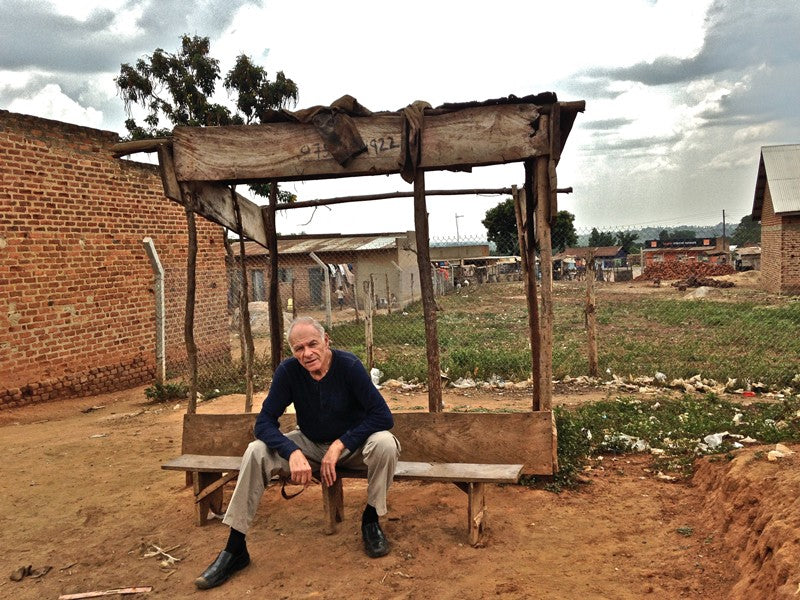
The world is lush with coffee growing regions, and inside those regions are thousands of small-scale coffee farmers, growing coffee in hundreds of different micro-climates and soil types. This is where we find the “micro-lot.”
Together with dozens of varietals (air, shade, wind, sun, rain, soil type, etc.), the coffee flavor is created in all its possibilities.
We have been in the coffee game for over forty years, and know the territory well, from Papua New Guinea to Nicaragua.
We know the farmers and they know us. Together we find these small, exceptional “micro-lots” produced by individual farms in quantities of no more than 10-20 sacks (1500-3000 pounds).
We pay the farmer a premium, and everyone involved is happy that a rare and quality coffee did not get lost in the crowd of good and quality coffee.
When the coffee finally arrives at Thanksgiving Coffee Company, our Roastmaster Jacob Long roasts the coffee 3-5 pounds at a time, using his knowledge to bring out the magic from each bean.
So when you see Thanksgiving Coffee offering a micro-lot coffee, you can be certain that you’re purchasing one hell of a great coffee.
– Paul Katzeff

Micro-Lot Coffee
read more -
![For the Birds: Blackburnian Warbler]()
For the Birds: Blackburnian Warbler
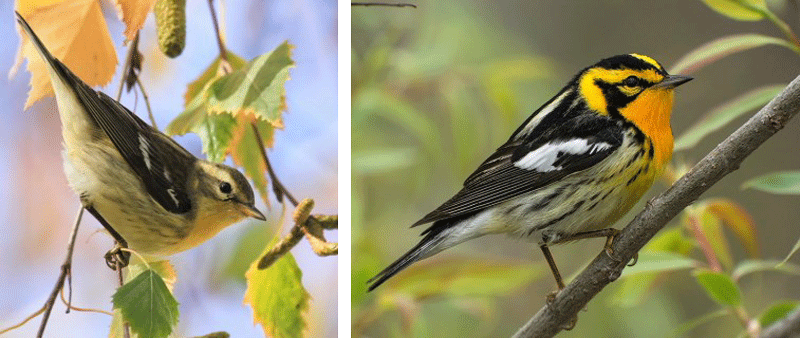
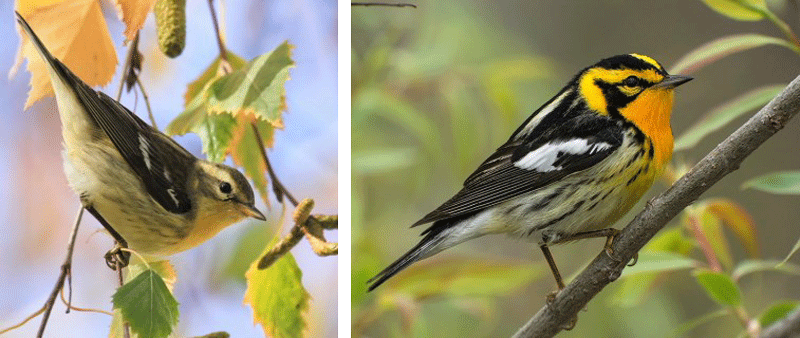
For the Birds is a blog series from Thanksgiving Coffee Company, highlighting one of the 200 Neotropical migratory birds who rely on shade grown coffee during their winter migration. In January, we featured the Cedar Waxwing, in February, the Magnolia Warbler, this month we’re focusing on the Blackburnian Warbler – the bird featured on our dark roast Songbird coffee.
Blackburnian Warbler
Songbird Coffee Dark Roast from Colombia
With their bright colors and trilling songs, it’s no surprise that a group or flock of vibrant warblers is often called a ‘bouquet’. However, one of the most striking members of the warbler family would rather not join the bunch.
Common along the eastern region of the United States during their migration, the Blackburnian warbler can be easily identified as the only orange-throated warbler in North America. Named after botanist Anna Blackburn, the Blackburnian warbler is territorial on its breeding grounds, solitary in the winter, and only forms flocks during migration. In fact, this little bird is such a loner that even though both parents feed and care for the chicks, the parents separate when the young are old enough to fledge and leave the nest, each taking part of the brood with them.
But even the most solitary parent needs the support of a group every once in a while. After going their separate ways, the parents will sometimes join foraging flocks of kinglets and nuthatches with their begging young, the cries of which have been known to also attract chickadees.
 <
<
Of the over 50 species of New World warblers to be found in North America, perhaps it is the colorful Blackburnian that stands out as a lone bloom, refusing to join the colorful assemblage of other warblers.
Help protect the winter habitat of Blackburnian warblers by buying SMBC Song Bird Colombian dark roast shade-grown coffee.
Dark Roast Colombian Coffee
Toasted • Spicy • Dark Chocolate
A rich coffee with flavors of toasted nut and dark chocolate followed by a smooth lasting finish, making this a clear winner for dark roast coffee enthusiasts.
For the Birds: Blackburnian Warbler
read more -
![Raising a Mug to Support the Art Explorers]()

Raising a Mug to Support the Art Explorers

Frank Van Curen, Art Explorer and Paul Katzeff, CEO of Thanksgiving Coffee
“I love doing art because until recently I had never done it before. It makes me feel really good. It makes me happy because I love learning new things.”
“Doing art calms me down. I feel happy while I’m planning a design and working on my pictures.”
“Art makes me feel calm…art makes life better.”
“When I do my art I feel calm and like I’m experiencing what I think in my mind and throwing it onto the paper. The colors came from my brain and from nature. God gave me my talent and a giant heart that can love and do art and do other things.”
“Art is both relaxing and exciting. It makes me feel good about myself.”
“I like to spend a long time working on my portraits, often for weeks, even months. Sometimes I wake up in the night and plan what I’m going to do when I get to Art Explorers.” Frank Van Curen
“Art makes me feel calm…art makes life better.”
If you haven’t taken the time to stop by and meet the artists at the Art Explorers Studio and Gallery, then you are missing out on one of the great hidden treasures of downtown Fort Bragg.
Art Explorers has been supporting artists with mental disabilities since 1996, providing a safe space for them to express themselves and find peace of mind with the stoke of a paint brush.
Last weekend, the Art Explorers celebrated a new ceramics show in Town Hall in collaboration with their artist in residence, Sabine Brunner of the Little Cup ceramics studio. A departure from their usual work, the artists got to enjoy expressing themselves in ceramics with hand made sculptures and painted mugs. And what goes perfectly with a new, one of a kind hand painted mug? Why, a fresh cup of coffee of course! Which is why the event also debuted a new fundraiser for the Art Explorers program: Thanksgiving Coffee.
Showcasing the artwork of 5 current Art Explorers, each bag label shares the story of the artist who created it. As the program grows, the work of more artists will have the opportunity to grace the front labels, highlighting the incredible talent of our local artists.
Packages of Art Explorers Coffee, dark roast and decaf, are currently available for purchase at the studio, online, or at special events. Each bag sold supports the artists and staff members of the Art Explorers program, and with 5 different labels to choose from, you’ll want to collect them all!
So take the time to stop on by the studio at 305 E. Redwood Ave (Tues. Thurs. + Fri. 9:00am – 3:00pm, Saturday 12:00pm – 3:00pm) and meet the artists, maybe buy a painting or some greeting cards, and pick up a bag of truly beautiful and one of a kind Art Explorers Coffee.
Learn more: www.artexplorers.org
Raising a Mug to Support the Art Explorers
read more -
![Congo Coffee for the Dian Fossey Gorilla Fund International]()
The Incredible Story of a War-Torn Region Redeemed by the Coffee Bean
 <
<
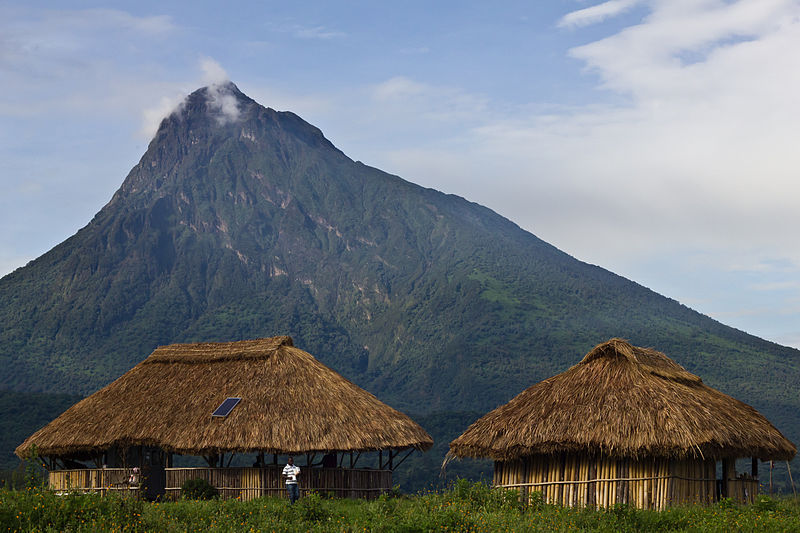
The Democratic Republic of Congo is in the heart of central Africa and considered to be the most bio-diverse country in the entire continent, which is quite a distinction. Iconic African wildlife such as jungle elephants and white rhino roam throughout the four national parks, and it is one of the few places on Earth that many great ape species, such as gorilla, chimpanzee and bonobo, call home. Its lush forests and equatorial climate means that the DRC is also an excellent region for growing some of the best sweet Bourbon varietals of coffee trees in the world.
 <
<
But despite the country’s wealth of natural resources, decades of war, genocide, and political unrest has condemned many of the 68 million civilians to lives of poverty, disease and violence.
The lack of businesses and income-generating activity pushed the DRC into deeper turmoil and left the once productive coffee sector neglected or abandoned. Most of the coffee farmers could no longer bring their harvest to market and fled the region, while others resorted to smuggling their beans into Rwanda in hopes to barter for food and supplies. So near, and yet so far: smuggling coffee is very dangerous and many people have lost their lives in the attempt.
Due to these circumstances, the small amount of coffee still produced in DRC was coming from small farms with old or rudimentary equipment and no access to international markets. All of that changed when Joachim Munganga founded the now-famous SOPACDI co-op.
Congo Coffee Farm
SOPACDI (Solidarité Paysanne pour la Promotion des Actions Café et Développement Intégral) was created by Joachim Munganga in 2002, as a means to bridge the ethnic strife of the region in order to tap into the international specialty coffee market. The co-op is located on the shores of Lake Kivu, which straddles the border between the DRC on the west bank and Rwanda to the east. Joachim started with his own farm and worked to rehabilitate an old, rundown estate with a central washing station for the co-op to process coffee. It wasn’t until 2008, when SOPACDI joined forces with the UK’s Twin Trading Company, that the doors to the international coffee market were opened wide. Together, they designed and obtained funding for a program to assist them with business skills and to begin rehabilitating the farms and improving the infrastructure, which included spearheading the construction of the first new central coffee washing station to be built in the country in over 40 years.
Since then, SOPACDI has grown to include over 5,200 farmers, 20% of whom are women. In a region infamous for rampant sexual violence, SOPACDI has been a leader in promoting gender equality and supporting the widows of those farmers who died trying to smuggle their beans into Rwanda. In addition to the revitalizing their lost coffee economy, SOPACDI has earned the distinction of being the first certified fair-trade co-op in the DRC and was also named 2014 Sustainability Award Recipient from the Specialty Coffee Association of America. They even hosted the DRC’s first internationally recognized coffee cupping competition, Saveur du Kivu, in 2015.
Economic stability saves lives, and not just human ones. Poor economic conditions result in the rise of eating and selling bushmeat, further endangering the sensitive wildlife of the DRC. As the animals are hunted, their numbers drop and they retreat deeper into the dense jungle. As logging companies and farmers clear away the forests at an alarming rate, they provide poachers an even greater access to hunt. That is, of course, unless the forest and the animals who live there can become a better economic resource to the people of DRC as a sustainable living ecosystem. Such is the hope of shade-grown coffee.
Coffee trees love the shade and they naturally thrive under a jungle canopy. Many coffee farmers additionally supplement their resources by growing shade-loving food crops, such as banana and avocado, along side their coffee trees, all within the natural infrastructure of the forest. By weaving the livelihood of the farmers into the success of a thriving jungle ecosystem, we are simultaneously supporting sustainable commercial goods and conservation.
 <
<
Specialty Coffee Saves Gorillas
Grauer’s gorillas are the world’s largest ape and only found in the Democratic Republic of Congo. Over the last two decades their population has plummeted by an estimated 80 percent, which is why the Dian Fossey Gorilla Fund International has set up a program to help save them based on their success working with mountain gorilla populations in Rwanda. These efforts include daily protection and monitoring, tracking the gorilla groups, scientific research, data collection, local education programs, and community engagement.
 <
<
By employing the local Congolese people to protect the gorillas, the Dian Fossey Gorilla Fund International is helping to foster a love for these creatures within the community while also creating an economic benefit. They now operate a permanent research and conservation field station in the core of Grauer’s gorilla range, working closely with traditional landowners and other local partners to help ensure the future of the species and countless others at risk in DRC.
Thanksgiving Coffee is proud to support the economic renewal of the DRC by partnering with SOPACDI to bring you Grauer’s Gorilla Congo Coffee. Not only does the purchase of this coffee promote the livelihoods of the SOPACDI farmers, but a percentage of all online sales benefit the Dian Fossey Gorilla Fund International and their continuing efforts to conserve and study the great apes of the DRC.
Coffee changes the world, but it is quite possible that there is nowhere on Earth more profoundly impacted by the humble coffee bean than the Democratic Republic of Congo is right now. Together, we can all do our part to help stabilize this unique ecological treasure for future generations to enjoy by simply enjoying a good cup of coffee.
Congo Coffee for the Dian Fossey Gorilla Fund International
read more -
![Fair Trade: A Movement for All]()
Fair Trade: A Movement for All
The following is an excerpt from a post from our fair trade certification: Fairtrade International:
True fair trade is about mutually beneficial relationships rooted in trust and respect spanning geographic and cultural boundaries.
As a global movement, fair trade brings attention to people around the world who work under exploitative conditions and highlights the true costs of goods in global supply chains. Organizations and activists, businesses and brands, farmers, workers and artisans have diligently worked for more than 40 years to bring greater balance to the terms of trade.
In recent months, we have watched as the term ‘fair trade’ has been grossly misused by politicians to energize their supporters while vilifying others. We have seen the term used to exclude people and encourage an isolationist agenda. These ideas stand in direct opposition to the concepts of justice and inclusivity that underlie our movement.
For far too long, conventional trade has maintained a narrow focus on the lowest common denominator. Efficiency at all costs, lower prices, and little consideration for the full social, economic and environmental impacts have been hallmarks of conventional international trade. Massive consolidation of power in supply chains has resulted in fewer options for consumers, farmers and workers, and unprecedented wealth controlled by few. Oxfam’s recent report on global inequality revealed that just eight men control more wealth than the world’s 3.6 billion poorest people combined.
IF WE HOPE FOR A SOCIETY – IN THE U.S. AND AROUND THE WORLD – THAT IS MORE EQUAL AND JUST, WE MUST PRESS TRADE INTO THE SERVICE OF PEOPLE.
Global trade and the trade deals that accompany it are not inherently bad. They provide an opportunity to deliver the benefits of trade more broadly, but only if they are used for that purpose. Fair trade, with its focus on inclusion and empowerment, shows that trade can – and must – be more equitable.
If we hope for a society – in the U.S. and around the world – that is more equal and just, we must press trade into the service of people.
True fair trade creates shared value throughout supply chains.
True fair trade promotes openness and transparency.
True fair trade respects human rights.
True fair trade supports diversity.
We support trade that is truly equitable for all, including artisans, farmers and workers, traders and brands, consumers and civil society. Fair trade will never be about exclusion, but about expanding the benefits of trade for those who need it most.
As the U.S. considers renegotiating or entering into new international trade agreements, we encourage the inclusion of true fair trade principles. We urge all who care about human rights, shared value, transparency and diversity to call, write or meet with their elected officials and make your voice heard.
See the original article from Fairtrade International here, and check out the list of names that have signed on to this agreement!
Fair Trade: A Movement for All
read more -
![For the Birds: Magnolia Warbler]()
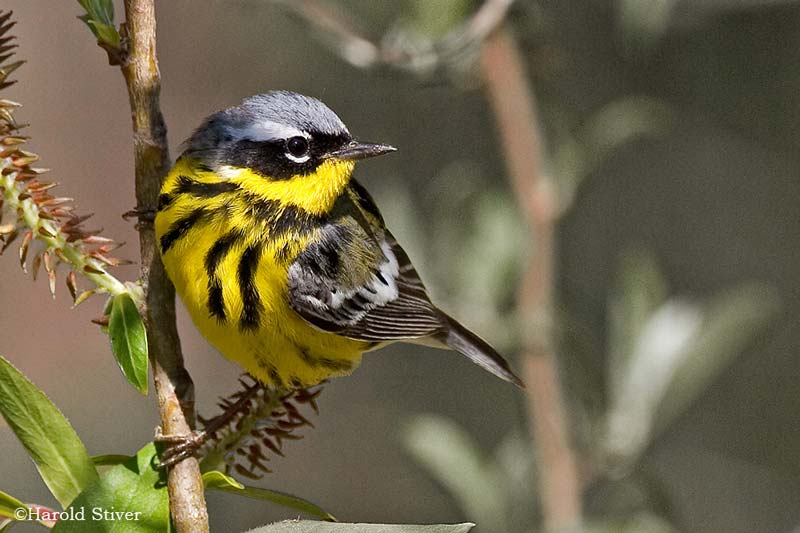
For the Birds: Magnolia Warbler
For the Birds is a blog series from Thanksgiving Coffee Company, highlighting one of the 200 Neotropical migratory birds who rely on shade grown coffee during their winter migration. In January, we featured the Cedar Waxwing; this month we’re focusing on the Magnolia Warbler – the bird featured on our medium roast Songbird coffee.
Magnolia Warbler

Songbird Coffee medium roast from Nicaragua
If you live east of the Mississippi river, you might be familiar with the Magnolia Warbler. This brightly-colored little songbird can be seen in the spring and fall as it passes through on its annual migration. Despite the name, these bird is rarely seen in magnolia trees. In 1810, ornithologist Alexander Wilson collected a specimen from a magnolia in Mississippi. At the time, he gave it the species the more accurate name of “Black-and-yellow Warbler”, but he used “magnolia” for the Latin name, and it stuck.

Like many warbler species, it can be hard to imagine how such a tiny bird, weighing little more than a quarter, can make a 3,000 mile journey, but they do it every year; from their summer breeding range in the Canadian Boral forests all the way down to Central America.
When the “Maggies” head south for the winter, they can often be found on shade grown coffee farms along with other migratory birds such as Ruby-throated Hummingbird and Western Tanager.

Although the population of Magnolia Warblers is thought to be stable, the birds are often victims of collisions with towers and other man-made structures, especially during migration. Habitat loss on their nesting and wintering grounds is also a threat. Supporting Bird Friendly coffee is an important way to keep Magnolia Warblers and other “coffee birds” common.

Medium Roast Nicaraguan Coffee
Nutty • Smooth • Milk Chocolate
Sweet without sugar, mellow without cream. This Smithsonian Bird Friendly Coffee is fruity, nutty and chocolaty with hints of dried mango. Sweet without sugar, mellow without cream, it is a great breakfast coffee. This coffee is roasted to a light milk chocolate color where its bright and complex flavors explode into life.
For the Birds: Magnolia Warbler
read more -
![Shade Grown Coffee Trees]()
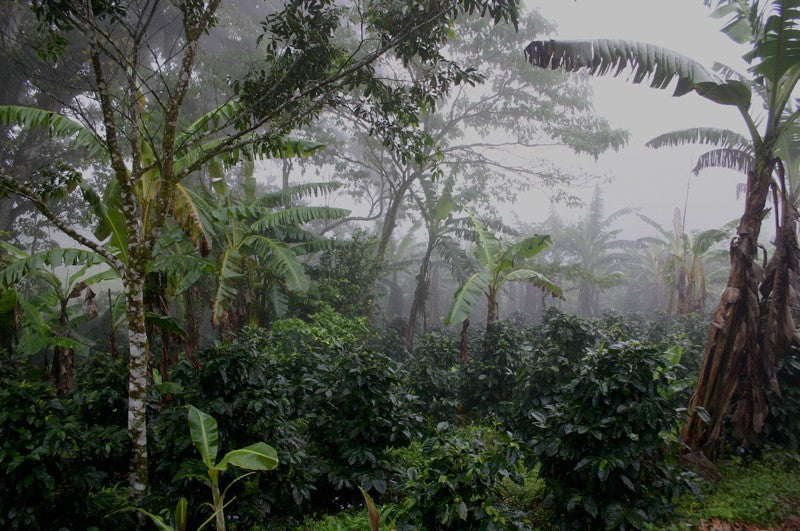
Shade Grown Coffee Trees
How are migratory birds and shade grown coffee trees linked?
The coffee industry has an enormous impact on migratory birds: when they fly south in the cold months, these birds rely on the trees that shade coffee farms throughout the tropics. When coffee plantations clear cut land to grow coffee in direct sunlight, not only does the loss of forested lands contribute to climate change, but our precious migratory birds lose their winter homes.
If we want to continue enjoying these birds, we have to preserve their winter habitat – and choosing to purchase only shade grown coffee is an integral part of that habitat preservation. Our SongBird Coffee is Fairtrade, and certified Bird-Friendly by the Smithsonian Migratory Bird Center.

“In this picture of shade grown coffee we see the lower level, dark green coffee trees. On the second level there are banana trees and on the overstay third level, native trees. From the mottled bark I can see that the tree is Inga, a tree with nitrogen setting qualities in the root system. It shades the coffee trees from above while providing leaf litter to refresh the thin topsoil layer, while at the same time adding Nitrogen to the soil with its roots.
This was taken on a trip to Jinotega, Nicaragua. Altitude is 5,000 feet"
– Paul Katzeff
Shade Grown Coffee Trees
read more -
![For the Birds: Cedar Waxwing]()
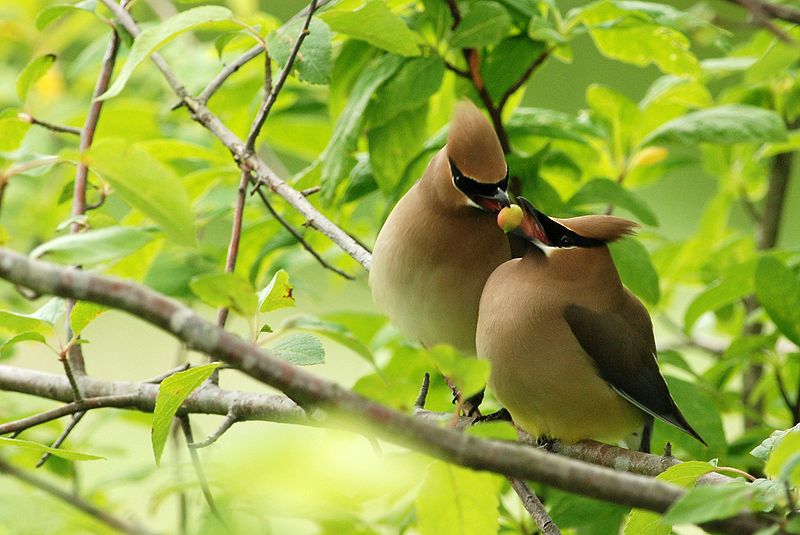
For the Birds: Cedar Waxwing
January 5 is National Bird Day and to celebrate we are going to kick off a new monthly blog post – For the Birds – highlighting one of the 200 Neotropical migratory birds who rely on shade grown coffee during their winter migration. We will start off by getting to know the birds representing our Songbird Coffee lineup:
Cedar Waxwing

Songbird Coffee light roast from Guatemala
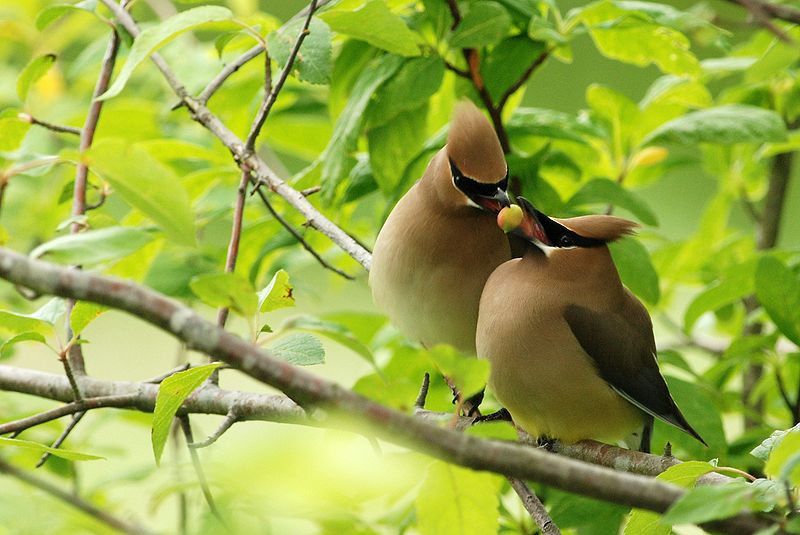
The Cedar Waxwing is the perfect representative for our light roast Guatemalan coffee because the ripe cherry sweetness of the coffee reflects the fruity diet of these strikingly beautiful backyard favorites. As social birds, you can usually see them in large flocks around fruit trees such as juniper, cedar, and mulberry, passing berries from one bird to another before swallowing them whole. In fact, the Cedar Waxwing is the only bird in North American whose diet is comprised primarily of fruits and berries.

All of Thanksgiving’s organically certified coffees are shade grown, and a select few carry the Bird Friendly gold seal of the Smithsonian Migratory Bird Center. This certification ensures that tropical “agroforests” are preserved and migratory birds can find a healthy haven to eat and rest as they travel the hundreds of miles from your backyard to the coffee farms producing the beans you so enjoy every morning.
We are thrilled to share our love with you and we hope you share this perfect pair with someone you love, too.
You don’t need binoculars to find a coffee that protects forests, helps wildlife and supports the efforts of the American Birding Association; just look for the Songbird Coffee with the Cedar Waxwing on the front.
For the Birds: Cedar Waxwing
read more -
![My Laos Experience: Part I]()
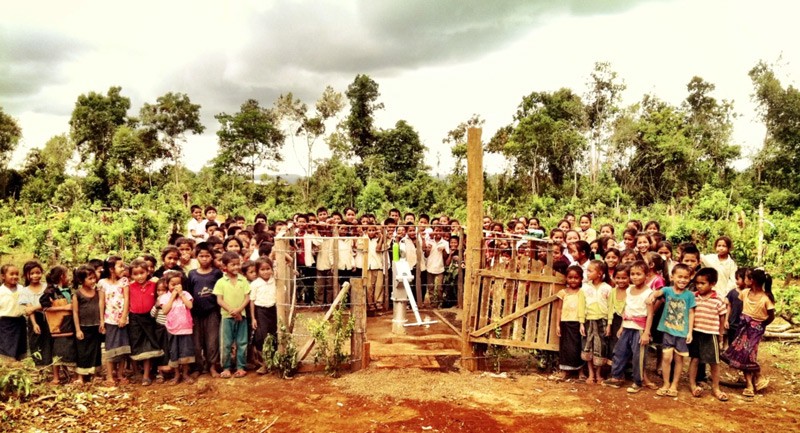
An American Family Grows Coffee
How poor quality coffee becomes great: the time it takes
Back in 2004 I received a call from Lee Thorn, the president of the San Francisco chapter of Veterans for Peace (VPAT). Lee was a Vietnam veteran who dropped bombs on Laos and destroyed the lives and villages of innocent civilians - and forty years later he was still feeling guilty for having done so.
He said that VPAT was an organization that wanted to make amends to the Laotian people, and asked if I would help him and his group do so. He explained that while on a return visit to the Highlands of Laos he had seen the farmers growing coffee. His idea was to import their coffee to the states, have Thanksgiving Coffee roast and package it in a branded package (Jhai Coffee) and then have his veterans group sell it to other VPAT chapters around the country.
That was back in 2002, almost fifteen years ago!
I was all for it if Lee could develop the sales. We began with a single container - which we imported without even tasting it for quality. The price we paid was fully 50% higher than the world market price and that extra amount went to the farmers as a bonus for selling to us instead of their long-standing Japanese buyers. Even though the farmers were happy to get the bonus, they feared losing their long-standing buyers that didn't care about quality.
Coffee Farms in Laos
Coffee was planted in Laos by the French. They had colonized the country in the early part of the twentieth century. That part of the world was eventually known as “French Indo China” and included Vietnam and Cambodia. The French knew their coffee varieties and carefully selected the Typica variety as most suitable for the Laos climate and soil conditions.
Knowing this, I was certain that if the farmers picked fully ripe cherries and processed the pulp and seeds properly, we could get some really great coffee. We could also become the first coffee roasters in the states to offer coffee from Laos. The story would be War Veterans Giving Back to Those They Harmed.

Moving Forward with VPAT
The first container arrived and the coffee was fair. The flavor was flat, acidity was low, sugars were not developed well and it was obvious the farmers needed greater supervision in their coffee farming practices. The coffee had hints of greatness and obvious potential. But it would take training in new systems for bringing the coffee to export grade.
I decided to continue with the project although I was finding the coffee hard to sell. Lee had also over-estimated the sales potential of the other VPAT chapters. I believe this “adventure” cost Thanksgiving Coffee $50,000 in advertising, marketing, labels and brochures. By the end of that first year we had roasted the coffee into many French Roasts (irony) and had sold 50,000 Jhai Foundation Coffee Packages.
Lee hired a “Development Director” to work in Laos with the farmers to improve their agricultural practices, to harvest only red ripe cherries and to reduce imperfections to 2%. The 2003 Crop was really sweet and filled with caramel and nutty flavor tones, and I was happy!
That year my son Jonah was living in Cambodia. I asked him to make a visit to the Jhai Farmers to reinforce our commitment to the program and to the Jhai Farmers Cooperative. There he met Will Thomlinson, the VPAT Development Director that Lee had hired. Together they mapped out a plan for Thanksgiving Coffee to purchase two Containers (75,000 pounds) in the following year.
Now, with really good coffee that I knew could only get better, new and better harvesting practices, and a guarantee of sale, I and The VPAT members went into full sales and marketing mode. We sold a lot of Jhai Coffee packages. We raised a lot of money for the Laos coffee farmers. The money was given to VPAT and they transferred the money to Laos. I was more interested in the coffee side and building a new market for Laos coffee in the USA. My plan was to bring in great amounts of raw coffee as it became available over the years and to resell the coffee to other artisan roasters. It all seemed to be falling into place.
The following year, in 2005, Mr Thomlinson went rogue, selling our contracted coffee from that years crop to a Japanese company.
The project died.
The VPAT members dispersed and we at Thanksgiving Coffee got stuck holding 20,000 empty Jhai Foundation packages, 50,000 brochures, and egg on our face.
We moved on, a bit wiser and a bit poorer for the effort.
A Decade Later
Fast forward to 2014. Ten years pass and I get a call from a young man who was living in Seattle but traveling to Laos. He was so in love with the Lao people and obsessed with the fact that the children had no books in their schools. He started a program with a local coffee roaster, and called it “Coffee for Books.” One book was donated for each pound of coffee sold.
This young man wanted my advice and help to use Lao coffee beans for his project. He said he had met and made friends with coffee growers on the Bolivian Plain in Laos (The same region I had been dealing with a decade before) and was going back. Then asked if I would be his adviser, and implied that I would roast and package Lao coffee for his project, if he got the coffee exported to the USA.
I thought of the song lyric: “once burned, twice shy babe” and told him I would think about it – and get back to him before he left for Laos.
His name was Tyson Adams.
Read My Laos Experience: Part II now…
My Laos Experience: Part I
read more -
![YCFCU is Transforming Lives.]()
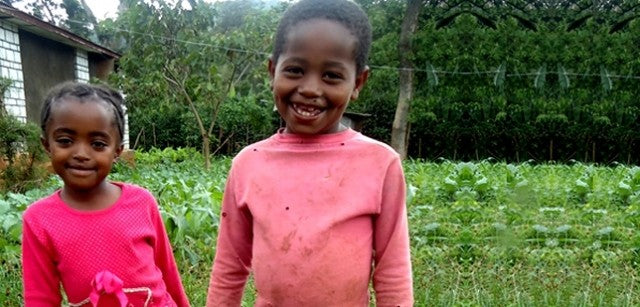
YCFCU is Transforming Lives.
re-posted from yirgacheffeunion.com
From poverty to self sustainability; Yirgacheffe Coffee Farmers’ Union has played a big role in the success of these farmers and their families as well as their surrounding communities.
The Testimonies coming from these great achievements of the Union are many, diverse and immense.
YCFCU is Transforming Lives.
read more -
![A Trip to Africa: Day 9 -The Final Entry]()
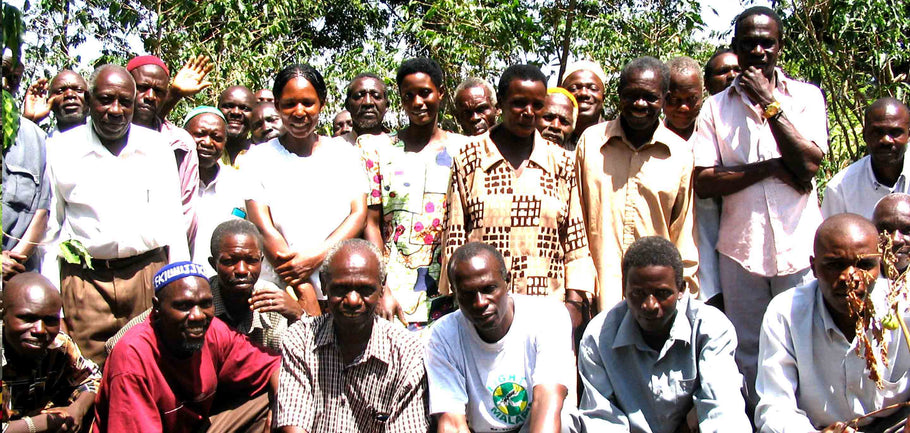
A Trip to Africa: Day 9 -The Final Entry
In January 2014, CEO & Co-Founder Paul Katzeff traveled to Africa to meet with two of our producer cooperatives. In this blog series, Paul shares his experience in Uganda and Rwanda.
Like everything else in life, things change over time. This was a wonderful story of how one man had a vision and changed his community once he was able to act on his idea, which was to unite coffee growers with different religions into a Fair Trade Certified coffee cooperative. He realized that if the farmers were working together they could reap beneficial economic gains and improve the quality of their lives. Laura Wetzler, Program Director of Kalunu was working with the Jewish community in Mbale, and came to aid this vision of the community leader, JJ Keki. That was 11 years ago. Thanksgiving Coffee responded to Ms. Wetzler’s and JJ’s call for help, and we began to purchase their coffee and to sell it via telling the amazing story of this interfaith cooperative.
We told their story, purchased their coffee, and worked with the coop and its “Leadership” to help the story survive, and the Cooperative to flourish. However, over ten years, random and not so random events make things change, and PKC was no exception to this rule of life.
Poor leadership, predatory organizations that wanted to use the story for their own purposes, unethical business practices, and a complete disregard for transparency and record keeping by the Mirembe Kawomera Cooperative Board created a toxic environment for using a Fair Trade model to improve and meet the needs of the coffee farmers of the Mirembe Kawomera Cooperative
Thanksgiving Coffee Company lost its trust in the Cooperative as the leadership declared their intention to become independent from their parent second level cooperative, Gumutindo, the organization that provided them with Organic certification oversight and leadership training, financial pre financing of the coffee harvest. Fair Trade certification, quality control and export services. This departure made the small cooperative rogue outfit out of what was in the beginning, a collaborative effort with adequate oversight of both quality control and financial integrity.
We have always intended to support the farmers through the Cooperative. It is always about the farmers. The Cooperative is a business model that democratically facilitates business policy and the activities of trade. We have ended our relationship with PKC under its current leadership; lack of trust and too much financial risk is the reason. But, we have not abandoned the farmers who were being poorly served by their leadership.
The situation has evolved, changed and morphed into Phase II, a more mature phase with the lessons learned, being applied to build a new primary level cooperative with the same interfaith coffee farmers that once were nominal members of Mirembe Kawomera. The Vice President of the PKC Cooperative and the Organic Coffee Director have broken away from the original PKC and reunited with their parent cooperative, Gumutindo, to begin this year’s purchasing of green coffee from the very same farmers. Thanksgiving Coffee will evolve our role in the supply chain to support the changes that are occurring in the coffee community that was once the Mirembe Kawomera primary cooperative. We have committed to begin purchases for the 2015 crop, and the farmers have already delivered over 600 sacks of dry parchment coffee to the Gumutindo Cooperative for export.
We are in transition to a deeper and more economically valuable situation. It has evolved from what was once a fine interfaith vision with poor leadership at the Cooperative, to what we see as a real positive evolution for the farmers and for interfaith work. We will continue to sell Delicious Peace Coffee from the same inspired farmers, and we will continue to support their coffee production by selling their coffee under a duel banner which I will briefly explain and then leave for more detailed discussion as we learn about and grow into this new evolution over the next decade of interfaith and inter-tribal collaboration.
The decade of work in Mbale Uganda has taught us that the coffee farmers of the Mt. Elgon region, which comprise the PKC members, was composed not just of Jews, Christians, and Muslims, but also of the nine indigenous tribes of Uganda. The original idea of PKC highlighted interfaith cooperation among Jews, Christians and Muslims to create peace in the region, and therefore enable economic cooperation for the common good. Now we will begin our efforts to support their tribal communities, and learn about this aspect of the farmers lives, as well.
In sum, we are changing, because things on the ground have changed. We ask for your continued support of this coffee, as it is the fuel that drives our ability to carry on. It took a decade to discover the internal toxicity that one or two charismatic leaders can create with a weak board of directors, and when hubris from self importance leads to decisions that are ill advised and beyond the scope of abilities. This interfaith story of peace and community economic development is still alive.
We see a bright future for telling the story of the value of interfaith and tribal cooperation in the quest for improved living conditions for all.
Nothing remains the same for long, however “Not Just a Cup, But a Just Cup” will stay with us for as long as coffee farmers need a friend to promote a fair deal for their efforts to grow our favorite national drink- coffee.
Here are links to the first 9 parts of this story:
A Trip to Africa (series archive)
Day 2 – Dancing, Mango Trees & the Dry Mill
Day 4 – Transparency, Trust & Relationships
Day 5 - Coffee Quality & A New Mystery
Day 6 – The Mystery Coffee’s Story
A Trip to Africa: Day 9 -The Final Entry
read more -
![A Trip to Africa: Day 8 - Making the New Transparency Work]()
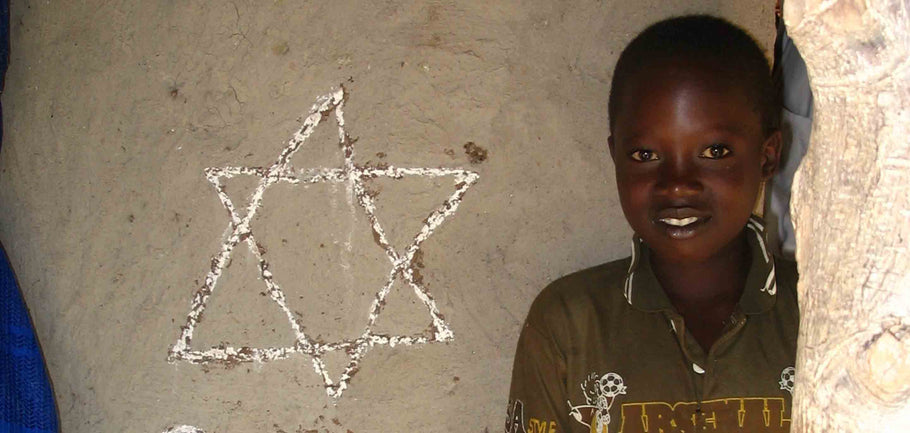
A Trip to Africa: Day 8 - Making the New Transparency Work
In January 2014, CEO & Co-Founder Paul Katzeff traveled to Africa to meet with two of our producer cooperatives. In this blog series, Paul shares his experience in Uganda and Rwanda.
The duplicity of The Coexist Foundation was ever on my mind while in Uganda. I felt betrayed by two young men in Washington DC. Tarek and Lance are the leaders of The Coexist Foundation. They came to us in early 2013, seeking a collaboration with the Thanksgiving Coffee Company. They presented the idea that they market and sell Mirembe Kawomera coffee in a coexist package. We were excited to have them come on board as promoters of this Interfaith Cooperatives coffee which we saw as our primary responsibility. Roasting the coffee for others to market and sell to their congregations, members and followers.
“Coexist came to us in early 2013, seeking a collaboration with the Thanksgiving Coffee Company.”
It has been a decade since we began promoting Mirembe Kawomera Coffee, and we have invested many hundreds of thousands of dollars to bring this story to the coffee world. Tarek and Lance, in numerous emails and phone conversations both encouraged and worried us as we moved forward with their private label package. We loved the idea that they were investing in a fully printed package, but we worried about their unwillingness to present Thanksgiving Coffee as the decade long carrier of the torch and promoter of the story and developer of the supply chain that created the improved quality we now roast. But we forged on with Coexist as they gave assurances to us that their only interest was to sell the coffee to raise funds for the school in Mbale.
When we were told that the 250 mystery sacks were sold to the Coexist Foundation by the cooperative two months before we arrived in Uganda, the mystery was no longer who were the bags of coffee for, but now the questions were; how did this happen, why did it happen, and what were the consequences going to be for this double betrayal of Thanksgiving by both the Cooperative and The Coexist Foundation.
The conversations led to these discoveries:
- The Coexist Foundation had used the film makers of the Documentary “Delicious Peace “, Ellen and Kurt to set up their own Film project and then sent a five person film crew with a script, to Mbale to create The Coexist Foundation Story of their discovery and adoption of this cooperative. Their video tells the story as if Thanksgiving Coffee never existed these past ten years.
- The president of the PKC Board had negotiated with the Coexist Foundation to sell this coffee without informing many on the Coop’s Board and in fact, there were no records of this coffee being purchased from the PKC coffee farmer members.
- Coexist had purchased coffee that could not be shown to be Certified Organic and was certainly not Fair Trade Certified. They had paid a price that was far below the price Thanksgiving Coffee had paid for this years crop according to their General Manager.
- There was nothing we could do about the situation because the money had exchanged hands already.
“Our Story was being re-filmed and revised to replace our Brand with Coexists Brand.”
I concluded that our decade of work had been hijacked. Our Story was being re-filmed and revised to replace our Brand with Coexists Brand. They believed they could buy media, legal services and a coffee supply chain that Thanksgiving Coffee company had developed over a decade of investment in time, travel, expertise, and money to create. What to do was the question on my mind in Uganda on day 8. I could walk away from this Interfaith Story and punish the cooperative for their moral decay. I could confront Coexist and threaten to expose their deception and unethical business practices to their Board of Trustees, I could redouble my efforts to strengthen the PKC cooperative now that we had a ability to discuss all issues with openness and transparency. One thing for sure, I was going to stop in Washington DC on my way back to California to confront Terek and Lance and lay down my threats to expose them.
To make it real, here is a link to Coexists Current Blog. It tells the story as if cutting out the middle man (Direct Trade) was a good thing. But this is their way of justifying cutting out the Company that invested its money and time to develop this story. There is no mention of Thanksgiving Coffee whatsoever. They are spinning ” Direct Trade” as something that benefits farmers by putting more money in their pockets, but Coexist paid substantially less to the cooperative saving money so they could be more competitive on their wholesale price to their customers. In their eyes, Thanksgiving Coffee was a Middleman in the supply chain, instead of the creator and financial supporter of the chain.
The last chapter in this story is being written now and will be posted soon.
— — —
Here are links to the first 8 parts of this ongoing story:A Trip to Africa (series archive)
Day 2 – Dancing, Mango Trees & the Dry Mill
Day 4 – Transparency, Trust & Relationships
Day 5 - Coffee Quality & A New Mystery
Day 6 – The Mystery Coffee’s Story
A Trip to Africa: Day 8 - Making the New Transparency Work
read more -
![A Trip to Africa: Day 7 – All Things Revealed]()
A Trip to Africa: Day 7 – All Things Revealed
In January 2014, CEO & Co-Founder Paul Katzeff traveled to Africa to meet with two of our producer cooperatives. In this blog series, Paul shares his experience in Uganda and Rwanda.
This knowledge thoroughly pissed me off…I was about as angry as a wasp being chased by a Zebra! But what good was anger? It was good for motivation to confront the duplicity while still in Uganda. And that is what we did. We asked for a second meeting with the Cooperative Board to discuss the matter of the 250 sacks…being sold directly to one of Thanksgiving’s wholesale coffee accounts. That “customer” had become aware Mirembe Kawomera through the media’s reports on my company’s decade-long collaboration with Mirembe Kawomera Cooperative. So, that was my beef. Why did the cooperative not see this end-around? Why did this important customer go around the roaster who they came to for a proposed collaboration?There are always many stories in a screenplay, such as the one Nick and I found us in. And, we were in Uganda, about to be in a semi-barren second floor meeting room, just chairs and walls not yet painted.
We sat together for three hours with the board and I expressed my surprise to learn that we had different ideas about our relationship and by open discussion, with many pointed questions (“where are the payment records for those coffees?”) and much talk about Transparency. Everybody knew something was wrong. There were those that were in on the deal and those who knew for the first time that “a deal went down” and they were not a part of it. There was a lot of discovery but nothing was revealed. No one got hurt in the scuffle. There were no indelible scars that would hinder future Trust developing.
Five concrete measures were decided on as a result of the conversations and cross conversations:
- A Memorandum of Understanding (MOU) between Thanksgiving Coffee Company and The Mirembe Kawomera Cooperative is needed so as to define the authorities and responsibilities, and the quantifiable goals and objectives of each Business.
- That the Cooperative members could produce four containers yearly and to be successful, it needed to have the financing to be able to purchase cherry or parchment from their members.
- The Washing Station needed to be expanded from being able to process one container to two containers by August 2014.
- Solar Driers needed to be installed to handle the increased volume of washed coffee.
- Thanksgiving Coffee had not expanded the roasted retail market in The USA to meet the needs of the cooperatives members. If Thanksgiving Coffee was to keep its exclusive relationship with the PK Cooperative, it was going to have to find homes for the three containers it did not purchase.
It was late afternoon and the heat of mid day was just a sweet memory. The sun was low and there was an orange tint to the air and everything solid and in the sunlight’s way. The meeting disbursed in a flurry of people going off in different directions amid the “good nights” and “see you tomorrows”. We covered a lot of ground during that meeting. It was a workout but through it I learned about the people I was going to be working with. We had discovered a “problem of ethics” and came to terms with no blame placed, and no sermons either. The room was filled with people who knew “when to leave well enough alone”. We all got it, so we moved on.
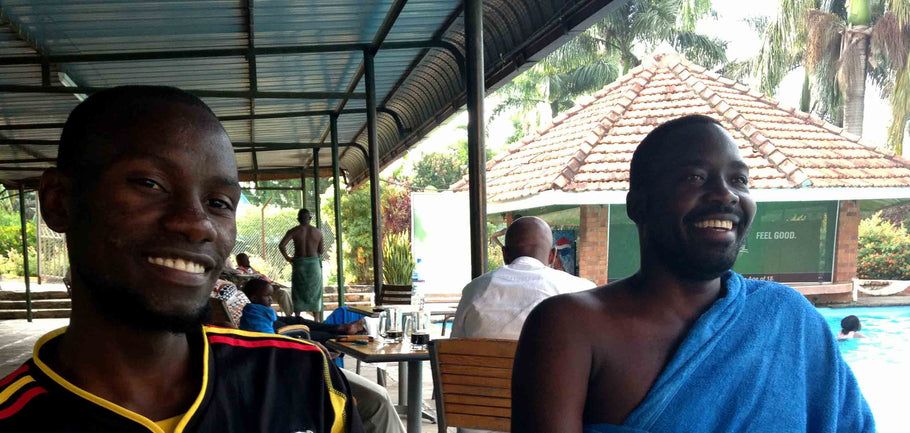
And so the long day ended at our very fancy hotel where JB and Juma joined us at the pool. JB is the Cooperatives GM and Juma is the Special Projects Director. They are payed by the cooperative to run the coop’s operations.
To be continued...
-PaulA Trip to Africa (series archive)
Day 2 – Dancing, Mango Trees & the Dry Mill
Day 4 – Transparency, Trust & Relationships
Day 5 - Coffee Quality & A New Mystery
Day 6 – The Mystery Coffee’s Story
A Trip to Africa: Day 7 – All Things Revealed
read more -
![Clean Cookstoves in Uganda]()
Clean Cookstoves in Uganda
By Paul Katzeff, CEO + Co-Founder, Thanksgiving Coffee Company
In 2012 Thanksgiving Coffee Company, in collaboration with the Mirembe Kawomera Board and members, began a Climate change mitigation initiative in the foothills of Mt. Elgon, with the cooperative. The first phase was tree planting, and the project had these basic principles at its core:
- The trees would provide shade to keep the ground cool and moist
- The trees would enhance the habitat for indigenous birds and other wildlife
- Deep root systems of trees holds the moisture in the soil and brings nutrients from deep in the ground to the surface via leaf litter produced by the trees. This makes the soil more fertile.
- The trees soften the impact of rainstorms and mitigate against runoff that carries away topsoil
- Shade improves the health of coffee trees as well as the flavor profile.
- Trees produce wood for cooking and reduce the need for long distance hauling of wood
- Trees bring up the water table and enable the ground to hold more water

There remained a problem.
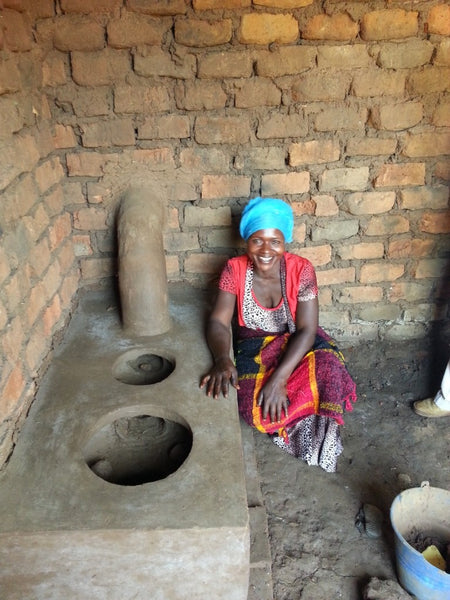
The coop members were relying on the climate change mitigation tree planting as a source of firewood for their open fire cooking. Open fires are a simple but extremely wasteful way to build a cook fire, so the coop members decided that if they had more efficient ways to cook, they would lower their use of firewood. This plan was the best way to allow the trees to grow to maturity before being sustainably pruned for firewood, and thus was born “The Clean Cookstove Project.”
In partnership with Carrotmob, Thanksgiving Coffee Company raised $4,600 in a crowd-funding campaign. The funds were allocated for the Clean Cookstove project. The General Manager of the cooperative designed the project, researched the methodology, hired local craftsmen and women, gathered materials, and began building the stoves in April of this year. In this first phase of the project, 46 families will receive the stoves. Families with children, older people and single parent families were chosen by the coop as are recipients of the first 46 stoves. The plan is to expand the program so all 300 coop member families eventually have one built for them in their homes. – Paul Katzeff
The benefits of clean cookstoves are many.
Obviously, better respiratory health and easier fuel collecting because these stoves use 1/10 the fuel to produce a cooked meal. That means more time to attend school, make music, do homework or whatever leisure time is used for in a small village at the base of a mountain, where there is no cafe to hang out, no community center, and where electricity is limited to a few outlets per square mile. We are proud to be associated with this project – happier, healthy coffee farmers means a better world, and better coffee.
I am currently in Uganda, on a trip that was planned back in February when I was last in Africa.
Much has happened since, including a clear Memorandum of Understanding (MOU) that outlines our and the Cooperatives responsibilities and expectations from the relationship we have created. The goal of this trip is mostly oversight. We are advancing funds to the Cooperative to double its washing station capacity. This will require a solar drying system of greatly increased capacity, and a financial system that is going to handle twice the amount of money, double the volume of coffee, and provide more transparency. We are building capacity and the requirement for a higher level of professional financial management will be required as soon as this next crop is ready in September. That is in about 60 days!
There is lots to do – and we want to be a part of the doing.
To be continued…
-Paul
Clean Cookstoves in Uganda
read more -
![A Trip to Africa: Day 6 - The Mystery Coffee's Story]()
A Trip to Africa: Day 6 - The Mystery Coffee's Story
In January 2014, CEO & Co-Founder Paul Katzeff traveled to Africa to meet with two of our producer cooperatives. In this blog series, Paul shares his experience in Uganda and Rwanda.
But what about the other 250 sacks along that back wall? Where did that come from and how did it pass defect inspection? And where was it going? Who had produced it, who had sold it? Who had purchased it and who had financed it? This was on my mind as we hit the road to Gumutindo’s dry mill, and it would play an important role in the days to come.
These mystery sacks of zero defect, 17 screen (large bean size) ready for export coffee were a sharp contrast to the coffee in parchment set aside for Thanksgiving Coffee's shipment. Where did they come from? We asked the Board and the General Manager. It was as if we had caught a thief . They could not account for the purchases . There was no record of this coffee being purchased by the cooperative from its members.
Then, as the pressure built for disclosure ( I threatened to dissolve our relationship of 10 years) JJ, the cooperative's founder revealed that the coffee was for Coexist, a Washington DC based charity with whom Thanksgiving Coffee had developed a relationship a year before.Parchment coffee is not green coffee. Parchment has to be milled off of the green beans so the green beans can be graded for percentage of defects. (broken beans, insect eaten beans, unripe beans, black beans, sticks, pebbles etc). Quality is related to the number of defects contained. Gumutindo, the secondary coop that is made up of 15 primary cooperatives of which PKC is but one member, accepts up to 7% defects. Anything over that needs to be sorted and picked out of the delivery to get the percentage down to 4%. If a coop delivers parchment coffee and there are more then 4% defects, they are deducted .02 cents per pound for each percent over 4%. The coffee in the open sacks had been delivered to the mill and tested, and showed 12% defects. That coffee had been rejected by the mill on our behalf – twelve pounds of defects per hundred makes for a very rough tasting coffee. Now, this organization was going around Thanksgiving Coffee, buying directly from the Cooperative. I was shocked and angry. It is one thing to not represent us in the development of the story and how we brought this incredible Interfaith story to the world (and the reason Coexist executives were able to discover them), but it is quite another thing to disrupt a business relationship based on a decade of trust and mutual inspiration.So, the sacks were brought back to the PKC warehouse to await my arrival – perhaps they thought I would have some “pull” at the Mill to get the coffee through. This was not exactly the way the problem was presented to me by the PKC management. They pointed fingers and said they were being picked on and that was why they wanted me, their buyer, to front for them at the mill. I thought this sounded legitimate, so I went to the GM at Gumutindo that afternoon to plead their case.
Willington, the GM of Gumutindo who has visited me in California, offered to send his truck to pick up the parchment coffee and re-test it in front of the PKC Board. That way, they could see for themselves just what the defect percentage was in the batch of coffee slated for Thanksgiving Coffee Company from their 2013 crop. But what about the other 250 sacks along that back wall? Where did that come from and how did it pass defect inspection? And where was it going? Who had produced it, who had sold it? Who had purchased it and who had financed it? This was on my mind as we hit the road to Gumutindo’s dry mill, and it would play an important role in the days to come.
That is enough reading for today. In my next post I will tell you how we handled this situation, how it changed our plans for the next three days of our trip and caused Nick and I to re-route out flight back thru Washington DC to meet with Coexist's Executives. I took this photo of a local artists interpretation of a street market. Total Chaos! The picture was hanging in our Hotel Lobby.
To be continued...
-PaulA Trip to Africa (series archive)
Day 2 – Dancing, Mango Trees & the Dry Mill
Day 4 – Transparency, Trust & Relationships
Day 5 - Coffee Quality & A New Mystery
Day 6 – The Mystery Coffee’s Story
A Trip to Africa: Day 6 - The Mystery Coffee's Story
read more -
![A Trip to Africa: Day 5 - Coffee Quality & A New Mystery]()
A Trip to Africa: Day 5 – Coffee Quality & A New Mystery
In January 2014, CEO & Co-Founder Paul Katzeff traveled to Africa to meet with two of our producer cooperatives. In this blog series, Paul shares his experience in Uganda and Rwanda.
In Mbale we stayed at a youth Hostel that has a Cafe that serves western style food that looks and tastes familiar. We had lunch there and met with the USAID Chief. It’s the kind of place where the average age of the people who hang out there is 20-something.
Peace Corps workers and backpackers can live there for $14.00 per night in a small private room or ‘Dormitory style’ for $5.00 per night, wake up in the morning and have a perfect Latte at the espresso bar in the lobby.
The story became different once we got into the world that the story was taking place. Theories are mental, the real world is physical.
Below is a picture I took after the Board Meeting we had with the Mirembe Kawomera Board.
What do we see in this picture?
1. Coffee in burlap sacks against the back wall with Peace Kawomera (PKC) lettering
2. A concrete floor with someone sleeping on a mat
3. A hand operated machine that is used to remove parchment from beans that have dried in the sun after the cherry pulp has been removed
4. White open sacks of coffee in parchmentThis picture uncovered a different set of issues. Where did the 250 burlap sacks come from and where were they going? They were ready for export while our coffee was ready to be taken to the mill in town to be “readied for export.”
This was the warehouse under the offices where we met the Board for discussion of the issues we came to resolve (late shipment, blending of coffees, verification of the sources of the coffee). As an aside, the PKC offices were in a building that was only half completed. In 2010, USAID funded the building of a small central coffee washing station. Thanksgiving Coffee’s rebates to the cooperative provided their in-kind contribution to the Grant. Unfortunately, there was embezzlement of funds by the coop’s GM who ran off with funds, and the Founder of the Coop was removed from the Board. USAID withdrew its remaining funds – and the building remains built but without a completed interior (no doors on offices , no paint on walls, No tables or chairs) and remains a shabby edifice that one would find hard to be proud of.
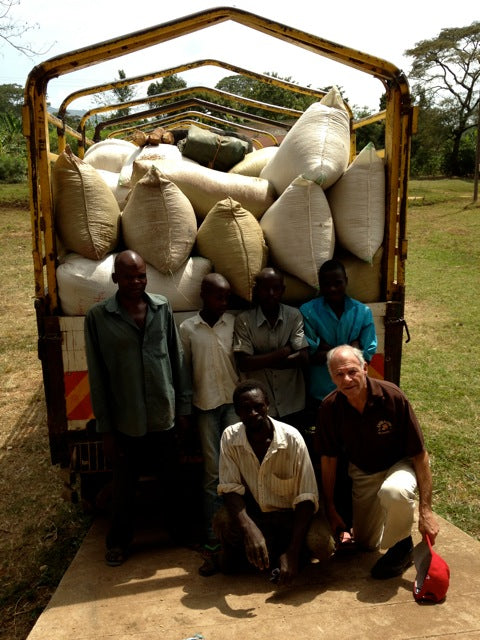 Parchment coffee is not green coffee. Parchment has to be milled off of the green beans so the green beans can be graded for percentage of defects. (broken beans, insect eaten beans, unripe beans, black beans, sticks, pebbles etc). Quality is related to the number of defects contained. Gumutindo, the secondary coop that is made up of 15 primary cooperatives of which PKC is but one member, accepts up to 7% defects. Anything over that needs to be sorted and picked out of the delivery to get the percentage down to 4%. If a coop delivers parchment coffee and there are more then 4% defects, they are deducted .02 cents per pound for each percent over 4%. The coffee in the open sacks had been delivered to the mill and tested, and showed 12% defects. That coffee had been rejected by the mill on our behalf – twelve pounds of defects per hundred makes for a very rough tasting coffee.
So, the sacks were brought back to the PKC warehouse to await my arrival – perhaps they thought I would have some “pull” at the Mill to get the coffee through. This was not exactly the way the problem was presented to me by the PKC management. They pointed fingers and said they were being picked on and that was why they wanted me, their buyer, to front for them at the mill. I thought this sounded legitimate, so I went to the GM at Gumutindo that afternoon to plead their case.

Willington, the GM of Gumutindo who has visited me in California, offered to send his truck to pick up the parchment coffee and re-test it in front of the PKC Board. That way, they could see for themselves just what the defect percentage was in the batch of coffee slated for Thanksgiving Coffee Company from their 2013 crop. But what about the other 250 sacks along that back wall? Where did that come from and how did it pass defect inspection? And where was it going? Who had produced it, who had sold it? Who had purchased it and who had financed it? This was on my mind as we hit the road to Gumutindo’s dry mill, and it would play an important role in the days to come.
We arrived at the dry mill (Gumutindo) that afternoon with the Board members of the cooperative to witness the grading process. It’s a simple process – first, a long pointed metal tube is thrust into a sack of parchment coffee and withdrawn filled with a sample from that sack. This is repeated on another ten sacks, each providing a small sample (about a half pound). The multiple samples are aggregated into a single sample from which 250 grams are taken and placed in a moisture meter.
The sample must come in under 13% moisture. Then, 100 grams are put through a hand crank parchment removal device and the green beans are then winnowed to remove dust and small pieces of parchment. The beans are then clean, and ready to be inspected for defects, which are sorted out by hand and eye inspection. There was an air of anxiety as the head sorter picked at the 100 gram sample.The defects are placed in a tray for all to see and agree on. Then they are weighed. This sample came out 9%. Again, too high for their Dry Mill to accept. Now there was a problem. I don’t want nine pounds of defects in every 100 pounds of coffee. There is no way I could make that coffee taste good enough to sell. The coop had to make a decision. They could pay the woman sorters to remove enough defects to get the coffee down to 7% or they could haul the coffee back to their warehouse 20 Kilometers to the north and sort out the defects themselves. Otherwise they would have to negotiate with the woman on a price for sorting out 2% from 30,000 lbs of coffee (600 pounds of defects).
At Gumutindo, the sorters are independent contractors. They sit under a giant shade tree at the mill and spend their days picking out defects, damaged bean by damaged bean. Unlike the sorters in Central and South America who sit at a conveyor belt that carries an endless stream of coffee beans past silent, sitting women who pick passing defective beans out of the rapids, these woman socialize all day and pick at their own pace. A much more civilized way to do tedious work.
The coop board members voted to hire the sorters and sent a member of the Board to the tree to negotiate a price for the sorting. About 300 feet from the defect assessment station the woman sat and sorted, each with their own sack to clean, knowing just how many pounds were needed to be culled from each sack to get it into an acceptable range.So now we had the 2014 crop due to be shipped to the US and arrive in May, being in the last phase before being put on a truck to travel to Mombasa where it will head south past Madagascar and round the Cape of Good Hope at the tip of South Africa and head across the Atlantic to The Panama Canal and up the west side of Central America toward its destination, The Port of Oakland. With 2013 crop and its problems behind it, I turned back to solve the mystery of the 250 sacks that were unaccounted for, with 17 screen and zero defects. What was their story?
To be continued...
-PaulA Trip to Africa (series archive)
Day 2 – Dancing, Mango Trees & the Dry Mill
Day 4 – Transparency, Trust & Relationships
Day 5 - Coffee Quality & A New Mystery
Day 6 – The Mystery Coffee’s Story
Day 8 - Making the New Transparency Work
A Trip to Africa: Day 5 - Coffee Quality & A New Mystery
read more