


Our Blog
Roots & Regeneration: Pioneering Regenerative Agriculture
View BY :
Pioneering Regenerative Agriculture
High in Nicaragua's pristine Arenal Forest Reserve, at 1,500 meters above sea level, Finca los Pinos stands as a testament to agricultural transformation. Here, Byron Corrales and his family have spent over four decades pioneering a different way of farming coffee. Since embracing organic practices in 1986, they've developed an innovative approach that works in perfect harmony with nature. Through their dedication to biodynamic farming, they've not only twice earned top honors for their extraordinary coffee, but they've also created a model for sustainable agriculture that's changing how we think about coffee cultivation.
Sarah Corrales on her families coffee farm
Byron Corrales hugging a tree on his family coffee farm
A Legacy of Excellence
Our relationship with the Corrales family spans three generations, witnessing their evolution from traditional farming to becoming leaders in biodynamic agriculture. Byron's innovative spirit led him to develop the exceptional Maracaturra variety, a unique hybrid that produces remarkably large beans – distinctively bigger than typical Arabica coffee beans. This size isn't just for show; it allows for exceptional taste elements that smaller beans simply cannot achieve, delivering a remarkable sweetness and richness in every cup.
Benita Corrales, Byron's mother
The first meeting with Thanksgiving Coffee Company in 1992- Left Byron Corrales, Right Arnulfo Corrales
Arnulfo Corrales, Byron's father
Left to right - Thanksgiving Coffee's Co-Founder Paul Katzeff, Byron Corrales, and Nick Hodgkins (Etico -The ethical trading company)
the Art Of Processing
Byron with drying natural Maracaturra coffee beans.
Corrales' artisanal approach to processing begins long before the cherries reach the beneficio (drying patio). On his farm, every element serves an integral function in creating exceptional coffee. This includes the carefully selected forage crops sustaining his cattle, whose manure enriches the compost used around the coffee trees, as well as the diverse pollinators - from honeybees to other beneficial insects - that support optimal cherry development.
For Corrales, successful coffee processing stems from creating a balanced, thriving ecosystem that produces the highest quality cherries possible for processing. This foundation of environmental harmony directly influences the clarity and complexity of his final cup.
The Natural process is when the coffee cherries are dried whole, without removing the pulp or using water or machines, and has become Byron’s preferred method for many reasons, as he explained in this video. It is a very good choice to reduce the use of fossil fuels and for water conservation, as well as the added antioxidant health benefits.
The Living Systems Of Los Pinos
At Finca los Pinos, every element serves multiple purposes in an intricate dance of mutual support:
- Native and planted trees provide essential shade and soil health
- Free-ranging cattle contribute to natural fertilization cycles
- Coffee cherry pulp (cascara) is recycled into nutritious cattle feed
- Birds and beneficial insects maintain natural pest control
- Pine trees create unique conditions that enhance both soil and coffee quality
Los Pinos coffee farm looking out over the forest
Soil: The Foundation of Life
Byron Corrales with his hands full of soil
Byron's approach to soil health demonstrates the core principles of regenerative agriculture. "The farmers that produce with agrochemicals and herbicides destroy the life of the soil," he observes. "We protect it." This protection includes:
- Maintaining ground cover to retain moisture
- Supporting microorganism and mycorrhizal networks
- Using natural fertilization methods
- Working with, rather than against, natural processes
“I feel really happy that those who drink my coffee are drinking a cup of life”
Byron Corrales
Climate Resilience Through Diversity
Great video produced by Viva La Finca - Virtual origin experience - Byron Corrales of Finca Los Pinos
Understanding the challenges of climate change, Byron has implemented robust adaptation strategies:
- Diverse tree species for enhanced shade coverage
- Strengthened soil biology
- Natural mineral enrichment
- Water conservation systems
The Unique Maracaturra Experience
This regenerative approach culminates in the cultivation of Maracaturra, a special variety found only at Finca los Pinos. This unique hybrid of Maragoype and Caturra (Bourbon) produces a truly exceptional coffee with:
- Juicy apricot aromatics
- Rich cashew nuttiness
- A deeply toned sweet cacao finish
- Remarkable sweetness unique to the large bean size
- Complex flavor elements impossible to achieve with conventional varieties
A Vision for the Future
"I want to transmit our family's art, our work of many years, discovering the flavors we've learned to bring forth from our mountains, expressed in this cup by way of respect for our environment," Byron shares. This respect for environment and commitment to regenerative practices creates coffee that is, in Byron's words, "the expression of life and the life energy of all the living beings who live in our community."
The Corrales Family from a visit to Nicaragua.
Each cup of Byron's coffee embodies a powerful truth: regenerative agriculture can produce extraordinary coffee while healing the earth.
Our Byron's Blend is where ancient farming wisdom meets modern artistry. By masterfully combining washed and natural processed Maracaturra coffees, we create a harmonious cup that showcases the finest expressions of both methods. The result is more than a blend – it's a testament to coffee craftsmanship at its peak.
As Byron himself reminds us with characteristic wisdom: we are "celebrating with joy the responsibility of protecting the future of our generations." In every sip, you taste that promise.
Lavender Grace is the Director of Brand Narritive and Culture for Thanksgiving Coffee Company.
Recommended Reading
Back to the Blog-
![New Arrival of Byron's Blend]()

New Arrival : Byron's Blend
A new fresh shipment from the Corrales Martinez Family farm has just arrived to our roastery, and this coffee tastes great! This is one of our Single Origin coffee's and it has the destinct flavors and qualities from Los Piños in Nicaragua.
The Corrales family manages and operates 5 farms in Matagalpa and Jinotega, though finca Los Pinos in Aranjuez is considered their home base. This blend is a mix of the natural and the Maracatura varietals (a hybrid developed by Byron Corrales), and is light-roasted here at Thanksgiving Coffee in Fort Bragg, CA.
Byron's Blend Grown by the Corrales Martinez Family Farm
Located in the northern region of Nicaragua is Finca Los Piños. This region produces approximately 83.80% of the national coffee production and has exceptional agro-ecological conditions. They are located in the community of Aranjuez, belonging to the department of Matagalpa. Los Piños farm is part of the El Arenal Natural Reserve, at an altitude of about 1500 meters, where the waters that feed the great Apanas lake are born.
Corrales is a visionary farmer, and pioneer in the application of biodynamic farming practices to coffee production. Maracaturra is a truly exceptional coffee that’s more akin to its cousins in the highlands of East Africa than its neighbors in Central America.
Altitude: 15,000 meters
Processing: Natural and Washed, blended
Cooperative: Corrales Matinez Family Farm
Varietal: Maracaturra, Caturra, Catuai
Byron Jose Corrales Martinez left and Mayra and Byron Corrales right
Ready to try this amazing coffee blend from the Corrales family in Nicaragua?
New Arrival of Byron's Blend
read more -
![A History of Fair Trade and Coffee Farmer Advocacy]()
Cups of Change
the promise behind A Just Cup
Paul Katzeff with children of the Nicaragua Coffee Farm 2001
"Be Our Voice"
Paul Katzeff recalls stepping off a plane in Nicaragua in 1985 and being greeted by Sandinistas carrying AK-47s. They were also campesinos, farmers trying to survive a civil war. They brought him into a room and asked him to carry their story home. He agreed.
That yes changed Thanksgiving Coffee. The people behind the harvest became part of what we meant by quality. Their request helped give us the words we still stand behind: Not Just a Cup, But a Just Cup™.
This October, Cups of Change follows that promise from Nicaragua to our roast room above Noyo Harbor, and into the wider coffee community. It is a story of what happened when a small Mendocino Coast roaster listened to farmers and began changing how it did business.
How Nicaragua Changed The Roast Room
Joan and Paul founded Thanksgiving Coffee in 1972 with a 25-pound roaster at the Mendocino Hotel. Freshly roasted coffee was finding its audience. We were learning our craft and building a business in the community that had welcomed us.
Original Menu and Roaster Illustration from Mendocino Hotel 1972
Café por la Paz, Coffee for Peace, gave our customers a deeper way to take part in our coffee journey. Our 1986 brochure shared how we gave a 25-cent contribution from each bag of coffee sold. The program sent rebates to UNAG, a Nicaraguan farmers’ organization supporting agrarian reform. Our 2016 retrospective shares how we distributed 500,000 educational brochures. Coffee was now a way to bring farmers’ struggles into American homes and give direct support back to their hard work.
We tell more of that history in our blog A Just Cup.
The promise to be the farmers voice was taking a practical form: a bag of coffee could carry information, raise funds, and invite a customer into a relationship with the people who grew it.
For the farmer organization’s perspective on this history, read “Daniel Núñez: The Farmers’ View,” a 1991 interview in Revista Envío, exploring farmers’ struggles for land, fair prices, and peace.
Changing what a coffee bag could tell you
Some changes began even before Nicaragua. Our packaging history records roast color on labels in 1972 and the use of Goglio valve bags in 1977. Freshness dates gave customers another useful fact about their coffee. These details helped people understand what they were buying and helped us deliver the flavor we worked so carefully to develop.
In 1992, our Harvest Line put farmers’ photographs on the packages. Customers could see a face behind the harvest. The grower’s work deserved a place beside the roaster’s name. Our early organic coffees and later commitment to shade-grown coffee also brought the health of the farming landscape into the conversation.
Harvest Line packages - Thanksgiving Coffee Company 1992.
Those choices helped turn a package into an invitation to pay attention. They connected the pleasure of drinking coffee with questions about who grew it, how it was cultivated, and how its value was shared. Independent roasters and producer organizations were building a wider movement toward fairer trade, and we were proud to work alongside them.
From one roaster to an industry conversation
A small roastery can have a voice beyond its harbor. Thanksgiving Coffee was a founding member of the Specialty Coffee Association of America (SCAA), and Paul was the association’s first president, serving three terms. In 2008, the SCAA honored him with a Lifetime Achievement Award for his extraordinary contributions.
In 1992, as president of the board, Paul created the SCAA Environment Committee, later renamed the Sustainability Committee. Its questions reached beyond the roast room. How could coffee businesses support the people growing their beans? What did the industry owe the forests, soil, and biodiversity that made those harvests possible?
Those questions became commitments. On October 10, 1997, the SCAA board unanimously adopted a sustainability policy that named biodiversity protection, respect for human rights, and prices that could support economic sustainability.
For us, this is part of becoming a movement maker: listening to farmers, bringing fellow roasters together, and helping turn concern into collective action. Paul’s leadership was one contribution to work carried forward by many people across the coffee community.
Explore this chapter of our history:
- A Just Cup: The story behind specialty coffee’s first environmental committee
- SCAA Sustainability Statement
- Quality revolutions, solidarity networks, and sustainability innovations: following Fair Trade coffee from Nicaragua to California
This is how a movement grows. People meet, disagree, organize, and change what their profession is willing to take responsibility for. We were one part of that work, alongside collaborators who carried it far beyond Mendocino.
Putting the tools of quality in farmers' hands
The promise also changed who gets to judge a coffee. From 2000–2001, Thanksgiving Coffee worked with USAID and Nicaraguan cooperatives on farmer-owned cupping labs. A lab made structured tasting possible at origin, and training taught growers to use the same tools and standards buyers use to assess their harvest.
For a producer, that knowledge supports experiments, improvements, and negotiations grounded in what the coffee actually is. UCA Miraflor and CECOCAFEN were among our cooperative partners. These farmers already knew their land deeply. The cupping tools gave them another way to show the value they create.
Explore the cupping lab story to meet the people and cooperatives behind this change. The ripple was practical: more knowledge at origin, better-informed conversations about value, and a stronger place for farmers in the story of specialty coffee.
Songbird Colombian carries the conversation forward
The questions behind our work with farmers, how coffee is grown and what a purchase can support, still guide us today. One example is our October feature coffee, Songbird Colombian, an organic, Smithsonian Bird Friendly certified dark roast with notes of toasted nut and dark chocolate and a smooth, lasting finish. Every package supports the programs of the American Birding Association.
Its story begins in Colombia’s Sierra Nevada de Santa Marta, where our Agroberlin farmer profile introduces Dario Delgado and his family’s La Cabaña farm. Coffee grows there beneath native shade trees, and our relationship with Agroberlin began in 2015. Bird Friendly certification requires organic production and verified habitat protections, so the trees overhead are part of the story, too.
Care still has to arrive as a delicious cup. That work happens every day in our roast room, where experience and close attention turn a farmer’s harvest into the coffee you brew. In 2017, Roast magazine named Thanksgiving Coffee its Macro Roaster of the Year. We’re grateful for that recognition, and for the growers whose coffee makes our craft possible.
The next ripple begins here
For more than fifty years, Thanksgiving Coffee has contributed time, energy, and coffee to community gatherings along the Mendocino Coast. Behind that history are neighbors setting up events, artists sharing their work, volunteers making things happen, and coffee being poured while people come together. We are part of this community, and it is part of us.
This October, we are contributing coffee to the Native Arts Expo and One People, One Fire October 16–18 in Mendocino, with Bee Bold Alliance helping share the invitation. These Indigenous-led gatherings offer a chance to listen to Native voices, meet artists, and support their work. We invite our neighbors to join us.
We want a regenerative future for Thanksgiving Coffee and the harbor we call home. We are exploring how food sovereignty, art, and community learning might grow alongside the work of roasting and our relationships with farmers. To carry those possibilities forward, this company needs a healthy business behind it. The next chapter depends on people continuing to choose our coffee.
If this work matters to you, choose Songbird Colombian, select a subscription if it fits your household, or introduce a friend to Thanksgiving Coffee.
Your order helps sustain the daily work and relationships behind this story. Then brew a little extra for this month’s Maple and Coffee Baked Pears. The cook deserves a cup, too.
“Be our voice” began with farmers asking to be heard. Cups of Change is an invitation to keep listening, and to let what we learn change what we do. Thank you for helping carry that promise forward.
Not Just a Cup, But a Just Cup™
Frequently Asked Questions
What was Thanksgiving Coffee’s Coffee for Peace project?
Coffee for Peace was a project supported by Thanksgiving Coffee in the 1980s that connected Nicaraguan coffee producers with consumers in the United States and Canada. Coffee sales returned funds to Nicaragua’s farmers’ organization, UNAG, to support farming communities.
What does “Not Just a Cup, But a Just Cup” mean?
Thanksgiving Coffee’s motto connects great coffee with responsibility to the people who grow it. Co-founder Paul Katzeff adopted the phrase after visiting Nicaragua in 1985, when witnessing farmers’ living conditions changed his understanding of what a good cup of coffee should represent.
How did Thanksgiving Coffee support coffee farmers in Nicaragua?
Thanksgiving Coffee purchased Nicaraguan coffee, advocated for producers, and supported the Coffee for Peace project. Later, the company helped nine Nicaraguan cooperatives establish farmer-owned cupping laboratories and trained producers to evaluate their own coffee.
How can coffee cupping help farmers negotiate better prices?
Cupping is a standardized way to evaluate coffee’s aroma, flavor, and quality. Access to cupping equipment and training helps farmers understand and document their harvest’s value, giving them stronger information for discussions with buyers. Quality knowledge supports negotiation, although it does not guarantee fair compensation.
What is Smithsonian Bird Friendly coffee?
Smithsonian Bird Friendly® coffee meets certification requirements for organic farming and wildlife habitat protection. The standards protect tree cover and biodiversity on coffee farms, helping conserve habitat for migratory and resident birds.
About the Author
Lavender Grace Kent, Head of Brand Narrative & Culture
Lavender Grace documents Thanksgiving Coffee’s history, producer relationships, environmental commitments, and continuing work at the intersection of coffee, culture, and biodiversity.
Stay in touch - we like to stay connected
A History of Fair Trade and Coffee Farmer Advocacy
read more -
![Women Brew the Future | Flor de Jinotega]()
The Just Cup of Her Hands
There are hands behind every coffee harvest.
Hands that plant seedlings beneath shade trees.
Hands that sort cherries at dusk.
Hands that manage homes, finances, children, and crops.
Hands that rarely make the headlines.This March, during Women’s History Month, we honor the women who quite literally brew the future.
Our featured coffee is Flor de Jinotega, grown by the women and families of the SOPPEXCCA Cooperative in Nicaragua. This single origin is available in 5lb format for foodservice and serious home brewers, this coffee represents something steady and powerful: economic dignity rooted in community.
This is shade-grown Nicaraguan coffee cultivated under diverse canopy trees. Those trees do more than protect flavor. They provide winter habitat for migratory songbirds and preserve soil integrity for future generations.
We have long believed that quality of life and quality of coffee go hand in hand. When farmers thrive, flavor deepens.
Origin: Jinotega, Nicaragua
Producer: SOPPEXCCA Cooperative
Growing Method: Shade-grown
Roast: MediumFlavor Profile
Cocoa warmth
Soft citrus brightness
Balanced sweetness
A grounded, elegant finish
Women In Coffee Farming:
Recognizing The Unpaid Work
Across Latin America, women perform critical agricultural labor while also carrying the majority of unpaid household work. Historically, much of that contribution has not been financially recognized.
SOPPEXCCA has worked intentionally to change this dynamic.
Through Fairtrade premiums and internal cooperative programs, they invest in:
- Women’s leadership roles within the cooperative
- Access to land titles
- Financial literacy training
- Micro-loan opportunities
- Educational advancement for children
This is not symbolic empowerment. It is structural empowerment.
And when women gain economic agency, farms become more resilient. Environmental stewardship strengthens. Communities stabilize.
That alignment between social justice and ecological care reflects the very heart of our founding philosophy.
Recipe: Cardamom Rose Coffee Cake
Made with Flor de Jinotega
This cake mirrors the coffee’s balance with floral lift, warm spice, grounded sweetness.
Ingredients:
2 cups flour
1 cup raw sugar
1 cup brewed Flor de Jinotega (cooled)
½ cup yogurt
2 eggs
1 tsp crushed cardamom
1 tbsp culinary rosewater
½ cup olive oil
Pinch sea saltMethod
Preheat oven to 350°F. Grease an 8–9 inch pan.Whisk eggs and sugar until slightly lightened. Add olive oil, yogurt, cooled coffee, and rosewater.
In a separate bowl, combine flour, cardamom, and salt. Fold into wet ingredients gently, just until combined.
Pour into pan and bake 35–40 minutes, until a toothpick comes out clean. Rest 10 minutes before removing.
Optional Finish
Drizzle with a light almond glaze or scatter sliced almonds before baking for a subtle crunch.Serve warm with a fresh cup of Flor de Jinotega. The cocoa and citrus notes carry the spice beautifully.
Spring Equinox & Renewal
March 20 marks the Spring Equinox — a moment of balance between light and dark.
There is something fitting about pairing that moment with a coffee grown under shade canopy, where light filters through branches in measured generosity.
Women in coffee farming embody that balance daily, production and protection, leadership and care, labor and love.
All Blends: Brewing Community Together
While Flor de Jinotega is our March spotlight, we also invite you to explore our full collection of coffee blends:
Each roast represents long-term partnership and artisanal roasting rooted in Mendocino’s coastal legacy.
Flor de Jinotega is currently available in 5lb format — ideal for cafés, offices, restaurants, and serious home brewers who believe coffee should carry meaning.
Why It Matters
More than 125 million people globally depend on coffee farming for their livelihood. When we center women in that equation, we strengthen the entire system.
This is what we mean when we say we are brewing a movement of justice, sustainability, and hope
Women brew the future.
We simply help tell the story.👉 Brew With Us
• Shop Flor de Jinotega (5lb)
• Explore all Thanksgiving Coffee blends
• Share your brew on Instagram during Women’s History Month
• Tag us for a chance to be featuredBecause every just cup begins in someone’s hands.
Lavender Grace Kent - Director of Brand Narrative & Culture.
Women Brew the Future | Flor de Jinotega
read more -
![55th Annual World's Largest Salmon BBQ]()
SUMMER 2026 EVENTS
Salmon Restoration Efforts Never Tasted So Good!
Fort Bragg's 55th Annual "World's Largest Salmon Barbeque" took place on Saturday July 4, 2026. This annual event raises funds for habitat restoration for salmon spawning grounds through the Salmon Restoration Association.
What a turnout! Approximately 3,000 attendees joined us to enjoy freshly grilled salmon, delicious sides, and live music from six bands. Thanks to nearly 100 volunteers and generous local sponsors, the event was a massive success—all while raising vital support for our local habitat, wild salmon populations, and the local economy.
In addition to Thanksgiving Coffee Company, two other Mendocino County certified B Corps donated to this event: North Coast Brewing Company and Bonterra Organic Estates. Other donors included: Harvest Market, Trout Unlimited, Rossi Building Materials, UNFI, Redwood Waste Solutions, and the California Conservation Corp.
At Thanksgiving Coffee Company, our commitment to sustainability extends far beyond the shade-grown canopies of our international source farms—it flows directly into our local backyards here on California’s North Coast. Healthy ecosystems require a holistic approach to conservation, and for our coastal home in Fort Bragg, nothing represents the vitality of our environment quite like the wild salmon navigating our local rivers.
As part of our mission to craft "Not Just A Cup, But A Just Cup" we recognize that true environmental stewardship means protecting our immediate watersheds. Over the years, coastal development, resource extraction, and shifting climates have fragmented critical aquatic habitats for species like the coho salmon. Successful ecological restoration requires persistent, community-led initiatives to restore damaged stream environments, monitor local water flow, track temperature variations, and clean vital spawning gravels.
This is why grassroots efforts are so vital. Local organizations work tirelessly to revitalize historic runs, hosting regional awareness events and driving hands-on recovery projects. Supporting watershed recovery is a natural extension of our values; pure, healthy water is not only essential for brewing the perfect cup of coffee, but it is also the lifeblood of our entire coastal ecosystem.
By prioritizing sustainably sourced coffee and championing regional conservation, our community can help protect these premier wild resources for generations to come. Join us in raising a mug to the streams, the forests, and the resilient fish that call the North Coast home. You can learn more about how to support local stream monitoring and regional habitat restoration initiatives by visiting the Salmon Restoration Association.
55th Annual World's Largest Salmon BBQ
read more -
![Bee Bold & Blooming: Coffee That Helps the World Flower]()
A May Invitation: Bees Make the World Bloom
There’s a moment in May when the air begins to hum.
You can feel it in the movement between blossoms, in the soft presence of bees at work, in the quiet unfolding of the season. This is the time when the world leans into bloom.
At Thanksgiving Coffee Company, coffee has always been a way of participating in that living system - connecting farmers, ecosystems, and daily ritual through a shared practice of care.
This May, we celebrate that connection through Bee Bold Medium Roast, a coffee crafted to support pollinator health and the ecosystems that coffee depends on.
Featured Coffee: Bee Bold Medium Roast
Crafted with Care, Connected to Biodiversity
Bee Bold is a vibrant blend of Central & South American and Ethiopian coffees, combining natural and washed processes to create a cup that is both lively and grounded.
In the cup:
- Bright fruit notes
- Deep sweetness
- A smooth, lasting finish
This coffee reflects the kind of sourcing we’ve practiced for decades, working with producers who grow coffee in ways that support biodiversity, soil health, and long-term resilience.
Through every purchase, Bee Bold contributes directly to pollinator protection through our partnership with Conservation Works - helping fund on-the-ground efforts that protect the species essential to our food systems.
Why Bees Matter: The Work Behind the Bloom
Bees and other pollinators play a vital role in the health of our ecosystems - including coffee farms.
When pollinators are present:
- Coffee plants produce more abundant and consistent harvests
- Flavor complexity can improve
- Farms become more resilient over time
When we choose pollinator-friendly coffee, we participate in something much larger than a morning ritual. We help restore the delicate balance that allows life to flourish.
Thanksgiving Coffee's Headquarters is 3 acres of Pollinator Protected Zone.
World Bee Day & The Flower Moon
May carries a constellation of meaning:
- Mother’s Day (May 10): honoring care, nourishment, and life-giving forces
- Endangered Species Day (May 15): recognizing what needs protection
- World Bee Day (May 20): celebrating pollinators
- International Day for Biological Diversity (May 22): protecting the web of life
- Memorial Day (May 26): a time for remembrance and gratitude
The Flower Moon rises in this same window—reminding us that blooming is not an accident. It is the result of relationship, timing, and attention.
The Bee Bold Challenge
This month, we invite you into action. Be a Pollinator Protector!
- 🌱 Plant pollinator-friendly flowers
- 🐝 Support local ecosystems
- 📸 Share your garden or blooms
- 🏷 Tag #BeeBold
Even a small patch of flowers can become a sanctuary.
Small acts, repeated across many places, create real change.
Recipe: Bee Bold Iced Honey Latte
Text
A simple ritual for warm days
Bee Bold Iced Honey Latte
Ingredients:
- 1 cup brewed Bee Bold Medium Roast (cooled)
- ½ cup milk - your choice
- 1–2 tsp local honey
- A pinch of culinary lavender (optional)
- Ice
Directions:
-
Brew your coffee and allow it to cool
-
Stir in honey while still slightly warm
-
Fill a glass with ice
-
Pour coffee over ice, then add your milk choice
-
Sprinkle lavender gently on top
Taste: floral, smooth, lightly sweet—like spring in a glass
A Closing Reflection
Every cup of coffee is part of a larger system, one that connects land, people, and daily life.
For over fifty years, we’ve worked to build that system with care: through long-term farmer relationships, thoughtful sourcing, and a commitment to quality that honors both our craft and our ecology.
Bee Bold is one expression of that work, supporting pollinators, biodiversity, and the conditions that allow coffee to flourish.
This May, may your cup be part of something that continues to grow.
Lavender Grace Kent is the Director of Brand Narrative and Culture
Stay In Touch - We like to stay connected
Bee Bold & Blooming: Coffee That Helps the World Flower
read more


New Arrival : Byron's Blend
A new fresh shipment from the Corrales Martinez Family farm has just arrived to our roastery, and this coffee tastes great! This is one of our Single Origin coffee's and it has the destinct flavors and qualities from Los Piños in Nicaragua.
The Corrales family manages and operates 5 farms in Matagalpa and Jinotega, though finca Los Pinos in Aranjuez is considered their home base. This blend is a mix of the natural and the Maracatura varietals (a hybrid developed by Byron Corrales), and is light-roasted here at Thanksgiving Coffee in Fort Bragg, CA.
Byron's Blend Grown by the Corrales Martinez Family Farm
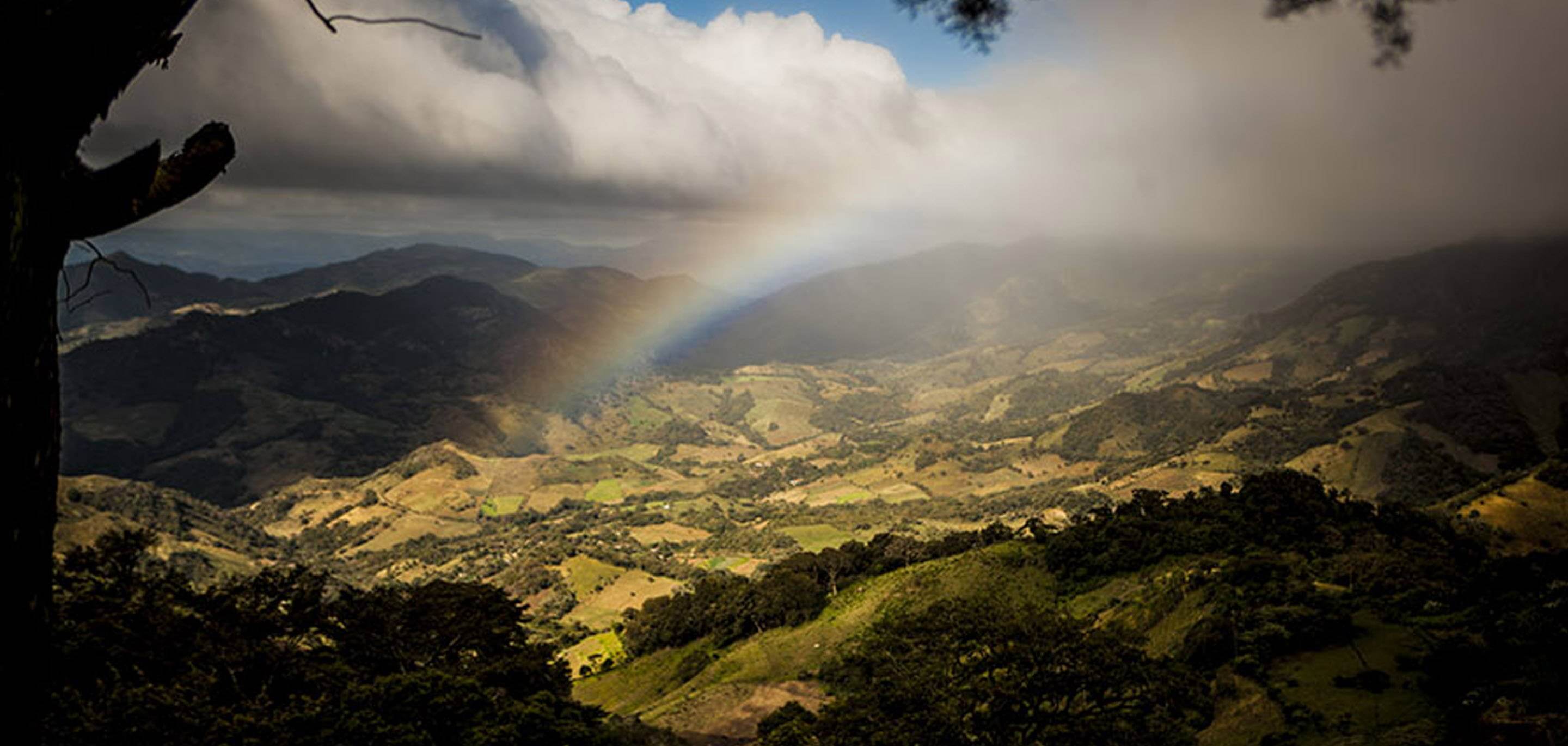
Located in the northern region of Nicaragua is Finca Los Piños. This region produces approximately 83.80% of the national coffee production and has exceptional agro-ecological conditions. They are located in the community of Aranjuez, belonging to the department of Matagalpa. Los Piños farm is part of the El Arenal Natural Reserve, at an altitude of about 1500 meters, where the waters that feed the great Apanas lake are born.
Corrales is a visionary farmer, and pioneer in the application of biodynamic farming practices to coffee production. Maracaturra is a truly exceptional coffee that’s more akin to its cousins in the highlands of East Africa than its neighbors in Central America.
Altitude: 15,000 meters
Processing: Natural and Washed, blended
Cooperative: Corrales Matinez Family Farm
Varietal: Maracaturra, Caturra, Catuai
Byron Jose Corrales Martinez left and Mayra and Byron Corrales right
Ready to try this amazing coffee blend from the Corrales family in Nicaragua?
New Arrival of Byron's Blend
read more
Cups of Change
the promise behind A Just Cup
Paul Katzeff with children of the Nicaragua Coffee Farm 2001
"Be Our Voice"
Paul Katzeff recalls stepping off a plane in Nicaragua in 1985 and being greeted by Sandinistas carrying AK-47s. They were also campesinos, farmers trying to survive a civil war. They brought him into a room and asked him to carry their story home. He agreed.
That yes changed Thanksgiving Coffee. The people behind the harvest became part of what we meant by quality. Their request helped give us the words we still stand behind: Not Just a Cup, But a Just Cup™.
This October, Cups of Change follows that promise from Nicaragua to our roast room above Noyo Harbor, and into the wider coffee community. It is a story of what happened when a small Mendocino Coast roaster listened to farmers and began changing how it did business.
How Nicaragua Changed The Roast Room
Joan and Paul founded Thanksgiving Coffee in 1972 with a 25-pound roaster at the Mendocino Hotel. Freshly roasted coffee was finding its audience. We were learning our craft and building a business in the community that had welcomed us.
Original Menu and Roaster Illustration from Mendocino Hotel 1972
Café por la Paz, Coffee for Peace, gave our customers a deeper way to take part in our coffee journey. Our 1986 brochure shared how we gave a 25-cent contribution from each bag of coffee sold. The program sent rebates to UNAG, a Nicaraguan farmers’ organization supporting agrarian reform. Our 2016 retrospective shares how we distributed 500,000 educational brochures. Coffee was now a way to bring farmers’ struggles into American homes and give direct support back to their hard work.
We tell more of that history in our blog A Just Cup.
The promise to be the farmers voice was taking a practical form: a bag of coffee could carry information, raise funds, and invite a customer into a relationship with the people who grew it.
For the farmer organization’s perspective on this history, read “Daniel Núñez: The Farmers’ View,” a 1991 interview in Revista Envío, exploring farmers’ struggles for land, fair prices, and peace.
Changing what a coffee bag could tell you
Some changes began even before Nicaragua. Our packaging history records roast color on labels in 1972 and the use of Goglio valve bags in 1977. Freshness dates gave customers another useful fact about their coffee. These details helped people understand what they were buying and helped us deliver the flavor we worked so carefully to develop.
In 1992, our Harvest Line put farmers’ photographs on the packages. Customers could see a face behind the harvest. The grower’s work deserved a place beside the roaster’s name. Our early organic coffees and later commitment to shade-grown coffee also brought the health of the farming landscape into the conversation.
Harvest Line packages - Thanksgiving Coffee Company 1992.
Those choices helped turn a package into an invitation to pay attention. They connected the pleasure of drinking coffee with questions about who grew it, how it was cultivated, and how its value was shared. Independent roasters and producer organizations were building a wider movement toward fairer trade, and we were proud to work alongside them.
From one roaster to an industry conversation
A small roastery can have a voice beyond its harbor. Thanksgiving Coffee was a founding member of the Specialty Coffee Association of America (SCAA), and Paul was the association’s first president, serving three terms. In 2008, the SCAA honored him with a Lifetime Achievement Award for his extraordinary contributions.
In 1992, as president of the board, Paul created the SCAA Environment Committee, later renamed the Sustainability Committee. Its questions reached beyond the roast room. How could coffee businesses support the people growing their beans? What did the industry owe the forests, soil, and biodiversity that made those harvests possible?
Those questions became commitments. On October 10, 1997, the SCAA board unanimously adopted a sustainability policy that named biodiversity protection, respect for human rights, and prices that could support economic sustainability.
For us, this is part of becoming a movement maker: listening to farmers, bringing fellow roasters together, and helping turn concern into collective action. Paul’s leadership was one contribution to work carried forward by many people across the coffee community.
Explore this chapter of our history:
- A Just Cup: The story behind specialty coffee’s first environmental committee
- SCAA Sustainability Statement
- Quality revolutions, solidarity networks, and sustainability innovations: following Fair Trade coffee from Nicaragua to California
This is how a movement grows. People meet, disagree, organize, and change what their profession is willing to take responsibility for. We were one part of that work, alongside collaborators who carried it far beyond Mendocino.
Putting the tools of quality in farmers' hands
The promise also changed who gets to judge a coffee. From 2000–2001, Thanksgiving Coffee worked with USAID and Nicaraguan cooperatives on farmer-owned cupping labs. A lab made structured tasting possible at origin, and training taught growers to use the same tools and standards buyers use to assess their harvest.
For a producer, that knowledge supports experiments, improvements, and negotiations grounded in what the coffee actually is. UCA Miraflor and CECOCAFEN were among our cooperative partners. These farmers already knew their land deeply. The cupping tools gave them another way to show the value they create.
Explore the cupping lab story to meet the people and cooperatives behind this change. The ripple was practical: more knowledge at origin, better-informed conversations about value, and a stronger place for farmers in the story of specialty coffee.
Songbird Colombian carries the conversation forward
The questions behind our work with farmers, how coffee is grown and what a purchase can support, still guide us today. One example is our October feature coffee, Songbird Colombian, an organic, Smithsonian Bird Friendly certified dark roast with notes of toasted nut and dark chocolate and a smooth, lasting finish. Every package supports the programs of the American Birding Association.
Its story begins in Colombia’s Sierra Nevada de Santa Marta, where our Agroberlin farmer profile introduces Dario Delgado and his family’s La Cabaña farm. Coffee grows there beneath native shade trees, and our relationship with Agroberlin began in 2015. Bird Friendly certification requires organic production and verified habitat protections, so the trees overhead are part of the story, too.
Care still has to arrive as a delicious cup. That work happens every day in our roast room, where experience and close attention turn a farmer’s harvest into the coffee you brew. In 2017, Roast magazine named Thanksgiving Coffee its Macro Roaster of the Year. We’re grateful for that recognition, and for the growers whose coffee makes our craft possible.
The next ripple begins here
For more than fifty years, Thanksgiving Coffee has contributed time, energy, and coffee to community gatherings along the Mendocino Coast. Behind that history are neighbors setting up events, artists sharing their work, volunteers making things happen, and coffee being poured while people come together. We are part of this community, and it is part of us.
This October, we are contributing coffee to the Native Arts Expo and One People, One Fire October 16–18 in Mendocino, with Bee Bold Alliance helping share the invitation. These Indigenous-led gatherings offer a chance to listen to Native voices, meet artists, and support their work. We invite our neighbors to join us.
We want a regenerative future for Thanksgiving Coffee and the harbor we call home. We are exploring how food sovereignty, art, and community learning might grow alongside the work of roasting and our relationships with farmers. To carry those possibilities forward, this company needs a healthy business behind it. The next chapter depends on people continuing to choose our coffee.
If this work matters to you, choose Songbird Colombian, select a subscription if it fits your household, or introduce a friend to Thanksgiving Coffee.
Your order helps sustain the daily work and relationships behind this story. Then brew a little extra for this month’s Maple and Coffee Baked Pears. The cook deserves a cup, too.
“Be our voice” began with farmers asking to be heard. Cups of Change is an invitation to keep listening, and to let what we learn change what we do. Thank you for helping carry that promise forward.
Not Just a Cup, But a Just Cup™
Frequently Asked Questions
What was Thanksgiving Coffee’s Coffee for Peace project?
Coffee for Peace was a project supported by Thanksgiving Coffee in the 1980s that connected Nicaraguan coffee producers with consumers in the United States and Canada. Coffee sales returned funds to Nicaragua’s farmers’ organization, UNAG, to support farming communities.
What does “Not Just a Cup, But a Just Cup” mean?
Thanksgiving Coffee’s motto connects great coffee with responsibility to the people who grow it. Co-founder Paul Katzeff adopted the phrase after visiting Nicaragua in 1985, when witnessing farmers’ living conditions changed his understanding of what a good cup of coffee should represent.
How did Thanksgiving Coffee support coffee farmers in Nicaragua?
Thanksgiving Coffee purchased Nicaraguan coffee, advocated for producers, and supported the Coffee for Peace project. Later, the company helped nine Nicaraguan cooperatives establish farmer-owned cupping laboratories and trained producers to evaluate their own coffee.
How can coffee cupping help farmers negotiate better prices?
Cupping is a standardized way to evaluate coffee’s aroma, flavor, and quality. Access to cupping equipment and training helps farmers understand and document their harvest’s value, giving them stronger information for discussions with buyers. Quality knowledge supports negotiation, although it does not guarantee fair compensation.
What is Smithsonian Bird Friendly coffee?
Smithsonian Bird Friendly® coffee meets certification requirements for organic farming and wildlife habitat protection. The standards protect tree cover and biodiversity on coffee farms, helping conserve habitat for migratory and resident birds.
About the Author
Lavender Grace Kent, Head of Brand Narrative & Culture
Lavender Grace documents Thanksgiving Coffee’s history, producer relationships, environmental commitments, and continuing work at the intersection of coffee, culture, and biodiversity.
Stay in touch - we like to stay connected
A History of Fair Trade and Coffee Farmer Advocacy
read more
The Just Cup of Her Hands
There are hands behind every coffee harvest.
Hands that plant seedlings beneath shade trees.
Hands that sort cherries at dusk.
Hands that manage homes, finances, children, and crops.
Hands that rarely make the headlines.
This March, during Women’s History Month, we honor the women who quite literally brew the future.
Our featured coffee is Flor de Jinotega, grown by the women and families of the SOPPEXCCA Cooperative in Nicaragua. This single origin is available in 5lb format for foodservice and serious home brewers, this coffee represents something steady and powerful: economic dignity rooted in community.
This is shade-grown Nicaraguan coffee cultivated under diverse canopy trees. Those trees do more than protect flavor. They provide winter habitat for migratory songbirds and preserve soil integrity for future generations.
We have long believed that quality of life and quality of coffee go hand in hand. When farmers thrive, flavor deepens.
Origin: Jinotega, Nicaragua
Producer: SOPPEXCCA Cooperative
Growing Method: Shade-grown
Roast: Medium
Flavor Profile
Cocoa warmth
Soft citrus brightness
Balanced sweetness
A grounded, elegant finish
Women In Coffee Farming:
Recognizing The Unpaid Work
Across Latin America, women perform critical agricultural labor while also carrying the majority of unpaid household work. Historically, much of that contribution has not been financially recognized.
SOPPEXCCA has worked intentionally to change this dynamic.
Through Fairtrade premiums and internal cooperative programs, they invest in:
- Women’s leadership roles within the cooperative
- Access to land titles
- Financial literacy training
- Micro-loan opportunities
- Educational advancement for children
This is not symbolic empowerment. It is structural empowerment.
And when women gain economic agency, farms become more resilient. Environmental stewardship strengthens. Communities stabilize.
That alignment between social justice and ecological care reflects the very heart of our founding philosophy.
Recipe: Cardamom Rose Coffee Cake
Made with Flor de Jinotega
This cake mirrors the coffee’s balance with floral lift, warm spice, grounded sweetness.
Ingredients:
2 cups flour
1 cup raw sugar
1 cup brewed Flor de Jinotega (cooled)
½ cup yogurt
2 eggs
1 tsp crushed cardamom
1 tbsp culinary rosewater
½ cup olive oil
Pinch sea salt
Method
Preheat oven to 350°F. Grease an 8–9 inch pan.
Whisk eggs and sugar until slightly lightened. Add olive oil, yogurt, cooled coffee, and rosewater.
In a separate bowl, combine flour, cardamom, and salt. Fold into wet ingredients gently, just until combined.
Pour into pan and bake 35–40 minutes, until a toothpick comes out clean. Rest 10 minutes before removing.
Optional Finish
Drizzle with a light almond glaze or scatter sliced almonds before baking for a subtle crunch.
Serve warm with a fresh cup of Flor de Jinotega. The cocoa and citrus notes carry the spice beautifully.
Spring Equinox & Renewal
March 20 marks the Spring Equinox — a moment of balance between light and dark.
There is something fitting about pairing that moment with a coffee grown under shade canopy, where light filters through branches in measured generosity.
Women in coffee farming embody that balance daily, production and protection, leadership and care, labor and love.
All Blends: Brewing Community Together
While Flor de Jinotega is our March spotlight, we also invite you to explore our full collection of coffee blends:
Each roast represents long-term partnership and artisanal roasting rooted in Mendocino’s coastal legacy.
Flor de Jinotega is currently available in 5lb format — ideal for cafés, offices, restaurants, and serious home brewers who believe coffee should carry meaning.
Why It Matters
More than 125 million people globally depend on coffee farming for their livelihood. When we center women in that equation, we strengthen the entire system.
This is what we mean when we say we are brewing a movement of justice, sustainability, and hope
Women brew the future.
We simply help tell the story.
👉 Brew With Us
• Shop Flor de Jinotega (5lb)
• Explore all Thanksgiving Coffee blends
• Share your brew on Instagram during Women’s History Month
• Tag us for a chance to be featured
Because every just cup begins in someone’s hands.
Lavender Grace Kent - Director of Brand Narrative & Culture.
Women Brew the Future | Flor de Jinotega
read more
New Arrival : Byron's Blend
A new fresh shipment from the Corrales Martinez Family farm has just arrived to our roastery, and this coffee tastes great! This is one of our Single Origin coffee's and it has the destinct flavors and qualities from Los Piños in Nicaragua.
The Corrales family manages and operates 5 farms in Matagalpa and Jinotega, though finca Los Pinos in Aranjuez is considered their home base. This blend is a mix of the natural and the Maracatura varietals (a hybrid developed by Byron Corrales), and is light-roasted here at Thanksgiving Coffee in Fort Bragg, CA.
Byron's Blend Grown by the Corrales Martinez Family Farm
Located in the northern region of Nicaragua is Finca Los Piños. This region produces approximately 83.80% of the national coffee production and has exceptional agro-ecological conditions. They are located in the community of Aranjuez, belonging to the department of Matagalpa. Los Piños farm is part of the El Arenal Natural Reserve, at an altitude of about 1500 meters, where the waters that feed the great Apanas lake are born.
Corrales is a visionary farmer, and pioneer in the application of biodynamic farming practices to coffee production. Maracaturra is a truly exceptional coffee that’s more akin to its cousins in the highlands of East Africa than its neighbors in Central America.
Altitude: 15,000 meters
Processing: Natural and Washed, blended
Cooperative: Corrales Matinez Family Farm
Varietal: Maracaturra, Caturra, Catuai
Byron Jose Corrales Martinez left and Mayra and Byron Corrales right
Ready to try this amazing coffee blend from the Corrales family in Nicaragua?
New Arrival of Byron's Blend
read more
SUMMER 2026 EVENTS
Salmon Restoration Efforts Never Tasted So Good!
Fort Bragg's 55th Annual "World's Largest Salmon Barbeque" took place on Saturday July 4, 2026. This annual event raises funds for habitat restoration for salmon spawning grounds through the Salmon Restoration Association.
What a turnout! Approximately 3,000 attendees joined us to enjoy freshly grilled salmon, delicious sides, and live music from six bands. Thanks to nearly 100 volunteers and generous local sponsors, the event was a massive success—all while raising vital support for our local habitat, wild salmon populations, and the local economy.
In addition to Thanksgiving Coffee Company, two other Mendocino County certified B Corps donated to this event: North Coast Brewing Company and Bonterra Organic Estates. Other donors included: Harvest Market, Trout Unlimited, Rossi Building Materials, UNFI, Redwood Waste Solutions, and the California Conservation Corp.
At Thanksgiving Coffee Company, our commitment to sustainability extends far beyond the shade-grown canopies of our international source farms—it flows directly into our local backyards here on California’s North Coast. Healthy ecosystems require a holistic approach to conservation, and for our coastal home in Fort Bragg, nothing represents the vitality of our environment quite like the wild salmon navigating our local rivers.
As part of our mission to craft "Not Just A Cup, But A Just Cup" we recognize that true environmental stewardship means protecting our immediate watersheds. Over the years, coastal development, resource extraction, and shifting climates have fragmented critical aquatic habitats for species like the coho salmon. Successful ecological restoration requires persistent, community-led initiatives to restore damaged stream environments, monitor local water flow, track temperature variations, and clean vital spawning gravels.
This is why grassroots efforts are so vital. Local organizations work tirelessly to revitalize historic runs, hosting regional awareness events and driving hands-on recovery projects. Supporting watershed recovery is a natural extension of our values; pure, healthy water is not only essential for brewing the perfect cup of coffee, but it is also the lifeblood of our entire coastal ecosystem.
By prioritizing sustainably sourced coffee and championing regional conservation, our community can help protect these premier wild resources for generations to come. Join us in raising a mug to the streams, the forests, and the resilient fish that call the North Coast home. You can learn more about how to support local stream monitoring and regional habitat restoration initiatives by visiting the Salmon Restoration Association.
|
|
|
|
|
|
|
|
|
|
|
|
|
|
|
|
|
|
|
|
|
|
|
|
55th Annual World's Largest Salmon BBQ
read more
A May Invitation: Bees Make the World Bloom
There’s a moment in May when the air begins to hum.
You can feel it in the movement between blossoms, in the soft presence of bees at work, in the quiet unfolding of the season. This is the time when the world leans into bloom.
At Thanksgiving Coffee Company, coffee has always been a way of participating in that living system - connecting farmers, ecosystems, and daily ritual through a shared practice of care.
This May, we celebrate that connection through Bee Bold Medium Roast, a coffee crafted to support pollinator health and the ecosystems that coffee depends on.
Featured Coffee: Bee Bold Medium Roast
Crafted with Care, Connected to Biodiversity
Bee Bold is a vibrant blend of Central & South American and Ethiopian coffees, combining natural and washed processes to create a cup that is both lively and grounded.
In the cup:
- Bright fruit notes
- Deep sweetness
- A smooth, lasting finish
This coffee reflects the kind of sourcing we’ve practiced for decades, working with producers who grow coffee in ways that support biodiversity, soil health, and long-term resilience.
Through every purchase, Bee Bold contributes directly to pollinator protection through our partnership with Conservation Works - helping fund on-the-ground efforts that protect the species essential to our food systems.
Why Bees Matter: The Work Behind the Bloom
Bees and other pollinators play a vital role in the health of our ecosystems - including coffee farms.
When pollinators are present:
- Coffee plants produce more abundant and consistent harvests
- Flavor complexity can improve
- Farms become more resilient over time
When we choose pollinator-friendly coffee, we participate in something much larger than a morning ritual. We help restore the delicate balance that allows life to flourish.
Thanksgiving Coffee's Headquarters is 3 acres of Pollinator Protected Zone.
World Bee Day & The Flower Moon
May carries a constellation of meaning:
- Mother’s Day (May 10): honoring care, nourishment, and life-giving forces
- Endangered Species Day (May 15): recognizing what needs protection
- World Bee Day (May 20): celebrating pollinators
- International Day for Biological Diversity (May 22): protecting the web of life
- Memorial Day (May 26): a time for remembrance and gratitude
The Flower Moon rises in this same window—reminding us that blooming is not an accident. It is the result of relationship, timing, and attention.
The Bee Bold Challenge
This month, we invite you into action. Be a Pollinator Protector!
- 🌱 Plant pollinator-friendly flowers
- 🐝 Support local ecosystems
- 📸 Share your garden or blooms
- 🏷 Tag #BeeBold
Even a small patch of flowers can become a sanctuary.
Small acts, repeated across many places, create real change.
Recipe: Bee Bold Iced Honey Latte
Text
A simple ritual for warm days
Bee Bold Iced Honey Latte
Ingredients:
- 1 cup brewed Bee Bold Medium Roast (cooled)
- ½ cup milk - your choice
- 1–2 tsp local honey
- A pinch of culinary lavender (optional)
- Ice
Directions:
-
Brew your coffee and allow it to cool
-
Stir in honey while still slightly warm
-
Fill a glass with ice
-
Pour coffee over ice, then add your milk choice
-
Sprinkle lavender gently on top
Taste: floral, smooth, lightly sweet—like spring in a glass
A Closing Reflection
Every cup of coffee is part of a larger system, one that connects land, people, and daily life.
For over fifty years, we’ve worked to build that system with care: through long-term farmer relationships, thoughtful sourcing, and a commitment to quality that honors both our craft and our ecology.
Bee Bold is one expression of that work, supporting pollinators, biodiversity, and the conditions that allow coffee to flourish.
This May, may your cup be part of something that continues to grow.
Lavender Grace Kent is the Director of Brand Narrative and Culture
Stay In Touch - We like to stay connected
Bee Bold & Blooming: Coffee That Helps the World Flower
read more
A Cup That Sounds Like the Forest
There’s a moment in the morning, before the day fully arrives, when everything is still soft.
The kettle hums. Light moves through the trees. And when the coffee begins to pour, there’s a feeling, like something living is arriving with it.
Our Songbird Nicaraguan Coffee carries that feeling. This is our shade-grown, bird-friendly coffee, cultivated beneath forest canopy where songbirds still find habitat along their migratory paths.
Bird-friendly coffee is one of the most effective everyday ways to support migratory bird habitat.
And when you brew it, you are part of that living system.
Nicaraguan Farmer in a Shade Grown Coffee Forest
Why Shade Grown Coffee Matters More Than Ever
The forests that sustain migratory birds are under pressure.
The Smithsonian Migratory Bird Center has spent decades studying and protecting bird migration across the Western Hemisphere. Their work helps make one thing clear: birds need healthy, connected habitat to survive.
Right now, that system is breaking down. Since 1970, bird populations in the U.S. and Canada have declined by 29%, or nearly 3 billion birds. Not only rare species, but common birds too. Backyard birds. Songbirds. The ones many of us grew up hearing.
Birds are indicators of ecological health. When they decline, it tells us something deeper is out of balance.
That is one reason this coffee matters.
For nearly three decades, we’ve partnered with the American Birding Association to help protect that habitat through coffee.
What began as a shared belief, that coffee could be grown in a way that supports bird life, has grown into one of our longest-standing relationships. Together, we’ve supported shade-grown practices that allow forests to remain intact, creating space for migratory birds to rest, feed, and continue their journeys.
This is what bird-friendly coffee makes possible.
What is Shade Grown Coffee?
Shade-grown coffee is coffee grown beneath a diverse canopy of trees instead of in cleared, sun-exposed fields.
This kind of farming helps create:
- habitat for migratory birds
- healthier soil and water systems
- natural biodiversity on the farm
- slower cherry development, which often leads to richer flavor
In simple terms: better habitat supports better coffee.
That has long been part of our understanding at Thanksgiving Coffee. Great coffee and healthy ecosystems belong together.
How do we grow coffee in a way that supports land, people, and ecosystems together?
A Legacy of Environmental Leadership
This work didn’t begin recently at Thanksgiving Coffee.
In the early years of specialty coffee, our team helped establish the first Environmental Committee within the Specialty Coffee Association of America - what today would be recognized as an early form of a sustainability committee in the coffee industry.
At the time, the language was different. But the intention was clear: to bring ecological responsibility into how coffee is grown, sourced, and shared.
Paul and Joan Katzeff worked across farmers, cooperatives, and industry leaders to help connect people around a shared understanding that coffee exists within a living system.
Today, many call this coffee sustainability leadership.
At its root, it was something simpler: whole systems thinking.
That:
- coffee quality is connected to farmer wellbeing
- farmer wellbeing is connected to ecosystem health
- ecosystem health is connected to how we all participate
This has never been separate from the coffee. It is the coffee.
Where Coffee Sustainability Began: A Whole Systems Approach
Long before sustainability became standard language in coffee, it began as a question of relationship.
How do we grow coffee in a way that supports land, people, and ecosystems together?
This question guided early collaboration across the industry - bringing together farmers, environmental advocates, and coffee professionals to think beyond the cup.
From extraction to relationship.
From product to system.
From short-term yield to long-term vitality.
That shift continues to shape coffee today.
Meet the Coffee: Songbird Nicaraguan
Tasting Notes
Cocoa richness
Gentle citrus brightness
Smooth, balanced finish
Origin
Nicaragua, sourced through long-standing cooperative partnerships
Roast
Medium roast, crafted for clarity and body
👉 Shop Songbird Nicaraguan Coffee
Part of our Songbird Coffee line, developed in partnership with the American Birding Association, this coffee reflects nearly 30 years of shared commitment to protecting bird habitat through shade-grown farming. It’s a relationship built slowly, like forests themselves.
Brewing Habitat: A Daily Ritual
There are large challenges in the world.
And there are daily practices that quietly shape what comes next.
When you choose bird-friendly, shade-grown coffee, you are supporting:
- forest ecosystems
- migratory bird pathways
- farmers working in balance with the land
It is not abstract.
It is immediate.
It is in your cup.
Watch how habitat, birds, and coffee are connected across continents.
Recipe: Citrus Bloom Cold Brew
A bright, floral expression of Songbird Nicaraguan.
Ingredients
- 1 cup coarsely ground Songbird Nicaraguan coffee
- 4 cups cold filtered water
- zest of 1 orange
- 1–2 teaspoons wildflower honey
- ice
Directions
- Steep coffee and water for 12–16 hours in the refrigerator
- Strain slowly
- Add orange zest and honey
- Serve over ice
Citrus cold brew coffee with orange zest and honey
7 Ways to Support Songbirds,
Starting With Your Cup
The good news is this: while the challenges are real, there are meaningful ways to help.
- Choose Bird-Friendly Coffee. More than 70 species of migratory songbirds depend on coffee farms for habitat. Shade-grown coffee helps preserve that habitat.
-
Plant Native Species. Even small spaces can provide food and shelter for birds.
-
Avoid Pesticides. Reducing chemical use supports birds and the ecosystems they rely on.
-
Make Windows Safer. Simple changes can reduce bird collisions.
-
Keep Cats Indoors. Protects both birds and pets.
-
Reduce Single-Use Plastics. Supports broader ecosystem health.
- Pay Attention. Noticing birds is part of protecting them.
Start With the Cup
Brew coffee that protects habitat. Let that choice ripple outward.
Earth Month: A Moment to Choose Differently
April brings us back into awareness:
- Earth Month (April)
- Earth Day (April 22)
- Arbor Day (April 24)
These are reminders, and also invitations.
The future of birds, forests, and farming systems is shaped by everyday choices.
From Forest to Cup
From the highlands of Nicaragua to your kitchen, there is a thread.
Birds in motion.
Farmers tending trees.
Water, soil, and time.
And you.
Not just a cup, but a living system that is held for a moment in your hands.
FAQ Section
What is bird-friendly coffee?
Coffee grown under forest canopy that supports bird habitat and biodiversity.
Why is shade-grown coffee important?
It protects ecosystems, supports wildlife, and improves coffee quality.
What is a sustainability committee in coffee?
Today, sustainability committees guide environmental and social practices. This work began with early environmental leadership efforts in specialty coffee, including the first Environmental Committee.
How can I support bird-friendly coffee?
Choose shade-grown coffee, reduce pesticides, plant native species, and support responsible sourcing. From Forest to Cup
Bring the Forest Home
Brew with intention.
Choose shade-grown coffee.
Share your ritual.
Lavender Grace Kent is the Director of Brand Narrative and Culture
Stay In Touch - We like to stay connected