
Our Blog
Beyond The Bean: Buzzing with Biodiversity
View BY :
Beyond The Bean: Buzzing with Biodiversity
Your morning coffee can be more than just a boost—it can drive positive change. With our Smithsonian Bird Friendly® certification and our Bee Bold Alliance initiative, we're turning your daily coffee ritual into a force for good. Here's how we're making waves in the world of sustainable agriculture while serving up exceptional coffee.
Butterfly on coffee leaf, Soppexxcca Coop, Nicaragua
Cultivating Natural Ecosystems
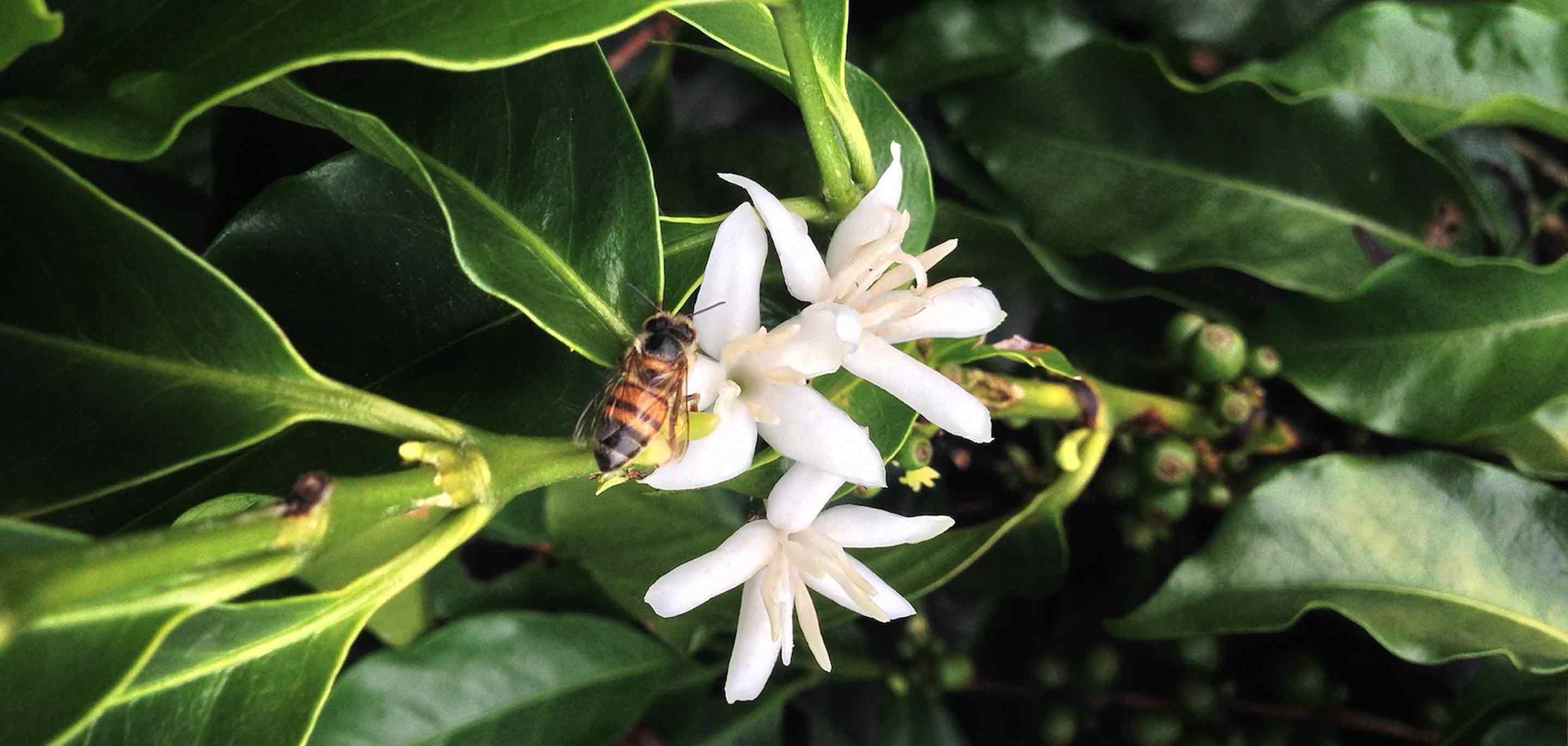
Our coffee farming goes beyond conventional methods. We nurture complete ecosystems where coffee plants thrive alongside native flora and fauna. A single coffee tree can support over 100 insect species, enhancing biodiversity on our farms.
coffee beans ripening in the understory of the forest canopy
Our Environmental Commitments
Our commitment to biodiversity is reflected in two key initiatives:
AT ORIGIN
Smithsonian Bird Friendly ® Certification: This certification is literally the environmental gold standard in the sustainable coffee industry. As holders of the Smithsonian Bird Friendly® certification since 2015, we adhere to the most comprehensive, science-based standards in the coffee industry. This certification requires:
- Multiple layers of native tree canopy providing crucial wildlife habitat
- USDA Organic certification as a foundation, ensuring chemical-free farming
- Regular third-party inspections verifying our environmental impact
- Documented support of migratory birds and local biodiversity
Did you know? A single coffee tree on a certified farm can support over 100 distinct insect species!
AT HOME
The Bee Bold Alliance: This is our initiative to restore biodiversity and support local food security through pollinator protection. The vision is to create a regenerative ecology network in our community for comprehensive pollinator protection. Here are the key principles guiding our path forward:
- Protecting the Soil: We're working toward eliminating harmful pesticides, fungicides, and herbicides from our farming practices. This transition aims to create healthier environments for pollinators while maintaining productive coffee cultivation.
- Watershed Stewardship: Our growing commitment includes developing better water conservation practices, reducing fertilizer usage, and implementing responsible waste management systems.
- Fostering Pollinator Forage: We're exploring ways to integrate more flowering plants throughout our local farms, aiming to provide year-round nutrition that supports healthy pollinator populations.
- Honoring Indigenous Wisdom: We're beginning to build relationships with Native/First Nation peoples in our growing regions, seeking to learn from their traditional knowledge and collaborate on sustainable solutions for the future.
We're reaching out to neighboring farms and communities, inviting them to join us in protecting pollinators. This initiative is beginning to form, and we believe that together, we can create meaningful change.
The Impact of Your Coffee Choice
We believe in the power of collective action. Here are ways you can participate in this journey:
-
Choose coffee that aligns with your environmental values
-
Cultivate native wildflowers in your garden or community spaces
-
Consider natural pest management practices
-
Create undisturbed areas in your garden to provide natural habitats
-
Learn about pollinator-friendly plants suitable for your local ecosystem
Moving Forward Together
We're at an exciting point in our environmental journey, where your choice of coffee can help shape future agricultural practices. Our Bird Friendly® certified coffee demonstrates our established commitment to environmental stewardship, while our developing Bee Bold Coffee initiative shows where we're heading. By choosing these products, you're not just selecting quality coffee—you're supporting the evolution of sustainable and pollinator-friendly agriculture.
Join us on this journey toward biodiversity conservation through sustainable agriculture. Your support through choosing our Bird Friendly® certified coffee and Bee Bold Coffee helps create positive environmental change, one cup at a time.
Lavender Grace is the Sustainable Ecology Consultant for Thanksgiving Coffee Company
Recommended Reading
Back to the Blog-
![Bee Bold & Blooming: Coffee That Helps the World Flower]()

A May Invitation: Bees Make the World Bloom
There’s a moment in May when the air begins to hum.
You can feel it in the movement between blossoms, in the soft presence of bees at work, in the quiet unfolding of the season. This is the time when the world leans into bloom.
At Thanksgiving Coffee Company, coffee has always been a way of participating in that living system - connecting farmers, ecosystems, and daily ritual through a shared practice of care.
This May, we celebrate that connection through Bee Bold Medium Roast, a coffee crafted to support pollinator health and the ecosystems that coffee depends on.
Featured Coffee: Bee Bold Medium Roast
Crafted with Care, Connected to Biodiversity
Bee Bold is a vibrant blend of Central & South American and Ethiopian coffees, combining natural and washed processes to create a cup that is both lively and grounded.
In the cup:
- Bright fruit notes
- Deep sweetness
- A smooth, lasting finish
This coffee reflects the kind of sourcing we’ve practiced for decades, working with producers who grow coffee in ways that support biodiversity, soil health, and long-term resilience.
Through every purchase, Bee Bold contributes directly to pollinator protection through our partnership with Conservation Works - helping fund on-the-ground efforts that protect the species essential to our food systems.
Why Bees Matter: The Work Behind the Bloom
Bees and other pollinators play a vital role in the health of our ecosystems - including coffee farms.
When pollinators are present:
- Coffee plants produce more abundant and consistent harvests
- Flavor complexity can improve
- Farms become more resilient over time
When we choose pollinator-friendly coffee, we participate in something much larger than a morning ritual. We help restore the delicate balance that allows life to flourish.
Thanksgiving Coffee's Headquarters is 3 acres of Pollinator Protected Zone.
World Bee Day & The Flower Moon
May carries a constellation of meaning:
- Mother’s Day (May 10): honoring care, nourishment, and life-giving forces
- Endangered Species Day (May 15): recognizing what needs protection
- World Bee Day (May 20): celebrating pollinators
- International Day for Biological Diversity (May 22): protecting the web of life
- Memorial Day (May 26): a time for remembrance and gratitude
The Flower Moon rises in this same window—reminding us that blooming is not an accident. It is the result of relationship, timing, and attention.
The Bee Bold Challenge
This month, we invite you into action. Be a Pollinator Protector!
- 🌱 Plant pollinator-friendly flowers
- 🐝 Support local ecosystems
- 📸 Share your garden or blooms
- 🏷 Tag #BeeBold
Even a small patch of flowers can become a sanctuary.
Small acts, repeated across many places, create real change.
Recipe: Bee Bold Iced Honey Latte
Text
A simple ritual for warm days
Bee Bold Iced Honey Latte
Ingredients:
- 1 cup brewed Bee Bold Medium Roast (cooled)
- ½ cup milk - your choice
- 1–2 tsp local honey
- A pinch of culinary lavender (optional)
- Ice
Directions:
-
Brew your coffee and allow it to cool
-
Stir in honey while still slightly warm
-
Fill a glass with ice
-
Pour coffee over ice, then add your milk choice
-
Sprinkle lavender gently on top
Taste: floral, smooth, lightly sweet—like spring in a glass
A Closing Reflection
Every cup of coffee is part of a larger system, one that connects land, people, and daily life.
For over fifty years, we’ve worked to build that system with care: through long-term farmer relationships, thoughtful sourcing, and a commitment to quality that honors both our craft and our ecology.
Bee Bold is one expression of that work, supporting pollinators, biodiversity, and the conditions that allow coffee to flourish.
This May, may your cup be part of something that continues to grow.
Lavender Grace Kent is the Director of Brand Narrative and Culture
Stay In Touch - We like to stay connected
Bee Bold & Blooming: Coffee That Helps the World Flower
read more -
![55th Annual World's Largest Salmon BBQ]()
SUMMER 2026 EVENTS
Salmon Restoration Efforts Never Tasted So Good!
Fort Bragg's 55th Annual "World's Largest Salmon Barbeque" took place on Saturday July 4, 2026. This annual event raises funds for habitat restoration for salmon spawning grounds through the Salmon Restoration Association.
What a turnout! Approximately 3,000 attendees joined us to enjoy freshly grilled salmon, delicious sides, and live music from six bands. Thanks to nearly 100 volunteers and generous local sponsors, the event was a massive success—all while raising vital support for our local habitat, wild salmon populations, and the local economy.
In addition to Thanksgiving Coffee Company, two other Mendocino County certified B Corps donated to this event: North Coast Brewing Company and Bonterra Organic Estates. Other donors included: Harvest Market, Trout Unlimited, Rossi Building Materials, UNFI, Redwood Waste Solutions, and the California Conservation Corp.
At Thanksgiving Coffee Company, our commitment to sustainability extends far beyond the shade-grown canopies of our international source farms—it flows directly into our local backyards here on California’s North Coast. Healthy ecosystems require a holistic approach to conservation, and for our coastal home in Fort Bragg, nothing represents the vitality of our environment quite like the wild salmon navigating our local rivers.
As part of our mission to craft "Not Just A Cup, But A Just Cup" we recognize that true environmental stewardship means protecting our immediate watersheds. Over the years, coastal development, resource extraction, and shifting climates have fragmented critical aquatic habitats for species like the coho salmon. Successful ecological restoration requires persistent, community-led initiatives to restore damaged stream environments, monitor local water flow, track temperature variations, and clean vital spawning gravels.
This is why grassroots efforts are so vital. Local organizations work tirelessly to revitalize historic runs, hosting regional awareness events and driving hands-on recovery projects. Supporting watershed recovery is a natural extension of our values; pure, healthy water is not only essential for brewing the perfect cup of coffee, but it is also the lifeblood of our entire coastal ecosystem.
By prioritizing sustainably sourced coffee and championing regional conservation, our community can help protect these premier wild resources for generations to come. Join us in raising a mug to the streams, the forests, and the resilient fish that call the North Coast home. You can learn more about how to support local stream monitoring and regional habitat restoration initiatives by visiting the Salmon Restoration Association.
55th Annual World's Largest Salmon BBQ
read more -
![Songbirds of the Forest: Brewing Habitat in Every Cup]()
A Cup That Sounds Like the Forest
There’s a moment in the morning, before the day fully arrives, when everything is still soft.
The kettle hums. Light moves through the trees. And when the coffee begins to pour, there’s a feeling, like something living is arriving with it.
Our Songbird Nicaraguan Coffee carries that feeling. This is our shade-grown, bird-friendly coffee, cultivated beneath forest canopy where songbirds still find habitat along their migratory paths.
Bird-friendly coffee is one of the most effective everyday ways to support migratory bird habitat.
And when you brew it, you are part of that living system.
Nicaraguan Farmer in a Shade Grown Coffee Forest
Why Shade Grown Coffee Matters More Than Ever
The forests that sustain migratory birds are under pressure.
The Smithsonian Migratory Bird Center has spent decades studying and protecting bird migration across the Western Hemisphere. Their work helps make one thing clear: birds need healthy, connected habitat to survive.
Right now, that system is breaking down. Since 1970, bird populations in the U.S. and Canada have declined by 29%, or nearly 3 billion birds. Not only rare species, but common birds too. Backyard birds. Songbirds. The ones many of us grew up hearing.
Birds are indicators of ecological health. When they decline, it tells us something deeper is out of balance.
That is one reason this coffee matters.
For nearly three decades, we’ve partnered with the American Birding Association to help protect that habitat through coffee.
What began as a shared belief, that coffee could be grown in a way that supports bird life, has grown into one of our longest-standing relationships. Together, we’ve supported shade-grown practices that allow forests to remain intact, creating space for migratory birds to rest, feed, and continue their journeys.
This is what bird-friendly coffee makes possible.
What is Shade Grown Coffee?
Shade-grown coffee is coffee grown beneath a diverse canopy of trees instead of in cleared, sun-exposed fields.
This kind of farming helps create:
- habitat for migratory birds
- healthier soil and water systems
- natural biodiversity on the farm
- slower cherry development, which often leads to richer flavor
In simple terms: better habitat supports better coffee.
That has long been part of our understanding at Thanksgiving Coffee. Great coffee and healthy ecosystems belong together.
How do we grow coffee in a way that supports land, people, and ecosystems together?
A Legacy of Environmental Leadership
This work didn’t begin recently at Thanksgiving Coffee.
In the early years of specialty coffee, our team helped establish the first Environmental Committee within the Specialty Coffee Association of America - what today would be recognized as an early form of a sustainability committee in the coffee industry.
At the time, the language was different. But the intention was clear: to bring ecological responsibility into how coffee is grown, sourced, and shared.
Paul and Joan Katzeff worked across farmers, cooperatives, and industry leaders to help connect people around a shared understanding that coffee exists within a living system.
Today, many call this coffee sustainability leadership.
At its root, it was something simpler: whole systems thinking.
That:
- coffee quality is connected to farmer wellbeing
- farmer wellbeing is connected to ecosystem health
- ecosystem health is connected to how we all participate
This has never been separate from the coffee. It is the coffee.
Where Coffee Sustainability Began: A Whole Systems Approach
Long before sustainability became standard language in coffee, it began as a question of relationship.
How do we grow coffee in a way that supports land, people, and ecosystems together?
This question guided early collaboration across the industry - bringing together farmers, environmental advocates, and coffee professionals to think beyond the cup.
From extraction to relationship.
From product to system.
From short-term yield to long-term vitality.That shift continues to shape coffee today.
Meet the Coffee: Songbird Nicaraguan
Tasting Notes
Cocoa richness
Gentle citrus brightness
Smooth, balanced finishOrigin
Nicaragua, sourced through long-standing cooperative partnershipsRoast
Medium roast, crafted for clarity and body👉 Shop Songbird Nicaraguan Coffee
Part of our Songbird Coffee line, developed in partnership with the American Birding Association, this coffee reflects nearly 30 years of shared commitment to protecting bird habitat through shade-grown farming. It’s a relationship built slowly, like forests themselves.
Brewing Habitat: A Daily Ritual
There are large challenges in the world.
And there are daily practices that quietly shape what comes next.
When you choose bird-friendly, shade-grown coffee, you are supporting:
- forest ecosystems
- migratory bird pathways
- farmers working in balance with the land
It is not abstract.
It is immediate.
It is in your cup.Watch how habitat, birds, and coffee are connected across continents.
Recipe: Citrus Bloom Cold Brew
A bright, floral expression of Songbird Nicaraguan.
Ingredients
- 1 cup coarsely ground Songbird Nicaraguan coffee
- 4 cups cold filtered water
- zest of 1 orange
- 1–2 teaspoons wildflower honey
- ice
Directions
- Steep coffee and water for 12–16 hours in the refrigerator
- Strain slowly
- Add orange zest and honey
- Serve over ice
Citrus cold brew coffee with orange zest and honey
7 Ways to Support Songbirds,
Starting With Your Cup
The good news is this: while the challenges are real, there are meaningful ways to help.
- Choose Bird-Friendly Coffee. More than 70 species of migratory songbirds depend on coffee farms for habitat. Shade-grown coffee helps preserve that habitat.
-
Plant Native Species. Even small spaces can provide food and shelter for birds.
-
Avoid Pesticides. Reducing chemical use supports birds and the ecosystems they rely on.
-
Make Windows Safer. Simple changes can reduce bird collisions.
-
Keep Cats Indoors. Protects both birds and pets.
-
Reduce Single-Use Plastics. Supports broader ecosystem health.
- Pay Attention. Noticing birds is part of protecting them.
Start With the Cup
Brew coffee that protects habitat. Let that choice ripple outward.
Earth Month: A Moment to Choose Differently
April brings us back into awareness:
- Earth Month (April)
- Earth Day (April 22)
- Arbor Day (April 24)
These are reminders, and also invitations.
The future of birds, forests, and farming systems is shaped by everyday choices.
From Forest to Cup
From the highlands of Nicaragua to your kitchen, there is a thread.
Birds in motion.
Farmers tending trees.
Water, soil, and time.And you.
Not just a cup, but a living system that is held for a moment in your hands.
FAQ Section
What is bird-friendly coffee?
Coffee grown under forest canopy that supports bird habitat and biodiversity.
Why is shade-grown coffee important?
It protects ecosystems, supports wildlife, and improves coffee quality.
What is a sustainability committee in coffee?
Today, sustainability committees guide environmental and social practices. This work began with early environmental leadership efforts in specialty coffee, including the first Environmental Committee.
How can I support bird-friendly coffee?
Choose shade-grown coffee, reduce pesticides, plant native species, and support responsible sourcing. From Forest to CupBring the Forest Home
Brew with intention.
Choose shade-grown coffee.
Share your ritual.
Lavender Grace Kent is the Director of Brand Narrative and Culture
Stay In Touch - We like to stay connected
Songbirds of the Forest: Brewing Habitat in Every Cup
read more


A May Invitation: Bees Make the World Bloom
There’s a moment in May when the air begins to hum.
You can feel it in the movement between blossoms, in the soft presence of bees at work, in the quiet unfolding of the season. This is the time when the world leans into bloom.
At Thanksgiving Coffee Company, coffee has always been a way of participating in that living system - connecting farmers, ecosystems, and daily ritual through a shared practice of care.
This May, we celebrate that connection through Bee Bold Medium Roast, a coffee crafted to support pollinator health and the ecosystems that coffee depends on.
Featured Coffee: Bee Bold Medium Roast
Crafted with Care, Connected to Biodiversity
Bee Bold is a vibrant blend of Central & South American and Ethiopian coffees, combining natural and washed processes to create a cup that is both lively and grounded.
In the cup:
- Bright fruit notes
- Deep sweetness
- A smooth, lasting finish
This coffee reflects the kind of sourcing we’ve practiced for decades, working with producers who grow coffee in ways that support biodiversity, soil health, and long-term resilience.
Through every purchase, Bee Bold contributes directly to pollinator protection through our partnership with Conservation Works - helping fund on-the-ground efforts that protect the species essential to our food systems.
Why Bees Matter: The Work Behind the Bloom
Bees and other pollinators play a vital role in the health of our ecosystems - including coffee farms.
When pollinators are present:
- Coffee plants produce more abundant and consistent harvests
- Flavor complexity can improve
- Farms become more resilient over time
When we choose pollinator-friendly coffee, we participate in something much larger than a morning ritual. We help restore the delicate balance that allows life to flourish.
Thanksgiving Coffee's Headquarters is 3 acres of Pollinator Protected Zone.
World Bee Day & The Flower Moon
May carries a constellation of meaning:
- Mother’s Day (May 10): honoring care, nourishment, and life-giving forces
- Endangered Species Day (May 15): recognizing what needs protection
- World Bee Day (May 20): celebrating pollinators
- International Day for Biological Diversity (May 22): protecting the web of life
- Memorial Day (May 26): a time for remembrance and gratitude
The Flower Moon rises in this same window—reminding us that blooming is not an accident. It is the result of relationship, timing, and attention.
The Bee Bold Challenge
This month, we invite you into action. Be a Pollinator Protector!
- 🌱 Plant pollinator-friendly flowers
- 🐝 Support local ecosystems
- 📸 Share your garden or blooms
- 🏷 Tag #BeeBold
Even a small patch of flowers can become a sanctuary.
Small acts, repeated across many places, create real change.
Recipe: Bee Bold Iced Honey Latte
Text
A simple ritual for warm days
Bee Bold Iced Honey Latte
Ingredients:
- 1 cup brewed Bee Bold Medium Roast (cooled)
- ½ cup milk - your choice
- 1–2 tsp local honey
- A pinch of culinary lavender (optional)
- Ice
Directions:
-
Brew your coffee and allow it to cool
-
Stir in honey while still slightly warm
-
Fill a glass with ice
-
Pour coffee over ice, then add your milk choice
-
Sprinkle lavender gently on top
Taste: floral, smooth, lightly sweet—like spring in a glass
A Closing Reflection
Every cup of coffee is part of a larger system, one that connects land, people, and daily life.
For over fifty years, we’ve worked to build that system with care: through long-term farmer relationships, thoughtful sourcing, and a commitment to quality that honors both our craft and our ecology.
Bee Bold is one expression of that work, supporting pollinators, biodiversity, and the conditions that allow coffee to flourish.
This May, may your cup be part of something that continues to grow.
Lavender Grace Kent is the Director of Brand Narrative and Culture
Stay In Touch - We like to stay connected
Bee Bold & Blooming: Coffee That Helps the World Flower
read more
SUMMER 2026 EVENTS
Salmon Restoration Efforts Never Tasted So Good!
Fort Bragg's 55th Annual "World's Largest Salmon Barbeque" took place on Saturday July 4, 2026. This annual event raises funds for habitat restoration for salmon spawning grounds through the Salmon Restoration Association.
What a turnout! Approximately 3,000 attendees joined us to enjoy freshly grilled salmon, delicious sides, and live music from six bands. Thanks to nearly 100 volunteers and generous local sponsors, the event was a massive success—all while raising vital support for our local habitat, wild salmon populations, and the local economy.
In addition to Thanksgiving Coffee Company, two other Mendocino County certified B Corps donated to this event: North Coast Brewing Company and Bonterra Organic Estates. Other donors included: Harvest Market, Trout Unlimited, Rossi Building Materials, UNFI, Redwood Waste Solutions, and the California Conservation Corp.
At Thanksgiving Coffee Company, our commitment to sustainability extends far beyond the shade-grown canopies of our international source farms—it flows directly into our local backyards here on California’s North Coast. Healthy ecosystems require a holistic approach to conservation, and for our coastal home in Fort Bragg, nothing represents the vitality of our environment quite like the wild salmon navigating our local rivers.
As part of our mission to craft "Not Just A Cup, But A Just Cup" we recognize that true environmental stewardship means protecting our immediate watersheds. Over the years, coastal development, resource extraction, and shifting climates have fragmented critical aquatic habitats for species like the coho salmon. Successful ecological restoration requires persistent, community-led initiatives to restore damaged stream environments, monitor local water flow, track temperature variations, and clean vital spawning gravels.
This is why grassroots efforts are so vital. Local organizations work tirelessly to revitalize historic runs, hosting regional awareness events and driving hands-on recovery projects. Supporting watershed recovery is a natural extension of our values; pure, healthy water is not only essential for brewing the perfect cup of coffee, but it is also the lifeblood of our entire coastal ecosystem.
By prioritizing sustainably sourced coffee and championing regional conservation, our community can help protect these premier wild resources for generations to come. Join us in raising a mug to the streams, the forests, and the resilient fish that call the North Coast home. You can learn more about how to support local stream monitoring and regional habitat restoration initiatives by visiting the Salmon Restoration Association.
|
|
|
|
|
|
|
|
|
|
|
|
|
|
|
|
|
|
|
|
|
|
|
|
55th Annual World's Largest Salmon BBQ
read more
A May Invitation: Bees Make the World Bloom
There’s a moment in May when the air begins to hum.
You can feel it in the movement between blossoms, in the soft presence of bees at work, in the quiet unfolding of the season. This is the time when the world leans into bloom.
At Thanksgiving Coffee Company, coffee has always been a way of participating in that living system - connecting farmers, ecosystems, and daily ritual through a shared practice of care.
This May, we celebrate that connection through Bee Bold Medium Roast, a coffee crafted to support pollinator health and the ecosystems that coffee depends on.
Featured Coffee: Bee Bold Medium Roast
Crafted with Care, Connected to Biodiversity
Bee Bold is a vibrant blend of Central & South American and Ethiopian coffees, combining natural and washed processes to create a cup that is both lively and grounded.
In the cup:
- Bright fruit notes
- Deep sweetness
- A smooth, lasting finish
This coffee reflects the kind of sourcing we’ve practiced for decades, working with producers who grow coffee in ways that support biodiversity, soil health, and long-term resilience.
Through every purchase, Bee Bold contributes directly to pollinator protection through our partnership with Conservation Works - helping fund on-the-ground efforts that protect the species essential to our food systems.
Why Bees Matter: The Work Behind the Bloom
Bees and other pollinators play a vital role in the health of our ecosystems - including coffee farms.
When pollinators are present:
- Coffee plants produce more abundant and consistent harvests
- Flavor complexity can improve
- Farms become more resilient over time
When we choose pollinator-friendly coffee, we participate in something much larger than a morning ritual. We help restore the delicate balance that allows life to flourish.
Thanksgiving Coffee's Headquarters is 3 acres of Pollinator Protected Zone.
World Bee Day & The Flower Moon
May carries a constellation of meaning:
- Mother’s Day (May 10): honoring care, nourishment, and life-giving forces
- Endangered Species Day (May 15): recognizing what needs protection
- World Bee Day (May 20): celebrating pollinators
- International Day for Biological Diversity (May 22): protecting the web of life
- Memorial Day (May 26): a time for remembrance and gratitude
The Flower Moon rises in this same window—reminding us that blooming is not an accident. It is the result of relationship, timing, and attention.
The Bee Bold Challenge
This month, we invite you into action. Be a Pollinator Protector!
- 🌱 Plant pollinator-friendly flowers
- 🐝 Support local ecosystems
- 📸 Share your garden or blooms
- 🏷 Tag #BeeBold
Even a small patch of flowers can become a sanctuary.
Small acts, repeated across many places, create real change.
Recipe: Bee Bold Iced Honey Latte
Text
A simple ritual for warm days
Bee Bold Iced Honey Latte
Ingredients:
- 1 cup brewed Bee Bold Medium Roast (cooled)
- ½ cup milk - your choice
- 1–2 tsp local honey
- A pinch of culinary lavender (optional)
- Ice
Directions:
-
Brew your coffee and allow it to cool
-
Stir in honey while still slightly warm
-
Fill a glass with ice
-
Pour coffee over ice, then add your milk choice
-
Sprinkle lavender gently on top
Taste: floral, smooth, lightly sweet—like spring in a glass
A Closing Reflection
Every cup of coffee is part of a larger system, one that connects land, people, and daily life.
For over fifty years, we’ve worked to build that system with care: through long-term farmer relationships, thoughtful sourcing, and a commitment to quality that honors both our craft and our ecology.
Bee Bold is one expression of that work, supporting pollinators, biodiversity, and the conditions that allow coffee to flourish.
This May, may your cup be part of something that continues to grow.
Lavender Grace Kent is the Director of Brand Narrative and Culture
Stay In Touch - We like to stay connected
Bee Bold & Blooming: Coffee That Helps the World Flower
read more
A Cup That Sounds Like the Forest
There’s a moment in the morning, before the day fully arrives, when everything is still soft.
The kettle hums. Light moves through the trees. And when the coffee begins to pour, there’s a feeling, like something living is arriving with it.
Our Songbird Nicaraguan Coffee carries that feeling. This is our shade-grown, bird-friendly coffee, cultivated beneath forest canopy where songbirds still find habitat along their migratory paths.
Bird-friendly coffee is one of the most effective everyday ways to support migratory bird habitat.
And when you brew it, you are part of that living system.
Nicaraguan Farmer in a Shade Grown Coffee Forest
Why Shade Grown Coffee Matters More Than Ever
The forests that sustain migratory birds are under pressure.
The Smithsonian Migratory Bird Center has spent decades studying and protecting bird migration across the Western Hemisphere. Their work helps make one thing clear: birds need healthy, connected habitat to survive.
Right now, that system is breaking down. Since 1970, bird populations in the U.S. and Canada have declined by 29%, or nearly 3 billion birds. Not only rare species, but common birds too. Backyard birds. Songbirds. The ones many of us grew up hearing.
Birds are indicators of ecological health. When they decline, it tells us something deeper is out of balance.
That is one reason this coffee matters.
For nearly three decades, we’ve partnered with the American Birding Association to help protect that habitat through coffee.
What began as a shared belief, that coffee could be grown in a way that supports bird life, has grown into one of our longest-standing relationships. Together, we’ve supported shade-grown practices that allow forests to remain intact, creating space for migratory birds to rest, feed, and continue their journeys.
This is what bird-friendly coffee makes possible.
What is Shade Grown Coffee?
Shade-grown coffee is coffee grown beneath a diverse canopy of trees instead of in cleared, sun-exposed fields.
This kind of farming helps create:
- habitat for migratory birds
- healthier soil and water systems
- natural biodiversity on the farm
- slower cherry development, which often leads to richer flavor
In simple terms: better habitat supports better coffee.
That has long been part of our understanding at Thanksgiving Coffee. Great coffee and healthy ecosystems belong together.
How do we grow coffee in a way that supports land, people, and ecosystems together?
A Legacy of Environmental Leadership
This work didn’t begin recently at Thanksgiving Coffee.
In the early years of specialty coffee, our team helped establish the first Environmental Committee within the Specialty Coffee Association of America - what today would be recognized as an early form of a sustainability committee in the coffee industry.
At the time, the language was different. But the intention was clear: to bring ecological responsibility into how coffee is grown, sourced, and shared.
Paul and Joan Katzeff worked across farmers, cooperatives, and industry leaders to help connect people around a shared understanding that coffee exists within a living system.
Today, many call this coffee sustainability leadership.
At its root, it was something simpler: whole systems thinking.
That:
- coffee quality is connected to farmer wellbeing
- farmer wellbeing is connected to ecosystem health
- ecosystem health is connected to how we all participate
This has never been separate from the coffee. It is the coffee.
Where Coffee Sustainability Began: A Whole Systems Approach
Long before sustainability became standard language in coffee, it began as a question of relationship.
How do we grow coffee in a way that supports land, people, and ecosystems together?
This question guided early collaboration across the industry - bringing together farmers, environmental advocates, and coffee professionals to think beyond the cup.
From extraction to relationship.
From product to system.
From short-term yield to long-term vitality.
That shift continues to shape coffee today.
Meet the Coffee: Songbird Nicaraguan
Tasting Notes
Cocoa richness
Gentle citrus brightness
Smooth, balanced finish
Origin
Nicaragua, sourced through long-standing cooperative partnerships
Roast
Medium roast, crafted for clarity and body
👉 Shop Songbird Nicaraguan Coffee
Part of our Songbird Coffee line, developed in partnership with the American Birding Association, this coffee reflects nearly 30 years of shared commitment to protecting bird habitat through shade-grown farming. It’s a relationship built slowly, like forests themselves.
Brewing Habitat: A Daily Ritual
There are large challenges in the world.
And there are daily practices that quietly shape what comes next.
When you choose bird-friendly, shade-grown coffee, you are supporting:
- forest ecosystems
- migratory bird pathways
- farmers working in balance with the land
It is not abstract.
It is immediate.
It is in your cup.
Watch how habitat, birds, and coffee are connected across continents.
Recipe: Citrus Bloom Cold Brew
A bright, floral expression of Songbird Nicaraguan.
Ingredients
- 1 cup coarsely ground Songbird Nicaraguan coffee
- 4 cups cold filtered water
- zest of 1 orange
- 1–2 teaspoons wildflower honey
- ice
Directions
- Steep coffee and water for 12–16 hours in the refrigerator
- Strain slowly
- Add orange zest and honey
- Serve over ice
Citrus cold brew coffee with orange zest and honey
7 Ways to Support Songbirds,
Starting With Your Cup
The good news is this: while the challenges are real, there are meaningful ways to help.
- Choose Bird-Friendly Coffee. More than 70 species of migratory songbirds depend on coffee farms for habitat. Shade-grown coffee helps preserve that habitat.
-
Plant Native Species. Even small spaces can provide food and shelter for birds.
-
Avoid Pesticides. Reducing chemical use supports birds and the ecosystems they rely on.
-
Make Windows Safer. Simple changes can reduce bird collisions.
-
Keep Cats Indoors. Protects both birds and pets.
-
Reduce Single-Use Plastics. Supports broader ecosystem health.
- Pay Attention. Noticing birds is part of protecting them.
Start With the Cup
Brew coffee that protects habitat. Let that choice ripple outward.
Earth Month: A Moment to Choose Differently
April brings us back into awareness:
- Earth Month (April)
- Earth Day (April 22)
- Arbor Day (April 24)
These are reminders, and also invitations.
The future of birds, forests, and farming systems is shaped by everyday choices.
From Forest to Cup
From the highlands of Nicaragua to your kitchen, there is a thread.
Birds in motion.
Farmers tending trees.
Water, soil, and time.
And you.
Not just a cup, but a living system that is held for a moment in your hands.
FAQ Section
What is bird-friendly coffee?
Coffee grown under forest canopy that supports bird habitat and biodiversity.
Why is shade-grown coffee important?
It protects ecosystems, supports wildlife, and improves coffee quality.
What is a sustainability committee in coffee?
Today, sustainability committees guide environmental and social practices. This work began with early environmental leadership efforts in specialty coffee, including the first Environmental Committee.
How can I support bird-friendly coffee?
Choose shade-grown coffee, reduce pesticides, plant native species, and support responsible sourcing. From Forest to Cup
Bring the Forest Home
Brew with intention.
Choose shade-grown coffee.
Share your ritual.
Lavender Grace Kent is the Director of Brand Narrative and Culture
Stay In Touch - We like to stay connected