

Our Blog
Salmon BBQ Event 2022
View BY :
Salmon BBQ 2022
It may seem like a contradiction in terms… Eating salmon to support Salmon Restoration, but the Salmon Trollers Association has been doing great work with this event for years. I’ve had the good fortune of participating in several different ways to support this event since I moved up here more than 20 years ago, but this year I think was the most fun, and I’ll tell you why.
Generous people, voting with their dollars to support a cause that has delicious implications.
This event is one of the largest events in Fort Bragg every year, often with a total of attendance of 3000 guests or more. Most of the folks who attend are tourists and most of the locals who attend are actually working on the periphery to make sure all these guests have a memorable experience. From the ticket takers, to the corn shuckers, to the salad spinners, to the garlic bread team with their bread mops soaked with that delicious stinking rose butter, and finally to the dignitaries wearing their best bright yellow rain gear, grilling up salmon to the delight of the masses.
(Image: Paul Katzeff on left, Joe Seta on Right)
So at the end of that buffet line you find musical entertainment, the ice cream from our local legendary Cowlicks ice cream parlor, fine craft beer from North Coast Brewing Company (also a certified B Corp.) and Thanksgiving Coffee. We had cold brew, three different hot brews and the ability for the first time to sell bags of coffee.
(Image: Crowed at the Worlds Largest Salmon BBQ, Fort bragg, CA)
The morning starts with coffee for the volunteers, who are all extremely appreciative. Then, at about 11 AM… The line forms. That line doesn’t stop until 6 PM. For the next seven hours, Paul and I look like a pair of octopus pals, each with eight arms going in every direction, telling stories while serving and explaining the difference between light roasts, dark roasts and cold brew. We live for that kind of connection to our audience.
Luckily, in the early afternoon, Jonah and Joan Katzeff arrived to give us a break, and allow us to feast like all the other salmon supporters. Wading out into the sea of picnic tables, all made by aspiring craftsman from Parlin Forks Conservation Camp, it’s inspiring to see the instant community that gets established, just by sitting next to someone from another place, from another experience, and all gathered together for the support of the salmon.
Back to it after the break, the audience primarily switched from hot brew to cold brew as the sun starts to reclaim its rightful position overhead instead of the often-present marine layer of clouds. Did I tell you that we were giving all this coffee away? Well, the coffee was ‘free’ in exchange for a donation, in any amount, to Salmon Restoration. When we took an average at the end of the day people were donating about six bucks per cup of coffee… Generous people, voting with their dollars to support a cause that has delicious implications. (Image: Momma Grows Funk Band with crowd at Worlds Largest Salmon BBQ, Fort Bragg, CA)
Below are the coffees that were served at the Salmon BBQ for you to enjoy at home.
If you want to see more of our work and follow along click our social links below.
Recommended Reading
Back to the Blog-
![Native Cinema 2024]()

Native Cinema 2024
Thanksgiving Coffee Company had the privilege to co-sponsor the “Native Cinema” event along with Xa Kako Dile: in the main tent at the 2024 Mendocino Film Festival. The sold out audience was alerted at the introduction that the next two and a half hours could make them feel “uncomfortable” and the truths that were shared at this event were even more than that word conveyed.
Corine Pearce - Pomo Basket Weaver
There were beautiful short films on the artistry and teaching of the world-renowned Pomo basketry with Corine Pearce, and the resurgence and validation of the Yurok tribe’s forest management practices using fire which has been practiced in this region for millennia. These controlled burns have now been adopted by Cal Fire and other agencies as extremely effective in controlling dangerous undergrowth and revitalizing the land.
Margo Robbins of the Yurok Tribe bringing prescribed fire back in the film - Fire Tender
This led up to the most significant part of the event – a documentary on MMIW – Missing and Murdered Indigenous Women. It was horrifying to learn that we live in parts of the top 5 most dangerous parts of California for Indigenous Women, and also for other Indigenous people (MMIP) as well. Here is a snapshot of an all-too-horrific story: Missing of Murdered Indigenous People Fact Sheet
"The next 2 1/2 hours could make you uncomfortable"
Image from the documentary "We Ride For Her"
raising awareness of the heartbreaking realities
The film WE RIDE FOR HER (directed by Prairie Rose Seminole & Katrina Lillian Sorrentino) follows the birth of a group of motorcycle riding indigenous women who created this group to raise awareness of the heartbreaking realities and to aid in the search for their missing sisters and brothers. This documentary should be required education for all Californians.
History of Thanksgiving Coffee Company and Native Cinema:
Native Cinema 2024
read more -
![Back to the Land, Forward in Time]()
Back to the Land, Forward in Time
Biodiversity, organic coffee, and the art of creating with care
September has a way of turning quietly on the Mendocino Coast. The light shifts, the gardens offer their last abundance, and the first edge of autumn asks us to notice what we have grown, both in the ground and in our lives.
This season, we are thinking about the relationships that hold everything together: people and place, farmer and roaster, tradition and everyday life. Biodiversity is part of that larger picture. It is the living foundation behind good coffee, and one of the things Thanksgiving Coffee is committed to protecting.
Original Roastary on Noyo Harbor circa 1970's, With Paul and Panda
A Living Mendocino Inheritance
Thanksgiving Coffee was born from the Mendocino Coast world. Our story is connected to Fort Bragg's working harbor, the Mendocino art scene, environmental activism, and the back-to-the-land ethos.
From the beginning, coffee here has meant more than a product. It has offered a way to remain connected to place, to people, and to a life shaped by purpose.
Much of what once sounded "alternative" has become part of how many of us are trying to live today. We want to know where our food comes from. We care about soil and water. We value independent makers and the knowledge carried within their work.
Coffee as Part of a Living System
Biodiversity is one of the threads tying these values together. Coffee doesn't grow in isolation. A biodiverse coffee farm can include shade trees, birds, insects and other pollinators, microorganisms, ground cover and neighboring plant species - all interacting with the coffee crop and the soil and water that sustain it. Coffee grown organically within a diverse landscape develops as part of a living system - carrying the influence of climate, elevation, soil, variety, and the knowledge of the people who tend it.
From Industry Change to Habitat Protection
Thanksgiving Coffee began making the relationship between coffee and habitat visible decades ago. In 1994, we introduced one of the first shade grown coffee lines, connecting customer choice with the protection of tropical forest habitat. Learn more about shade-grown coffee.
In 2015, we joined the Smithsonian Migratory Bird Center’s Bird Friendly program. This certification brings organic agriculture and forest canopy protection together, recognizing coffee farms that provide habitat for migratory birds and other wildlife.
That history continues to shape how we understand biodiversity today. It is a living foundation of the landscape and an essential part of coffee quality and our responsibility. When farms maintain diverse vegetation, forest canopy, and healthy soil, they create conditions in which coffee, wildlife, and farming communities can thrive together.
A Resilient Coffee System Is a Human System
Every cup passes through many hands. Farmers bring an intimate knowledge of their land. Cooperative leaders build shared stability. Cuppers develop their palates through years of practice. Roasters respond to the qualities each coffee brings. Designers, production teams, retailers, and customers carry it forward from there.
This is where biodiversity and justice meet. Fair compensation supports farmers in caring for their farms, remaining connected to their land, and passing knowledge from one generation to the next.
Putting Knowledge in Farmers’ Hands
Original Cupping Lab project, Nicaragua
Thanksgiving Coffee put this belief into practice in Nicaragua. In 1999, Paul Katzeff proposed placing professional coffee tasting tools directly in the hands of producer cooperatives. With support from USAID, Thanksgiving Coffee helped nine cooperatives build cupping labs owned by farmers in 2000 and trained farmers to evaluate coffee using the same standards as buyers. The farmers could taste, understand, and demonstrate the quality of their own coffee, strengthening their ability to improve it and negotiate its value.
We see ecological responsibility and fairness as complementary goals. They are the same root system, revealed in different forms.
Not Just A Cup, But A Just Cup™.
Mendocino Vienna: A Taste of Place
Mendocino Vienna blends organic coffees from Central America, South America, and Indonesia. Each coffee is shaped by its own landscape and farming traditions.
Careful roasting brings these coffees into balance. The result is bold but sweet, with notes of nuts and dark chocolate and a natural sweetness that lingers. This dark roast still allows the blend’s character to come through.
The beans travel from three continents, but the blend itself was shaped here on the Mendocino Coast. Many of our customers first discovered it in Mendocino and have kept returning to it over the years.
One longtime customer, Joe Massucco of Seattle, first tasted Mendocino Vienna while visiting the coast. He describes it as dark and flavorful without tasting burnt, and as a welcome companion to the morning paper.
Sold outA New Way To Enjoy Mendocino Vienna
Its rich notes of chocolate and nuts also make Mendocino Vienna a wonderful foundation for cold brew recipes. Try our Mayan Mocha Smoothie, made with chilled Mendocino Vienna, cacao, banana, cinnamon, and your choice of milk.
Bringing These Values To Your Cup
The choices we make as coffee drinkers can support a more resilient and biodiverse coffee system.
- Look for meaningful certifications. Learn what Organic, Fair Trade, and Smithsonian Bird Friendly certifications tell you about how a coffee was grown or traded. Shade, biodiversity, farming practices, and economic relationships all matter beyond the cup.
- Learn where your coffee comes from. Origin is more than a flavor descriptor. It represents farmers, communities, landscapes, and generations of knowledge.
- Support companies that maintain lasting producer relationships. Relationships built over time can create greater transparency, shared knowledge, and a deeper understanding of quality.
- Learn one story behind the coffee you buy. Knowing something about the people and places behind your coffee can change your relationship with it.
Ready to Begin That Journey?
Start with this month’s featured coffee, Mendocino Vienna. Discover how organic coffees from three continents and more than fifty years of Mendocino Coast roasting experience come together in one enduring blend.
None of this has to be perfect. It simply has to become part of your practice, repeated with care.
Carrying the Legacy Forward
As the fall equinox approaches, we are giving thanks for the harvest, for the people who grow and cultivate our food, and for the relationships that make all of it possible.
The back to the land movement taught us to pay attention. The arts taught us to imagine. Biodiversity reminds us that everything is connected.
At Thanksgiving Coffee, this is living history. It continues through how we source, roast, and share coffee. It also lives within the community that continues to grow around it.
Explore Mendocino Vienna and experience what it means to cultivate coffee, community, and a more thoughtful way of living.
Not Just A Cup, But A Just Cup™.
Frequently Asked Questions
What does biodiversity mean in coffee farming?
Biodiversity refers to the variety of life found within and around a coffee farm. This can include coffee plants, shade trees, food crops, native vegetation, birds, pollinators, insects, fungi, and microorganisms in the soil.
These living elements interact with one another. Together, they can help maintain healthy soil, protect water, support natural pest control, and make a farm more resilient to environmental change. Coffee is one crop within this larger community of life.
How is shade grown coffee good for biodiversity?
Shade grown coffee is cultivated beneath a canopy of trees rather than in a cleared field exposed to full sun. When that canopy includes a variety of tree species and layers of vegetation, it can provide food, shelter, and migratory pathways for birds, insects, and other wildlife.
Shade trees can also help regulate temperature, retain moisture, reduce soil erosion, and return organic matter to the ground. However, “shade grown” by itself is not always a regulated claim. Smithsonian Bird Friendly certification provides additional assurance because participating farms must be certified organic and meet specific standards for forest canopy, vegetation, and habitat protection.
What is the difference between Organic, Fair Trade, and Bird Friendly coffee?
Each certification looks at a different part of the coffee system.
Organic certification focuses on farming and processing practices. Certified organic coffee must meet verified standards governing how it is grown and handled. These standards restrict most synthetic pesticides and fertilizers while supporting soil and water health, ecological balance, and biodiversity.
Fair Trade certification focuses on people and trade. It establishes social, economic, and environmental standards for participating producers and businesses. Depending on the certifying system, this can include price protections, additional community premiums, labor standards, and support for democratic producer organizations.
Smithsonian Bird Friendly certification focuses on habitat. Bird Friendly farms must first meet organic certification requirements. They must also maintain specific levels of shade, forest structure, and plant diversity that provide habitat for migratory birds and other wildlife.
A coffee can carry more than one certification. Organic addresses how the coffee is cultivated. Fair Trade addresses how it moves through economic and social relationships. Bird Friendly adds verified habitat requirements. Together, they give coffee drinkers a fuller understanding of what their coffee supports.
About The Author
Lavender Grace Kent, Head of Brand Narrative & Culture
Lavender Grace documents Thanksgiving Coffee’s history, producer relationships, environmental commitments, and continuing work at the intersection of coffee, culture, and biodiversity.
Stay in touch - we like to stay connected
Back to the Land, Forward in Time
read more

Native Cinema 2024
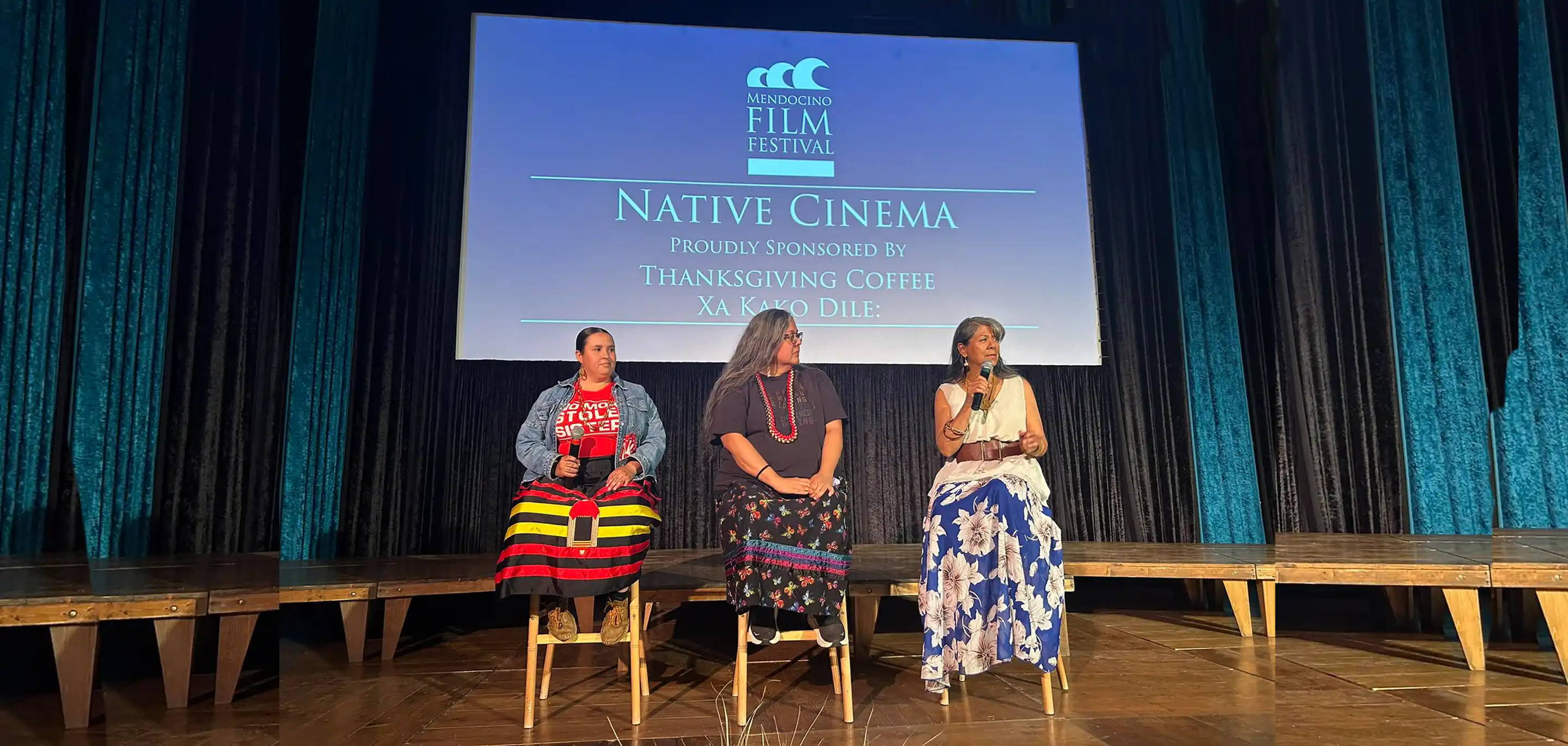
Thanksgiving Coffee Company had the privilege to co-sponsor the “Native Cinema” event along with Xa Kako Dile: in the main tent at the 2024 Mendocino Film Festival. The sold out audience was alerted at the introduction that the next two and a half hours could make them feel “uncomfortable” and the truths that were shared at this event were even more than that word conveyed.
Corine Pearce - Pomo Basket Weaver
There were beautiful short films on the artistry and teaching of the world-renowned Pomo basketry with Corine Pearce, and the resurgence and validation of the Yurok tribe’s forest management practices using fire which has been practiced in this region for millennia. These controlled burns have now been adopted by Cal Fire and other agencies as extremely effective in controlling dangerous undergrowth and revitalizing the land.
Margo Robbins of the Yurok Tribe bringing prescribed fire back in the film - Fire Tender
This led up to the most significant part of the event – a documentary on MMIW – Missing and Murdered Indigenous Women. It was horrifying to learn that we live in parts of the top 5 most dangerous parts of California for Indigenous Women, and also for other Indigenous people (MMIP) as well. Here is a snapshot of an all-too-horrific story: Missing of Murdered Indigenous People Fact Sheet
"The next 2 1/2 hours could make you uncomfortable"
Image from the documentary "We Ride For Her"
raising awareness of the heartbreaking realities
The film WE RIDE FOR HER (directed by Prairie Rose Seminole & Katrina Lillian Sorrentino) follows the birth of a group of motorcycle riding indigenous women who created this group to raise awareness of the heartbreaking realities and to aid in the search for their missing sisters and brothers. This documentary should be required education for all Californians.
History of Thanksgiving Coffee Company and Native Cinema:
Native Cinema 2024
read more
Back to the Land, Forward in Time
Biodiversity, organic coffee, and the art of creating with care
September has a way of turning quietly on the Mendocino Coast. The light shifts, the gardens offer their last abundance, and the first edge of autumn asks us to notice what we have grown, both in the ground and in our lives.
This season, we are thinking about the relationships that hold everything together: people and place, farmer and roaster, tradition and everyday life. Biodiversity is part of that larger picture. It is the living foundation behind good coffee, and one of the things Thanksgiving Coffee is committed to protecting.
Original Roastary on Noyo Harbor circa 1970's, With Paul and Panda
A Living Mendocino Inheritance
Thanksgiving Coffee was born from the Mendocino Coast world. Our story is connected to Fort Bragg's working harbor, the Mendocino art scene, environmental activism, and the back-to-the-land ethos.
From the beginning, coffee here has meant more than a product. It has offered a way to remain connected to place, to people, and to a life shaped by purpose.
Much of what once sounded "alternative" has become part of how many of us are trying to live today. We want to know where our food comes from. We care about soil and water. We value independent makers and the knowledge carried within their work.
Coffee as Part of a Living System
Biodiversity is one of the threads tying these values together. Coffee doesn't grow in isolation. A biodiverse coffee farm can include shade trees, birds, insects and other pollinators, microorganisms, ground cover and neighboring plant species - all interacting with the coffee crop and the soil and water that sustain it. Coffee grown organically within a diverse landscape develops as part of a living system - carrying the influence of climate, elevation, soil, variety, and the knowledge of the people who tend it.
From Industry Change to Habitat Protection
Thanksgiving Coffee began making the relationship between coffee and habitat visible decades ago. In 1994, we introduced one of the first shade grown coffee lines, connecting customer choice with the protection of tropical forest habitat. Learn more about shade-grown coffee.
In 2015, we joined the Smithsonian Migratory Bird Center’s Bird Friendly program. This certification brings organic agriculture and forest canopy protection together, recognizing coffee farms that provide habitat for migratory birds and other wildlife.
That history continues to shape how we understand biodiversity today. It is a living foundation of the landscape and an essential part of coffee quality and our responsibility. When farms maintain diverse vegetation, forest canopy, and healthy soil, they create conditions in which coffee, wildlife, and farming communities can thrive together.
A Resilient Coffee System Is a Human System
Every cup passes through many hands. Farmers bring an intimate knowledge of their land. Cooperative leaders build shared stability. Cuppers develop their palates through years of practice. Roasters respond to the qualities each coffee brings. Designers, production teams, retailers, and customers carry it forward from there.
This is where biodiversity and justice meet. Fair compensation supports farmers in caring for their farms, remaining connected to their land, and passing knowledge from one generation to the next.
Putting Knowledge in Farmers’ Hands
Original Cupping Lab project, Nicaragua
Thanksgiving Coffee put this belief into practice in Nicaragua. In 1999, Paul Katzeff proposed placing professional coffee tasting tools directly in the hands of producer cooperatives. With support from USAID, Thanksgiving Coffee helped nine cooperatives build cupping labs owned by farmers in 2000 and trained farmers to evaluate coffee using the same standards as buyers. The farmers could taste, understand, and demonstrate the quality of their own coffee, strengthening their ability to improve it and negotiate its value.
We see ecological responsibility and fairness as complementary goals. They are the same root system, revealed in different forms.
Not Just A Cup, But A Just Cup™.
Mendocino Vienna: A Taste of Place
Mendocino Vienna blends organic coffees from Central America, South America, and Indonesia. Each coffee is shaped by its own landscape and farming traditions.
Careful roasting brings these coffees into balance. The result is bold but sweet, with notes of nuts and dark chocolate and a natural sweetness that lingers. This dark roast still allows the blend’s character to come through.
The beans travel from three continents, but the blend itself was shaped here on the Mendocino Coast. Many of our customers first discovered it in Mendocino and have kept returning to it over the years.
One longtime customer, Joe Massucco of Seattle, first tasted Mendocino Vienna while visiting the coast. He describes it as dark and flavorful without tasting burnt, and as a welcome companion to the morning paper.
A New Way To Enjoy Mendocino Vienna
Its rich notes of chocolate and nuts also make Mendocino Vienna a wonderful foundation for cold brew recipes. Try our Mayan Mocha Smoothie, made with chilled Mendocino Vienna, cacao, banana, cinnamon, and your choice of milk.
Bringing These Values To Your Cup
The choices we make as coffee drinkers can support a more resilient and biodiverse coffee system.
- Look for meaningful certifications. Learn what Organic, Fair Trade, and Smithsonian Bird Friendly certifications tell you about how a coffee was grown or traded. Shade, biodiversity, farming practices, and economic relationships all matter beyond the cup.
- Learn where your coffee comes from. Origin is more than a flavor descriptor. It represents farmers, communities, landscapes, and generations of knowledge.
- Support companies that maintain lasting producer relationships. Relationships built over time can create greater transparency, shared knowledge, and a deeper understanding of quality.
- Learn one story behind the coffee you buy. Knowing something about the people and places behind your coffee can change your relationship with it.
Ready to Begin That Journey?
Start with this month’s featured coffee, Mendocino Vienna. Discover how organic coffees from three continents and more than fifty years of Mendocino Coast roasting experience come together in one enduring blend.
None of this has to be perfect. It simply has to become part of your practice, repeated with care.
Carrying the Legacy Forward
As the fall equinox approaches, we are giving thanks for the harvest, for the people who grow and cultivate our food, and for the relationships that make all of it possible.
The back to the land movement taught us to pay attention. The arts taught us to imagine. Biodiversity reminds us that everything is connected.
At Thanksgiving Coffee, this is living history. It continues through how we source, roast, and share coffee. It also lives within the community that continues to grow around it.
Explore Mendocino Vienna and experience what it means to cultivate coffee, community, and a more thoughtful way of living.
Not Just A Cup, But A Just Cup™.
Frequently Asked Questions
What does biodiversity mean in coffee farming?
Biodiversity refers to the variety of life found within and around a coffee farm. This can include coffee plants, shade trees, food crops, native vegetation, birds, pollinators, insects, fungi, and microorganisms in the soil.
These living elements interact with one another. Together, they can help maintain healthy soil, protect water, support natural pest control, and make a farm more resilient to environmental change. Coffee is one crop within this larger community of life.
How is shade grown coffee good for biodiversity?
Shade grown coffee is cultivated beneath a canopy of trees rather than in a cleared field exposed to full sun. When that canopy includes a variety of tree species and layers of vegetation, it can provide food, shelter, and migratory pathways for birds, insects, and other wildlife.
Shade trees can also help regulate temperature, retain moisture, reduce soil erosion, and return organic matter to the ground. However, “shade grown” by itself is not always a regulated claim. Smithsonian Bird Friendly certification provides additional assurance because participating farms must be certified organic and meet specific standards for forest canopy, vegetation, and habitat protection.
What is the difference between Organic, Fair Trade, and Bird Friendly coffee?
Each certification looks at a different part of the coffee system.
Organic certification focuses on farming and processing practices. Certified organic coffee must meet verified standards governing how it is grown and handled. These standards restrict most synthetic pesticides and fertilizers while supporting soil and water health, ecological balance, and biodiversity.
Fair Trade certification focuses on people and trade. It establishes social, economic, and environmental standards for participating producers and businesses. Depending on the certifying system, this can include price protections, additional community premiums, labor standards, and support for democratic producer organizations.
Smithsonian Bird Friendly certification focuses on habitat. Bird Friendly farms must first meet organic certification requirements. They must also maintain specific levels of shade, forest structure, and plant diversity that provide habitat for migratory birds and other wildlife.
A coffee can carry more than one certification. Organic addresses how the coffee is cultivated. Fair Trade addresses how it moves through economic and social relationships. Bird Friendly adds verified habitat requirements. Together, they give coffee drinkers a fuller understanding of what their coffee supports.
About The Author
Lavender Grace Kent, Head of Brand Narrative & Culture
Lavender Grace documents Thanksgiving Coffee’s history, producer relationships, environmental commitments, and continuing work at the intersection of coffee, culture, and biodiversity.
Stay in touch - we like to stay connected