

Our Blog
Marilyn Monroe, Clark Gable and the Mustangs
View BY :
I met my first wild horse in a movie theatre in Greenwich Village in 1963.

The story behind Wild Grounds Coffee
By Paul Katzeff, Co-Founder & Roastmaster Emeritus
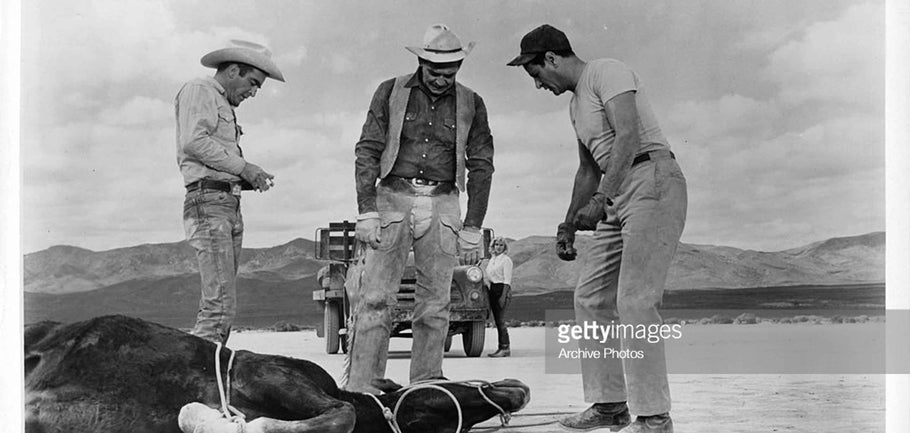
He was on the wrong end of a lasso being held by Clark Gable. The horse was bucking and raising up on his hind legs, pulling desperately away from his capture. Marilyn Monroe was pulling on Clark’s hand pleading for the horses freedom. Clark was determined to get his horse and another payday. The Name of the Movie was The Misfits and was about three Aging Cowpokes who once made their living capturing Mustangs and selling them into the slaughter houses for meat. In this movie they complained about how the horses were no longer in abundance , hard to find and it was impossible to make a decent days pay capturing the ‘things’. Maralyn was as beautiful as the horses eyes, fierce now but with long lashes and deep deep soft eyes. Marilyn was beautiful but it was the Mustang, fighting for her freedom, that stole my heart,
Today, 58 years later there is a similar story playing out on the millions of square miles of rangeland between the western slope of the Rocky Mountains and the Eastern slope of the Sierra Nevadas. Today it is not aging cowboys in Pick up trucks and lassos , but Federal Agents in Helicopters rounding up entire herds of free horses and burros and their children, often in the chaos separating family members or driving the horses to their death in the frenzy. Hay Feds, what’s the problem?
The round ups gather the horses into corals so they wont compete for the space grassland feed out there on the range. Thet range is for the Beef Cattle ! Our government leases our citizen owned land to cattle ranchers they can make money selling beef to our meat eating society of which I must admit , I am one. The cost of feeding jailed Mustangs is estimated to be in the billions. And why, when the 1970 Congress afforded Mustangs America’s protection, has all the Bureau of Land Management continued to harass the best symbols of freedom we have ?
A horse has eyes that tell a story. Each of us who have looked into the eyes of a Mustang will never forget the moment , never.
Yes, it happened for me long ago in a movie theatre but last October, on the way from Northern California to Phoenix to play baseball , I pulled my car onto a a sandy dirt road to nowhere and drove into the dessert just to see what was out there on that dirt road to nowhere. About five miles in, there they were ! Three magnificent free roaming Mustangs …and they were looking at me from a hill about a home runs distance away. I stopped, my heart jumping , I exited my car and laid down on the very hot sand and stared back. Finally, the circle was complete. I saw them alive and free.
Who belongs on that land we, as citizens own but have delegated the responsibility for their safety to The Bureau of Land Management to secure ? And why has the BLM chosen to represent the Cattle Industry and not our Mustangs?
When I discovered that others of my kind were fighting for them too, we joined the American Wild Horse Campaign and created a coffee package to tell coffee lovers whose side we were on. As with our other Cause Coffee programs, we wanted to empower our customers to help raise funds and awareness for this important work.
Horse and stuntman in the 1960 film "The Misfits"
Every time you purchase a package of AWHC coffee, Thanksgiving Coffee Company donates $3.00 to the AWHC.
When we are a bit further past this COVID-19 Pandemic we are planning a visit, jointly with AWHC staff, to visit and see these magnificent spirits up close. I hope you will be able to come with us. Until then, buy their coffee and know you are on the bus with us. And let me use that old expression , “The steak is as good as the sizzle “ when I say that the coffee inside the package is as good as it gets. You be the judge.
Wild Grounds Coffee
supports the American Wild Horse Campaign
The American Wild Horse Campaign (AWHC) is dedicated to preserving American wild horses and burros in viable free-roaming herds for generations to come, as part of our national heritage.
Since 2004, this organization has been raising awareness and making change for America’s wild horses. Thanksgiving Coffee Company has partnered with them to create Wild Grounds, a cause coffee to save the wild horses.
Recommended Reading
Back to the Blog-
![Earth Day Event in Fort Bragg 2024]()
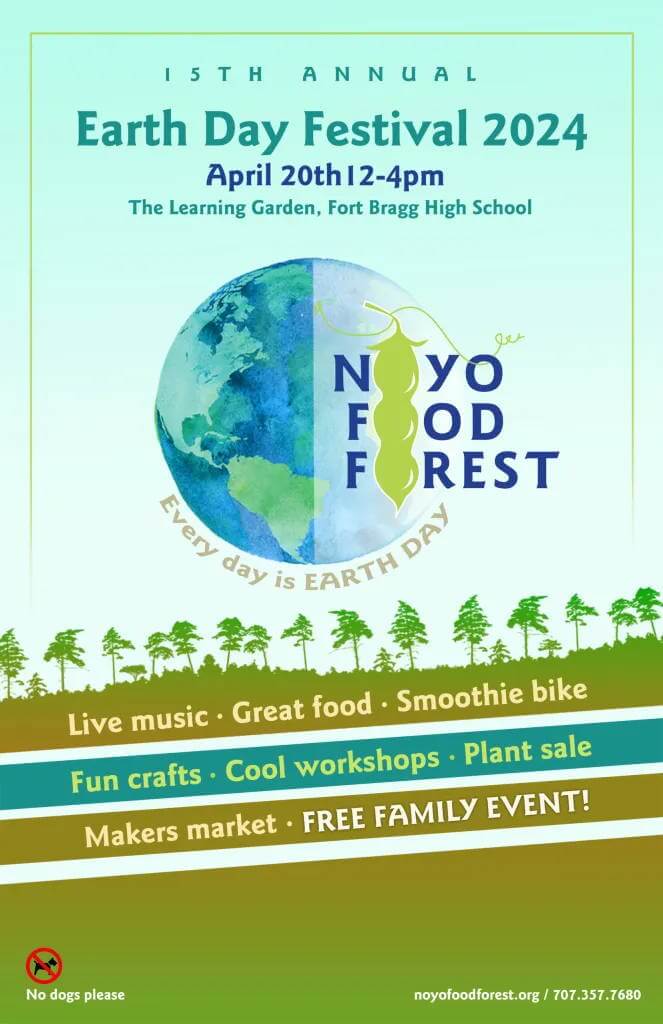
Earth Day Event in Fort Bragg
The Noyo Food Forest is having their annual Earth Day celebration this Saturday at the Learning Garden. This four hour event is a fundraiser for the Farm-to-School and Youth Intern programs that the Noyo Food Forest operates year-round. We partner with the Noyo Food Forest throughout the year, and we especially love being a part of this annual event in Fort Bragg.
15th Annual Earth Day Event
Saturday, April 20, 12 - 4 PM
At the Learning Garden at Fort Bragg High School on Dana Street.This Earth Day event is free and geared toward everyone in the family. There will be live music, and you can participate by putting down a bid for the silent auction, paying entry to bouncy houses, and tasting goodies from local chefs. This is one of the most fun events that happens in the city of Fort Bragg every year. Local organizations and nonprofits are a big part of this event, and you’ll see booths and representatives from the Noyo Marine Science Center, the Mendocino Land Trust, our Mendocino County state parks and many more important parts of the coastal community.
Thanksgiving Coffee will be serving up samples of our Bee Bold Blend, our new Nitro Coffee, and the Noyo Food Forest will be selling 12oz bags, as well. All the proceeds benefit the Noyo Food Forest and their important work here in our community. We are very happy to be a part of this awesome event. For more information, visit the Noyo Food Forest Earth Day page on their website, and RSVP on Facebook to share with your friends. Join us on April 20 – see you at the Learning Garden.
Thanksgiving Coffee Company
Partnership with the Noyo Food ForestLearn more about how we support our Mother Earth
Earth Day Event in Fort Bragg 2024
read more -
![Bee Bold & Blooming: Coffee That Helps the World Flower]()
A May Invitation: Bees Make the World Bloom
There’s a moment in May when the air begins to hum.
You can feel it in the movement between blossoms, in the soft presence of bees at work, in the quiet unfolding of the season. This is the time when the world leans into bloom.
At Thanksgiving Coffee Company, coffee has always been a way of participating in that living system - connecting farmers, ecosystems, and daily ritual through a shared practice of care.
This May, we celebrate that connection through Bee Bold Medium Roast, a coffee crafted to support pollinator health and the ecosystems that coffee depends on.
Honey Bee (Apis Mellifera) on Calendual in the garden. image by deluca
Featured Coffee: Bee Bold Medium Roast
Crafted with Care, Connected to Biodiversity
Bee Bold is a vibrant blend of Central & South American and Ethiopian coffees, combining natural and washed processes to create a cup that is both lively and grounded.
In the cup:
- Bright fruit notes
- Deep sweetness
- A smooth, lasting finish
This coffee reflects the kind of sourcing we’ve practiced for decades, working with producers who grow coffee in ways that support biodiversity, soil health, and long-term resilience.
Through every purchase, Bee Bold contributes directly to pollinator protection through our partnership with Conservation Works - helping fund on-the-ground efforts that protect the species essential to our food systems.
Why Bees Matter: The Work Behind the Bloom
Bees and other pollinators play a vital role in the health of our ecosystems - including coffee farms.
When pollinators are present:
- Coffee plants produce more abundant and consistent harvests
- Flavor complexity can improve
- Farms become more resilient over time
When we choose pollinator-friendly coffee, we participate in something much larger than a morning ritual. We help restore the delicate balance that allows life to flourish.
Thanksgiving Coffee's Headquarters is 3 acres of Pollinator Protected Zone.
World Bee Day & The Flower Moon
May carries a constellation of meaning:
- Mother’s Day (May 10): honoring care, nourishment, and life-giving forces
- Endangered Species Day (May 15): recognizing what needs protection
- World Bee Day (May 20): celebrating pollinators
- International Day for Biological Diversity (May 22): protecting the web of life
- Memorial Day (May 26): a time for remembrance and gratitude
The Flower Moon rises in this same window—reminding us that blooming is not an accident. It is the result of relationship, timing, and attention.
The Bee Bold Challenge
This month, we invite you into action. Be a Pollinator Protector!
- 🌱 Plant pollinator-friendly flowers
- 🐝 Support local ecosystems
- 📸 Share your garden or blooms
- 🏷 Tag #BeeBold
Even a small patch of flowers can become a sanctuary.
Small acts, repeated across many places, create real change.
Recipe: Bee Bold Iced Honey Latte
Text
A simple ritual for warm days
Bee Bold Iced Honey Latte
Ingredients:
- 1 cup brewed Bee Bold Medium Roast (cooled)
- ½ cup milk - your choice
- 1–2 tsp local honey
- A pinch of culinary lavender (optional)
- Ice
Directions:
-
Brew your coffee and allow it to cool
-
Stir in honey while still slightly warm
-
Fill a glass with ice
-
Pour coffee over ice, then add your milk choice
-
Sprinkle lavender gently on top
Taste: floral, smooth, lightly sweet—like spring in a glass
A Closing Reflection
Every cup of coffee is part of a larger system, one that connects land, people, and daily life.
For over fifty years, we’ve worked to build that system with care: through long-term farmer relationships, thoughtful sourcing, and a commitment to quality that honors both our craft and our ecology.
Bee Bold is one expression of that work, supporting pollinators, biodiversity, and the conditions that allow coffee to flourish.
This May, may your cup be part of something that continues to grow.
Lavender Grace Kent is the Director of Brand Narrative and Culture
Stay In Touch - We like to stay connected
Bee Bold & Blooming: Coffee That Helps the World Flower
read more -
![Songbirds of the Forest: Brewing Habitat in Every Cup]()
A Cup That Sounds Like the Forest
There’s a moment in the morning, before the day fully arrives, when everything is still soft.
The kettle hums. Light moves through the trees. And when the coffee begins to pour, there’s a feeling, like something living is arriving with it.
Our Songbird Nicaraguan Coffee carries that feeling. This is our shade-grown, bird-friendly coffee, cultivated beneath forest canopy where songbirds still find habitat along their migratory paths.
Bird-friendly coffee is one of the most effective everyday ways to support migratory bird habitat.
And when you brew it, you are part of that living system.
Nicaraguan Farmer in a Shade Grown Coffee Forest
Why Shade Grown Coffee Matters More Than Ever
The forests that sustain migratory birds are under pressure.
The Smithsonian Migratory Bird Center has spent decades studying and protecting bird migration across the Western Hemisphere. Their work helps make one thing clear: birds need healthy, connected habitat to survive.
Right now, that system is breaking down. Since 1970, bird populations in the U.S. and Canada have declined by 29%, or nearly 3 billion birds. Not only rare species, but common birds too. Backyard birds. Songbirds. The ones many of us grew up hearing.
Birds are indicators of ecological health. When they decline, it tells us something deeper is out of balance.
That is one reason this coffee matters.
For nearly three decades, we’ve partnered with the American Birding Association to help protect that habitat through coffee.
What began as a shared belief, that coffee could be grown in a way that supports bird life, has grown into one of our longest-standing relationships. Together, we’ve supported shade-grown practices that allow forests to remain intact, creating space for migratory birds to rest, feed, and continue their journeys.
This is what bird-friendly coffee makes possible.
What is Shade Grown Coffee?
Shade-grown coffee is coffee grown beneath a diverse canopy of trees instead of in cleared, sun-exposed fields.
This kind of farming helps create:
- habitat for migratory birds
- healthier soil and water systems
- natural biodiversity on the farm
- slower cherry development, which often leads to richer flavor
In simple terms: better habitat supports better coffee.
That has long been part of our understanding at Thanksgiving Coffee. Great coffee and healthy ecosystems belong together.
How do we grow coffee in a way that supports land, people, and ecosystems together?
A Legacy of Environmental Leadership
This work didn’t begin recently at Thanksgiving Coffee.
In the early years of specialty coffee, our team helped establish the first Environmental Committee within the Specialty Coffee Association of America - what today would be recognized as an early form of a sustainability committee in the coffee industry.
At the time, the language was different. But the intention was clear: to bring ecological responsibility into how coffee is grown, sourced, and shared.
Paul and Joan Katzeff worked across farmers, cooperatives, and industry leaders to help connect people around a shared understanding that coffee exists within a living system.
Today, many call this coffee sustainability leadership.
At its root, it was something simpler: whole systems thinking.
That:
- coffee quality is connected to farmer wellbeing
- farmer wellbeing is connected to ecosystem health
- ecosystem health is connected to how we all participate
This has never been separate from the coffee. It is the coffee.
Where Coffee Sustainability Began: A Whole Systems Approach
Long before sustainability became standard language in coffee, it began as a question of relationship.
How do we grow coffee in a way that supports land, people, and ecosystems together?
This question guided early collaboration across the industry - bringing together farmers, environmental advocates, and coffee professionals to think beyond the cup.
From extraction to relationship.
From product to system.
From short-term yield to long-term vitality.That shift continues to shape coffee today.
Meet the Coffee: Songbird Nicaraguan
Tasting Notes
Cocoa richness
Gentle citrus brightness
Smooth, balanced finishOrigin
Nicaragua, sourced through long-standing cooperative partnershipsRoast
Medium roast, crafted for clarity and body👉 Shop Songbird Nicaraguan Coffee
Part of our Songbird Coffee line, developed in partnership with the American Birding Association, this coffee reflects nearly 30 years of shared commitment to protecting bird habitat through shade-grown farming. It’s a relationship built slowly, like forests themselves.
Brewing Habitat: A Daily Ritual
There are large challenges in the world.
And there are daily practices that quietly shape what comes next.
When you choose bird-friendly, shade-grown coffee, you are supporting:
- forest ecosystems
- migratory bird pathways
- farmers working in balance with the land
It is not abstract.
It is immediate.
It is in your cup.Watch how habitat, birds, and coffee are connected across continents.
Recipe: Citrus Bloom Cold Brew
A bright, floral expression of Songbird Nicaraguan.
Ingredients
- 1 cup coarsely ground Songbird Nicaraguan coffee
- 4 cups cold filtered water
- zest of 1 orange
- 1–2 teaspoons wildflower honey
- ice
Directions
- Steep coffee and water for 12–16 hours in the refrigerator
- Strain slowly
- Add orange zest and honey
- Serve over ice
Citrus cold brew coffee with orange zest and honey
7 Ways to Support Songbirds,
Starting With Your Cup
The good news is this: while the challenges are real, there are meaningful ways to help.
- Choose Bird-Friendly Coffee. More than 70 species of migratory songbirds depend on coffee farms for habitat. Shade-grown coffee helps preserve that habitat.
-
Plant Native Species. Even small spaces can provide food and shelter for birds.
-
Avoid Pesticides. Reducing chemical use supports birds and the ecosystems they rely on.
-
Make Windows Safer. Simple changes can reduce bird collisions.
-
Keep Cats Indoors. Protects both birds and pets.
-
Reduce Single-Use Plastics. Supports broader ecosystem health.
- Pay Attention. Noticing birds is part of protecting them.
Start With the Cup
Brew coffee that protects habitat. Let that choice ripple outward.
Earth Month: A Moment to Choose Differently
April brings us back into awareness:
- Earth Month (April)
- Earth Day (April 22)
- Arbor Day (April 24)
These are reminders, and also invitations.
The future of birds, forests, and farming systems is shaped by everyday choices.
From Forest to Cup
From the highlands of Nicaragua to your kitchen, there is a thread.
Birds in motion.
Farmers tending trees.
Water, soil, and time.And you.
Not just a cup, but a living system that is held for a moment in your hands.
FAQ Section
What is bird-friendly coffee?
Coffee grown under forest canopy that supports bird habitat and biodiversity.
Why is shade-grown coffee important?
It protects ecosystems, supports wildlife, and improves coffee quality.
What is a sustainability committee in coffee?
Today, sustainability committees guide environmental and social practices. This work began with early environmental leadership efforts in specialty coffee, including the first Environmental Committee.
How can I support bird-friendly coffee?
Choose shade-grown coffee, reduce pesticides, plant native species, and support responsible sourcing. From Forest to CupBring the Forest Home
Brew with intention.
Choose shade-grown coffee.
Share your ritual.
Lavender Grace Kent is the Director of Brand Narrative and Culture
Stay In Touch - We like to stay connected
Songbirds of the Forest: Brewing Habitat in Every Cup
read more
Earth Day Event in Fort Bragg
The Noyo Food Forest is having their annual Earth Day celebration this Saturday at the Learning Garden. This four hour event is a fundraiser for the Farm-to-School and Youth Intern programs that the Noyo Food Forest operates year-round. We partner with the Noyo Food Forest throughout the year, and we especially love being a part of this annual event in Fort Bragg.
15th Annual Earth Day Event
Saturday, April 20, 12 - 4 PM
At the Learning Garden at Fort Bragg High School on Dana Street.
This Earth Day event is free and geared toward everyone in the family. There will be live music, and you can participate by putting down a bid for the silent auction, paying entry to bouncy houses, and tasting goodies from local chefs. This is one of the most fun events that happens in the city of Fort Bragg every year. Local organizations and nonprofits are a big part of this event, and you’ll see booths and representatives from the Noyo Marine Science Center, the Mendocino Land Trust, our Mendocino County state parks and many more important parts of the coastal community.
Thanksgiving Coffee will be serving up samples of our Bee Bold Blend, our new Nitro Coffee, and the Noyo Food Forest will be selling 12oz bags, as well. All the proceeds benefit the Noyo Food Forest and their important work here in our community. We are very happy to be a part of this awesome event. For more information, visit the Noyo Food Forest Earth Day page on their website, and RSVP on Facebook to share with your friends. Join us on April 20 – see you at the Learning Garden.
Thanksgiving Coffee Company
Partnership with the Noyo Food Forest
Learn more about how we support our Mother Earth
Earth Day Event in Fort Bragg 2024
read more
A May Invitation: Bees Make the World Bloom
There’s a moment in May when the air begins to hum.
You can feel it in the movement between blossoms, in the soft presence of bees at work, in the quiet unfolding of the season. This is the time when the world leans into bloom.
At Thanksgiving Coffee Company, coffee has always been a way of participating in that living system - connecting farmers, ecosystems, and daily ritual through a shared practice of care.
This May, we celebrate that connection through Bee Bold Medium Roast, a coffee crafted to support pollinator health and the ecosystems that coffee depends on.
Honey Bee (Apis Mellifera) on Calendual in the garden. image by deluca
Featured Coffee: Bee Bold Medium Roast
Crafted with Care, Connected to Biodiversity
Bee Bold is a vibrant blend of Central & South American and Ethiopian coffees, combining natural and washed processes to create a cup that is both lively and grounded.
In the cup:
- Bright fruit notes
- Deep sweetness
- A smooth, lasting finish
This coffee reflects the kind of sourcing we’ve practiced for decades, working with producers who grow coffee in ways that support biodiversity, soil health, and long-term resilience.
Through every purchase, Bee Bold contributes directly to pollinator protection through our partnership with Conservation Works - helping fund on-the-ground efforts that protect the species essential to our food systems.
Why Bees Matter: The Work Behind the Bloom
Bees and other pollinators play a vital role in the health of our ecosystems - including coffee farms.
When pollinators are present:
- Coffee plants produce more abundant and consistent harvests
- Flavor complexity can improve
- Farms become more resilient over time
When we choose pollinator-friendly coffee, we participate in something much larger than a morning ritual. We help restore the delicate balance that allows life to flourish.
Thanksgiving Coffee's Headquarters is 3 acres of Pollinator Protected Zone.
World Bee Day & The Flower Moon
May carries a constellation of meaning:
- Mother’s Day (May 10): honoring care, nourishment, and life-giving forces
- Endangered Species Day (May 15): recognizing what needs protection
- World Bee Day (May 20): celebrating pollinators
- International Day for Biological Diversity (May 22): protecting the web of life
- Memorial Day (May 26): a time for remembrance and gratitude
The Flower Moon rises in this same window—reminding us that blooming is not an accident. It is the result of relationship, timing, and attention.
The Bee Bold Challenge
This month, we invite you into action. Be a Pollinator Protector!
- 🌱 Plant pollinator-friendly flowers
- 🐝 Support local ecosystems
- 📸 Share your garden or blooms
- 🏷 Tag #BeeBold
Even a small patch of flowers can become a sanctuary.
Small acts, repeated across many places, create real change.
Recipe: Bee Bold Iced Honey Latte
Text
A simple ritual for warm days
Bee Bold Iced Honey Latte
Ingredients:
- 1 cup brewed Bee Bold Medium Roast (cooled)
- ½ cup milk - your choice
- 1–2 tsp local honey
- A pinch of culinary lavender (optional)
- Ice
Directions:
-
Brew your coffee and allow it to cool
-
Stir in honey while still slightly warm
-
Fill a glass with ice
-
Pour coffee over ice, then add your milk choice
-
Sprinkle lavender gently on top
Taste: floral, smooth, lightly sweet—like spring in a glass
A Closing Reflection
Every cup of coffee is part of a larger system, one that connects land, people, and daily life.
For over fifty years, we’ve worked to build that system with care: through long-term farmer relationships, thoughtful sourcing, and a commitment to quality that honors both our craft and our ecology.
Bee Bold is one expression of that work, supporting pollinators, biodiversity, and the conditions that allow coffee to flourish.
This May, may your cup be part of something that continues to grow.
Lavender Grace Kent is the Director of Brand Narrative and Culture
Stay In Touch - We like to stay connected
Bee Bold & Blooming: Coffee That Helps the World Flower
read more
A Cup That Sounds Like the Forest
There’s a moment in the morning, before the day fully arrives, when everything is still soft.
The kettle hums. Light moves through the trees. And when the coffee begins to pour, there’s a feeling, like something living is arriving with it.
Our Songbird Nicaraguan Coffee carries that feeling. This is our shade-grown, bird-friendly coffee, cultivated beneath forest canopy where songbirds still find habitat along their migratory paths.
Bird-friendly coffee is one of the most effective everyday ways to support migratory bird habitat.
And when you brew it, you are part of that living system.
Nicaraguan Farmer in a Shade Grown Coffee Forest
Why Shade Grown Coffee Matters More Than Ever
The forests that sustain migratory birds are under pressure.
The Smithsonian Migratory Bird Center has spent decades studying and protecting bird migration across the Western Hemisphere. Their work helps make one thing clear: birds need healthy, connected habitat to survive.
Right now, that system is breaking down. Since 1970, bird populations in the U.S. and Canada have declined by 29%, or nearly 3 billion birds. Not only rare species, but common birds too. Backyard birds. Songbirds. The ones many of us grew up hearing.
Birds are indicators of ecological health. When they decline, it tells us something deeper is out of balance.
That is one reason this coffee matters.
For nearly three decades, we’ve partnered with the American Birding Association to help protect that habitat through coffee.
What began as a shared belief, that coffee could be grown in a way that supports bird life, has grown into one of our longest-standing relationships. Together, we’ve supported shade-grown practices that allow forests to remain intact, creating space for migratory birds to rest, feed, and continue their journeys.
This is what bird-friendly coffee makes possible.
What is Shade Grown Coffee?
Shade-grown coffee is coffee grown beneath a diverse canopy of trees instead of in cleared, sun-exposed fields.
This kind of farming helps create:
- habitat for migratory birds
- healthier soil and water systems
- natural biodiversity on the farm
- slower cherry development, which often leads to richer flavor
In simple terms: better habitat supports better coffee.
That has long been part of our understanding at Thanksgiving Coffee. Great coffee and healthy ecosystems belong together.
How do we grow coffee in a way that supports land, people, and ecosystems together?
A Legacy of Environmental Leadership
This work didn’t begin recently at Thanksgiving Coffee.
In the early years of specialty coffee, our team helped establish the first Environmental Committee within the Specialty Coffee Association of America - what today would be recognized as an early form of a sustainability committee in the coffee industry.
At the time, the language was different. But the intention was clear: to bring ecological responsibility into how coffee is grown, sourced, and shared.
Paul and Joan Katzeff worked across farmers, cooperatives, and industry leaders to help connect people around a shared understanding that coffee exists within a living system.
Today, many call this coffee sustainability leadership.
At its root, it was something simpler: whole systems thinking.
That:
- coffee quality is connected to farmer wellbeing
- farmer wellbeing is connected to ecosystem health
- ecosystem health is connected to how we all participate
This has never been separate from the coffee. It is the coffee.
Where Coffee Sustainability Began: A Whole Systems Approach
Long before sustainability became standard language in coffee, it began as a question of relationship.
How do we grow coffee in a way that supports land, people, and ecosystems together?
This question guided early collaboration across the industry - bringing together farmers, environmental advocates, and coffee professionals to think beyond the cup.
From extraction to relationship.
From product to system.
From short-term yield to long-term vitality.
That shift continues to shape coffee today.
Meet the Coffee: Songbird Nicaraguan
Tasting Notes
Cocoa richness
Gentle citrus brightness
Smooth, balanced finish
Origin
Nicaragua, sourced through long-standing cooperative partnerships
Roast
Medium roast, crafted for clarity and body
👉 Shop Songbird Nicaraguan Coffee
Part of our Songbird Coffee line, developed in partnership with the American Birding Association, this coffee reflects nearly 30 years of shared commitment to protecting bird habitat through shade-grown farming. It’s a relationship built slowly, like forests themselves.
Brewing Habitat: A Daily Ritual
There are large challenges in the world.
And there are daily practices that quietly shape what comes next.
When you choose bird-friendly, shade-grown coffee, you are supporting:
- forest ecosystems
- migratory bird pathways
- farmers working in balance with the land
It is not abstract.
It is immediate.
It is in your cup.
Watch how habitat, birds, and coffee are connected across continents.
Recipe: Citrus Bloom Cold Brew
A bright, floral expression of Songbird Nicaraguan.
Ingredients
- 1 cup coarsely ground Songbird Nicaraguan coffee
- 4 cups cold filtered water
- zest of 1 orange
- 1–2 teaspoons wildflower honey
- ice
Directions
- Steep coffee and water for 12–16 hours in the refrigerator
- Strain slowly
- Add orange zest and honey
- Serve over ice
Citrus cold brew coffee with orange zest and honey
7 Ways to Support Songbirds,
Starting With Your Cup
The good news is this: while the challenges are real, there are meaningful ways to help.
- Choose Bird-Friendly Coffee. More than 70 species of migratory songbirds depend on coffee farms for habitat. Shade-grown coffee helps preserve that habitat.
-
Plant Native Species. Even small spaces can provide food and shelter for birds.
-
Avoid Pesticides. Reducing chemical use supports birds and the ecosystems they rely on.
-
Make Windows Safer. Simple changes can reduce bird collisions.
-
Keep Cats Indoors. Protects both birds and pets.
-
Reduce Single-Use Plastics. Supports broader ecosystem health.
- Pay Attention. Noticing birds is part of protecting them.
Start With the Cup
Brew coffee that protects habitat. Let that choice ripple outward.
Earth Month: A Moment to Choose Differently
April brings us back into awareness:
- Earth Month (April)
- Earth Day (April 22)
- Arbor Day (April 24)
These are reminders, and also invitations.
The future of birds, forests, and farming systems is shaped by everyday choices.
From Forest to Cup
From the highlands of Nicaragua to your kitchen, there is a thread.
Birds in motion.
Farmers tending trees.
Water, soil, and time.
And you.
Not just a cup, but a living system that is held for a moment in your hands.
FAQ Section
What is bird-friendly coffee?
Coffee grown under forest canopy that supports bird habitat and biodiversity.
Why is shade-grown coffee important?
It protects ecosystems, supports wildlife, and improves coffee quality.
What is a sustainability committee in coffee?
Today, sustainability committees guide environmental and social practices. This work began with early environmental leadership efforts in specialty coffee, including the first Environmental Committee.
How can I support bird-friendly coffee?
Choose shade-grown coffee, reduce pesticides, plant native species, and support responsible sourcing. From Forest to Cup
Bring the Forest Home
Brew with intention.
Choose shade-grown coffee.
Share your ritual.
Lavender Grace Kent is the Director of Brand Narrative and Culture
Stay In Touch - We like to stay connected
Songbirds of the Forest: Brewing Habitat in Every Cup
read more
The Just Cup of Her Hands
There are hands behind every coffee harvest.
Hands that plant seedlings beneath shade trees.
Hands that sort cherries at dusk.
Hands that manage homes, finances, children, and crops.
Hands that rarely make the headlines.
This March, during Women’s History Month, we honor the women who quite literally brew the future.
Our featured coffee is Flor de Jinotega, grown by the women and families of the SOPPEXCCA Cooperative in Nicaragua. This single origin is available in 5lb format for foodservice and serious home brewers, this coffee represents something steady and powerful: economic dignity rooted in community.
This is shade-grown Nicaraguan coffee cultivated under diverse canopy trees. Those trees do more than protect flavor. They provide winter habitat for migratory songbirds and preserve soil integrity for future generations.
We have long believed that quality of life and quality of coffee go hand in hand. When farmers thrive, flavor deepens.
Origin: Jinotega, Nicaragua
Producer: SOPPEXCCA Cooperative
Growing Method: Shade-grown
Roast: Medium
Flavor Profile
Cocoa warmth
Soft citrus brightness
Balanced sweetness
A grounded, elegant finish
Women In Coffee Farming:
Recognizing The Unpaid Work
Across Latin America, women perform critical agricultural labor while also carrying the majority of unpaid household work. Historically, much of that contribution has not been financially recognized.
SOPPEXCCA has worked intentionally to change this dynamic.
Through Fairtrade premiums and internal cooperative programs, they invest in:
- Women’s leadership roles within the cooperative
- Access to land titles
- Financial literacy training
- Micro-loan opportunities
- Educational advancement for children
This is not symbolic empowerment. It is structural empowerment.
And when women gain economic agency, farms become more resilient. Environmental stewardship strengthens. Communities stabilize.
That alignment between social justice and ecological care reflects the very heart of our founding philosophy.
Recipe: Cardamom Rose Coffee Cake
Made with Flor de Jinotega
This cake mirrors the coffee’s balance with floral lift, warm spice, grounded sweetness.
Ingredients:
2 cups flour
1 cup raw sugar
1 cup brewed Flor de Jinotega (cooled)
½ cup yogurt
2 eggs
1 tsp crushed cardamom
1 tbsp culinary rosewater
½ cup olive oil
Pinch sea salt
Method
Preheat oven to 350°F. Grease an 8–9 inch pan.
Whisk eggs and sugar until slightly lightened. Add olive oil, yogurt, cooled coffee, and rosewater.
In a separate bowl, combine flour, cardamom, and salt. Fold into wet ingredients gently, just until combined.
Pour into pan and bake 35–40 minutes, until a toothpick comes out clean. Rest 10 minutes before removing.
Optional Finish
Drizzle with a light almond glaze or scatter sliced almonds before baking for a subtle crunch.
Serve warm with a fresh cup of Flor de Jinotega. The cocoa and citrus notes carry the spice beautifully.
Spring Equinox & Renewal
March 20 marks the Spring Equinox — a moment of balance between light and dark.
There is something fitting about pairing that moment with a coffee grown under shade canopy, where light filters through branches in measured generosity.
Women in coffee farming embody that balance daily, production and protection, leadership and care, labor and love.
All Blends: Brewing Community Together
While Flor de Jinotega is our March spotlight, we also invite you to explore our full collection of coffee blends:
Each roast represents long-term partnership and artisanal roasting rooted in Mendocino’s coastal legacy.
Flor de Jinotega is currently available in 5lb format — ideal for cafés, offices, restaurants, and serious home brewers who believe coffee should carry meaning.
Why It Matters
More than 125 million people globally depend on coffee farming for their livelihood. When we center women in that equation, we strengthen the entire system.
This is what we mean when we say we are brewing a movement of justice, sustainability, and hope
Women brew the future.
We simply help tell the story.

👉 Brew With Us
• Shop Flor de Jinotega (5lb)
• Explore all Thanksgiving Coffee blends
• Share your brew on Instagram during Women’s History Month
• Tag us for a chance to be featured
Because every just cup begins in someone’s hands.
Lavender Grace Kent - Director of Brand Narrative & Culture